2019/12/16
Day 2
I was really reluctant to leave Nguyen Shack near Cần Thơ. I had such a good stay there that I wanted to stay longer. But, alas, I had a schedule to keep and the hostel was full the next night. I had no choice but to move on. I bid farewell to the hostel’s cat and puppies and set off for Long Xuyên and promptly took a wrong turn. The riding was so pleasant I neglected to check the map. I went a considerable distance out of my way before I realized my mistake. If I had properly mapped out this segment of my tour I could have cut out 10 or more kilometers. Ah well, these things happen.
Since I had come somewhat away from the main branch of the river (Sông Hậu River, a branch of the Mekong River) I worked my way back towards National Highway 91. In Vietnam the National Highways are accessible to all manner of vehicles, including those being pulled by animals. For cars, buses and trucks there is a toll in some places but bicycles and motorcycles can use them for free. In fact, at the toll booth there is a special lane next to the shoulder where two wheeled vehicles can get through without paying the toll.
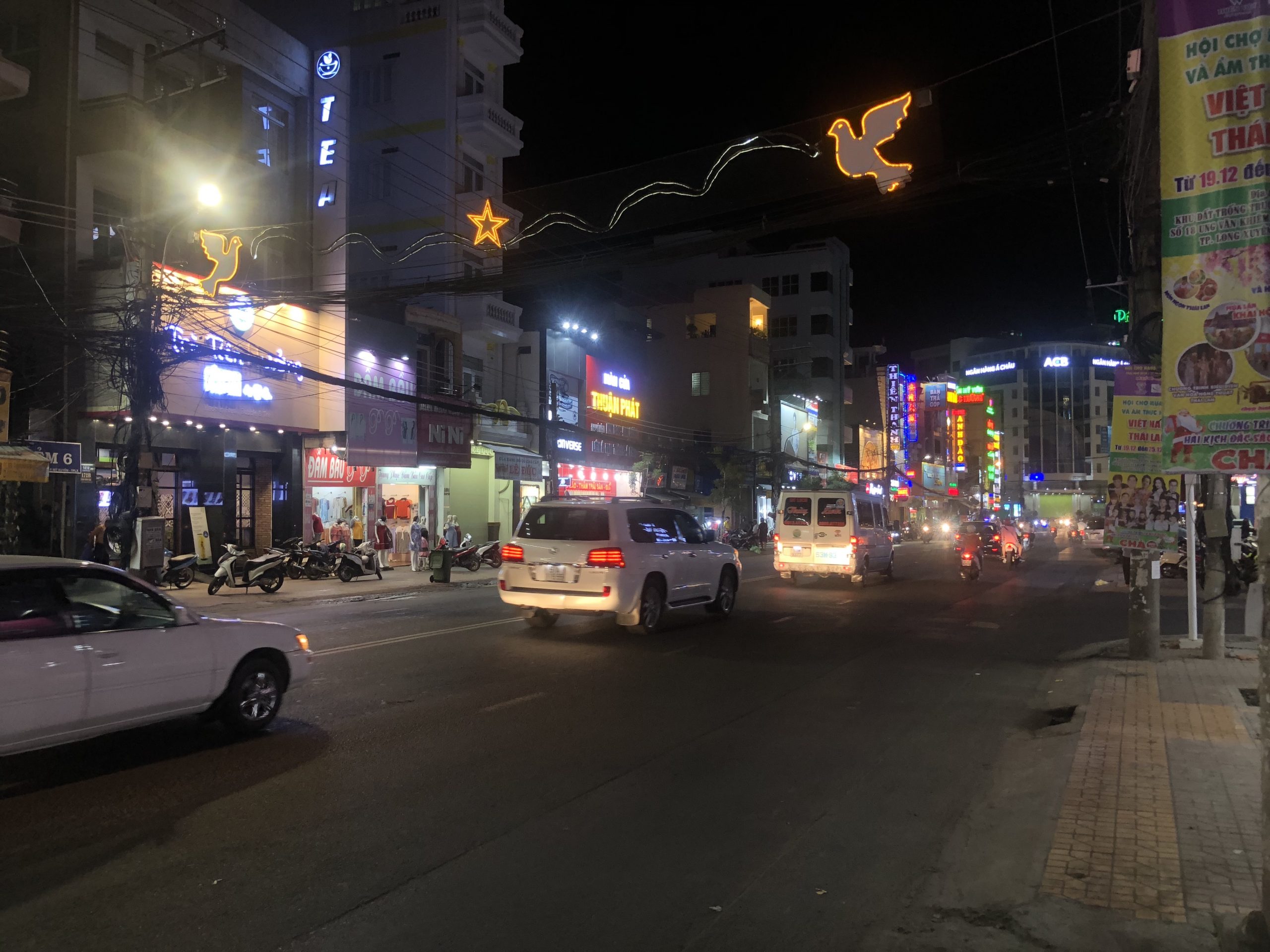
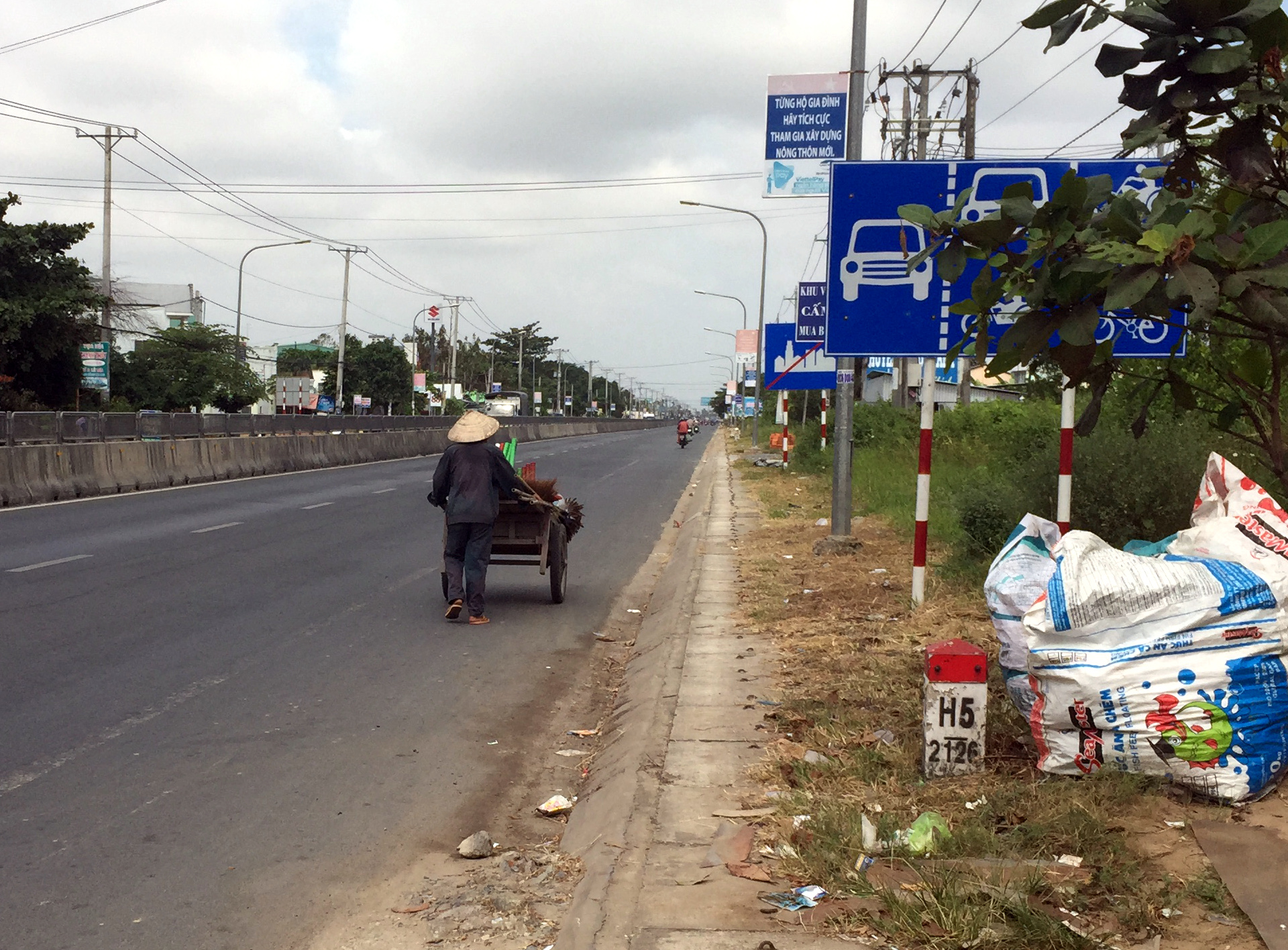
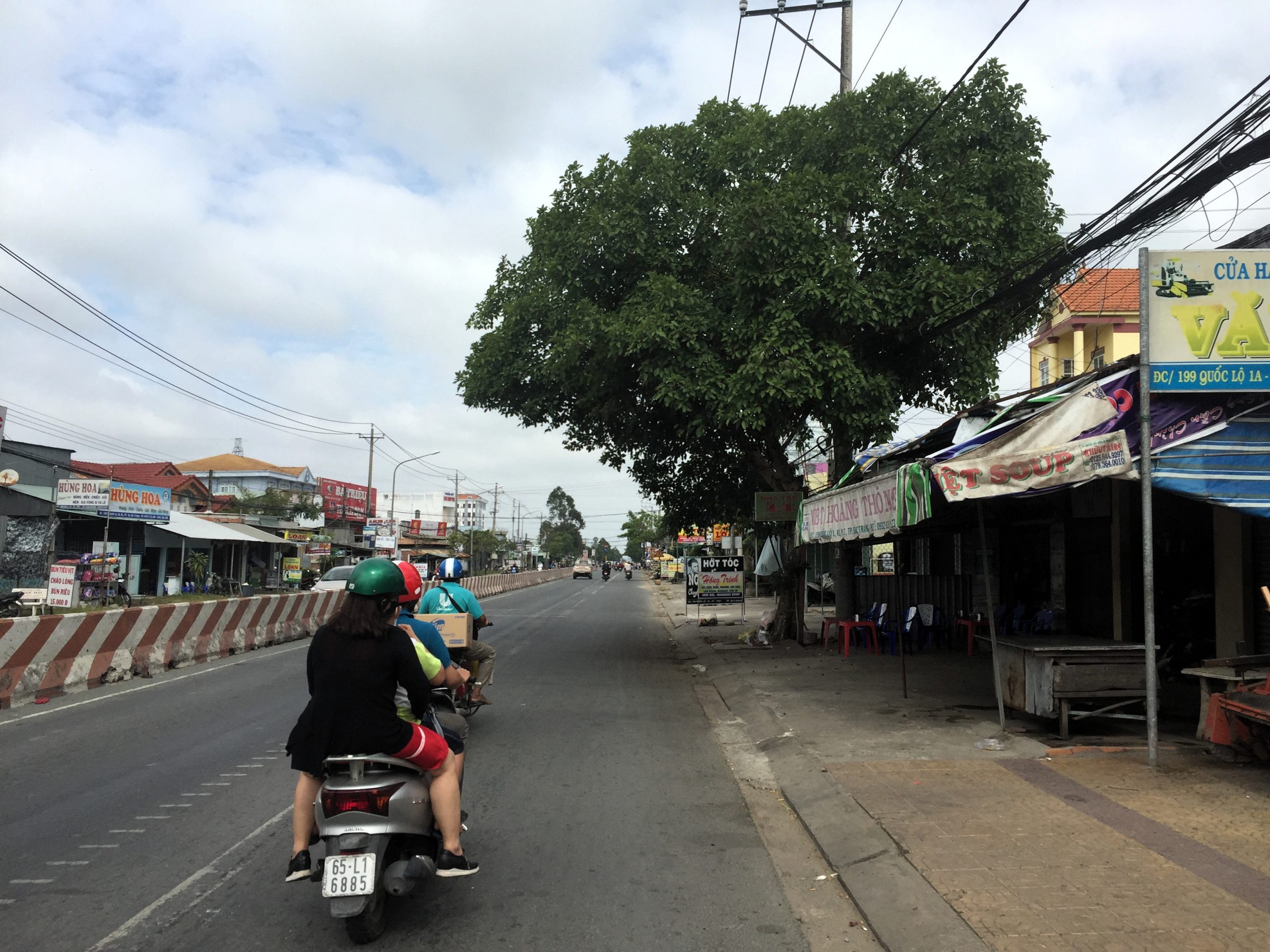
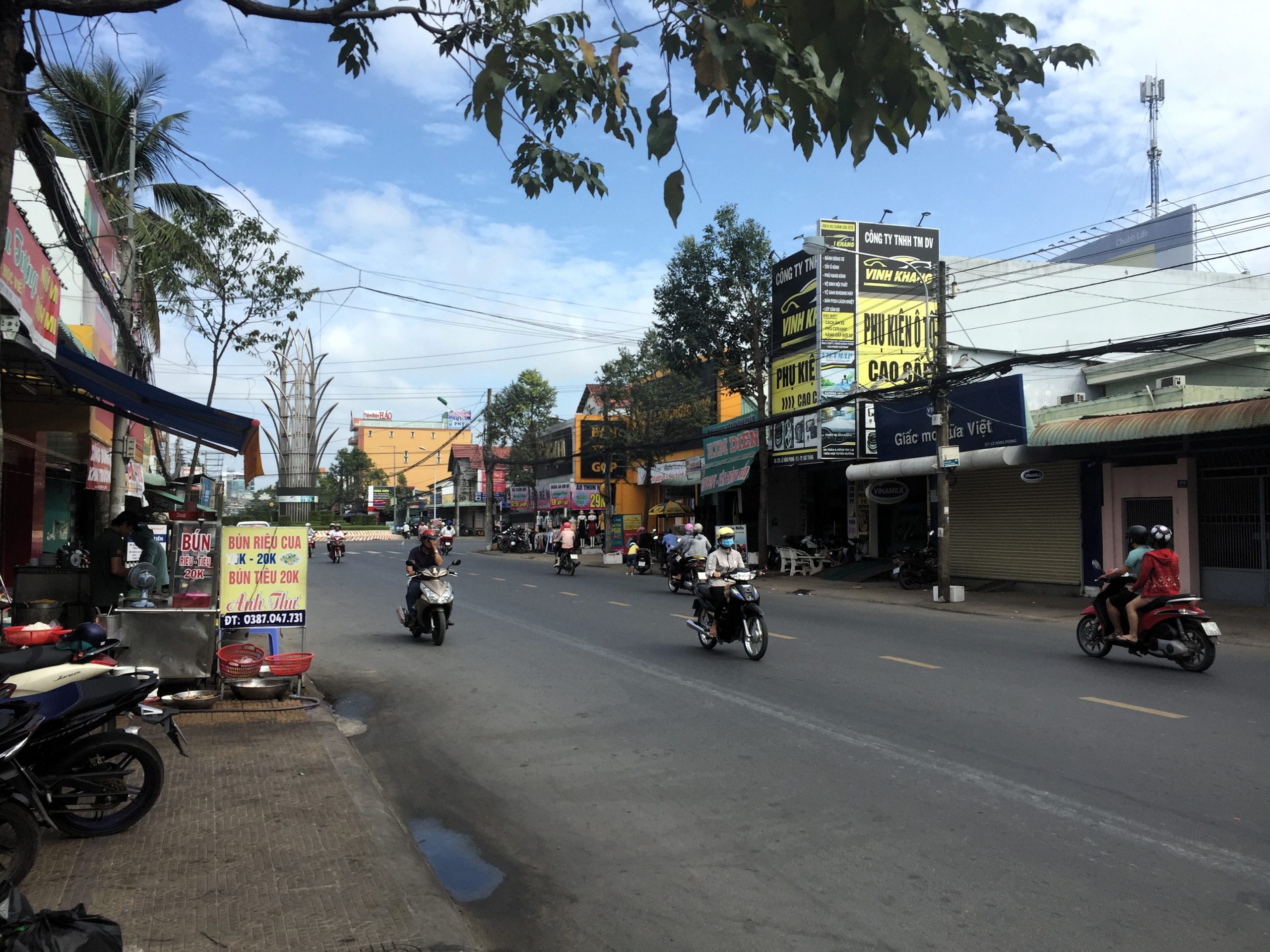
Almost the entire day was spent on Highway 91. When I say highway you may be picturing a four lane divided highway with exit and entrance ramps and trucks and automobiles whizzing by at 75 miles an hour. It is nothing like that. You would be closer to the real deal if you pictured a county highway going through the outskirts of a small town. But even that image misses the mark. All along the road there are cafes and restaurants, street vendors and even clothing sellers. There aren’t many side roads between the towns so it feels like all the life of the country exists within a few dozen meters of the highway or in the cities and towns. I know this isn’t true but that’s the way it feels when you spend all day on the road and can’t see much beyond the buildings that line it. Perhaps I should have taken more detours off the highway. Maybe next time.
I don’t know what the speed limit on the National Highway system in Vietnam is as I never saw any speed limit signs the entire time I was in Vietnam but it seems like traffic was going no faster than 50 or 60 kph. At no point did I ever feel like I was in any danger. There are so many motorcycles, bicycles, and carts being pulled or pushed by people that I think drivers are used to slow moving vehicles. Something that is noticeable right from the start is that Vietnamese streets are noisy from all of the horn honking. There are many different tones and rhythms to the honking. Trucks, cars and motorcycles all have their own sound and there is a lot of variation among types. If this were in North America or Japan you would assume that the drivers are always impatient and irritated. But that is not the case. Honking the horn is just a way for faster moving road users to say to slower road users, “I am coming up behind you and I am going to pass you so stay where you are. Don’t meander.” I sometimes wished I too had a klaxon when I passed slower moving cyclists and pedestrians. Unfortunately, on the busy streets it is impossible to tell who is beeping at who.
For people who come from orderly, rule based countries Vietnamese streets may seem, at first glance, like chaotic places where there are no rules. I saw very few traffic lights during the hours I spent on National Highway 91 and the city streets of Can Thơ and Long Xuyên. Intersections seem chaotic but they are a lot easier to navigate than you would expect. The key to getting across the street is move slowly, steadily and in a predictable manner. This is true for pedestrians, bicycles and even motorcycles and 4 wheeled vehicles. If others can predict where you are going they will adjust their path to flow around you just as you are adjusting your path to avoid them. It just works. Just like Adam Smith’s invisible had.
You would be tempted to think that there were frequent accidents with serious injuries. During my time in Vietnam I didn’t see any accidents. I did see a woman have a little incident with her scooter in Long Xuyên. I heard a crashing noises. When I turned to look, I saw a woman picking her scooter up off the ground. I don’t know what caused her to dump her ride but she didn’t appear to be hurt and I didn’t see anyone else involved. I think one factor that might prevent a lot of serious injuries is the slower speed which traffic moves at. The axiom that speed kills is very true.
Another thing I noticed is the ubiquitousness of free Wi-Fi. Putting the dangers of free Wi-Fi aside, it was easier to get a Wi-Fi connection in Vietnam than it is in Tokyo. I stopped for lunch at a roadside eating place that advertised free Wi-Fi. (Calling it a restaurant would give you the wrong impression.) I asked the lady running the place for the password because I didn’t see it posted anywhere. She took my phone and entered the password herself. That was an interesting meal. I didn’t really have any idea what the place offered. Through the power of Google Translate I said something like “I would like something to eat. What do you have?” The woman said something I didn’t understand and I said “Okay”. I had no idea what I was going to get. It turned out to be a plate of rice with some barbecue meat (my guess is pork) and a little bowl of soup. It was delicious. While I was sitting at a low table eating my lunch, the woman’s little boy, no more than 18 months I would guess.) was toddling around the place. He was clearly curious about me but was a little shy. I smiled at him and made funny faces at him and soon he ventured to my table. As I said, the table was low and the boy could easily see me across the table. Without understanding each other we spent a few pleasant minutes playing.
A very common establishment along National Highway 91 are cafes. I saw many signs that said “Cafe Võng”. I saw so many of them I thought it must be a chain store. I found out later that it is not a chain store. It is just a type of cafe. The outstanding characteristic of Cafe Võng is that they usually have hammocks for the guests. You can get a cold drink and rest for awhile in a hammock. These are popular along the National Highway because it is tiring work riding a motorcycle along the highway. Riders like to pull off for a while and take a rest before continuing on with their business.
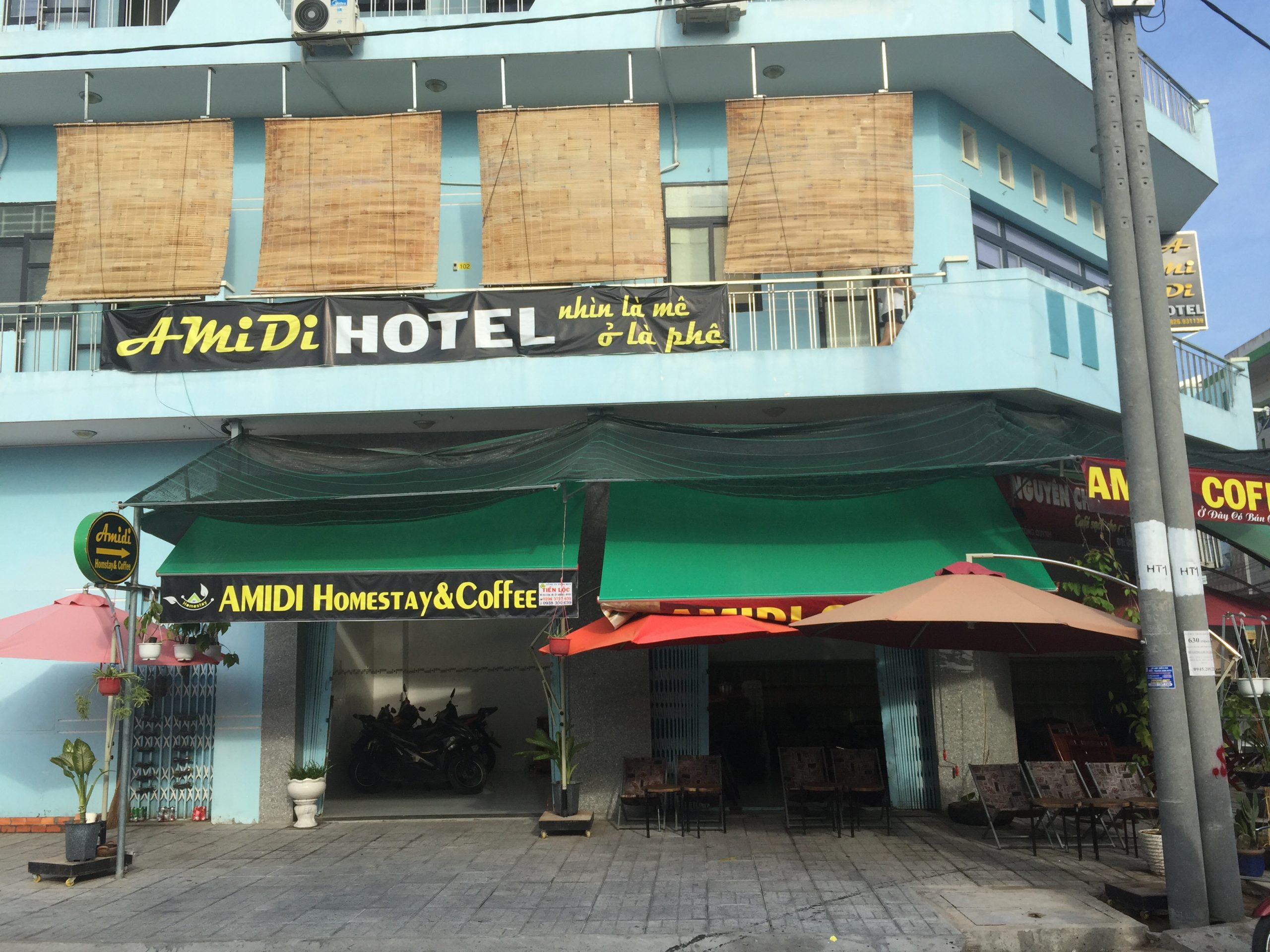
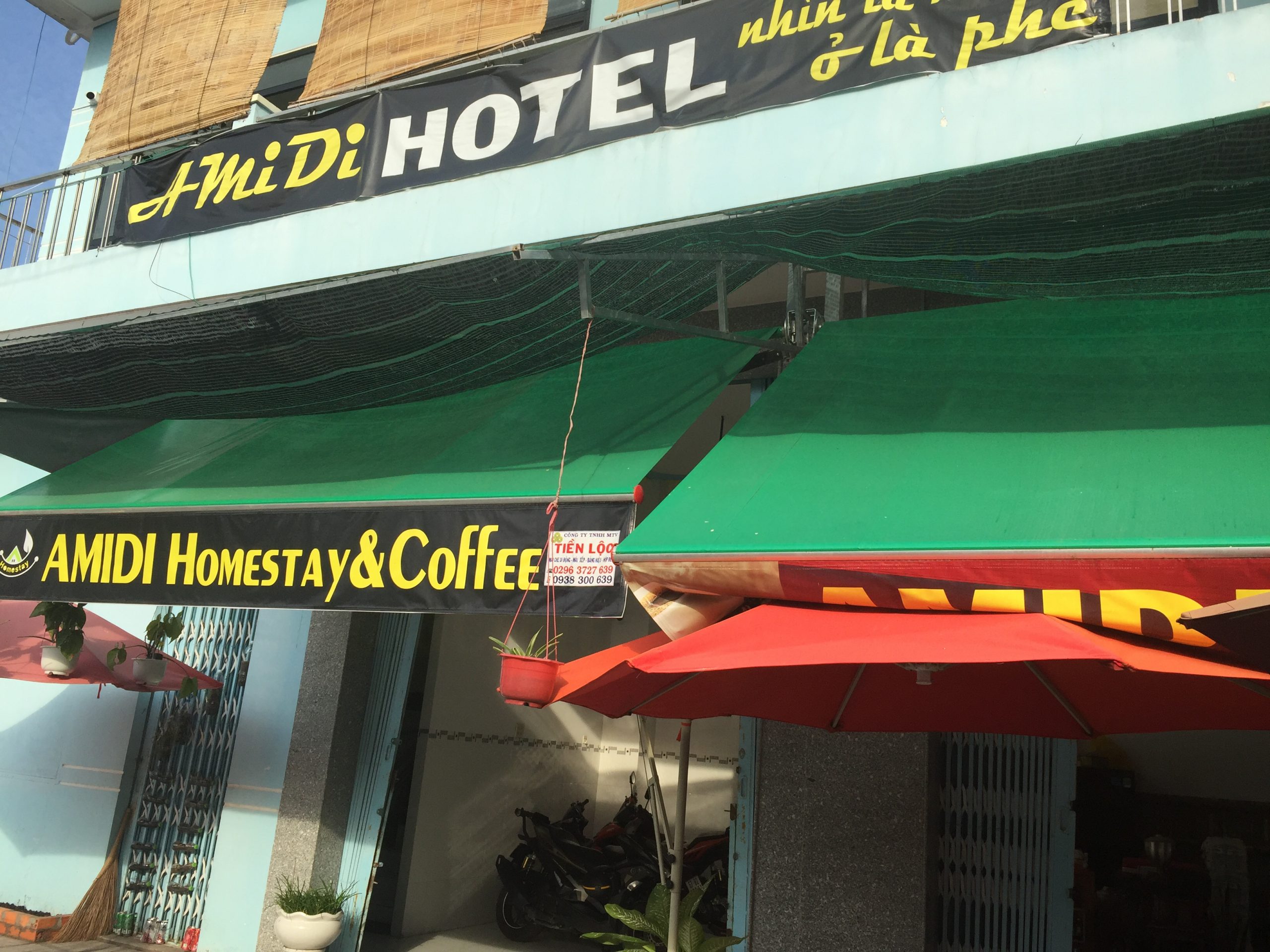
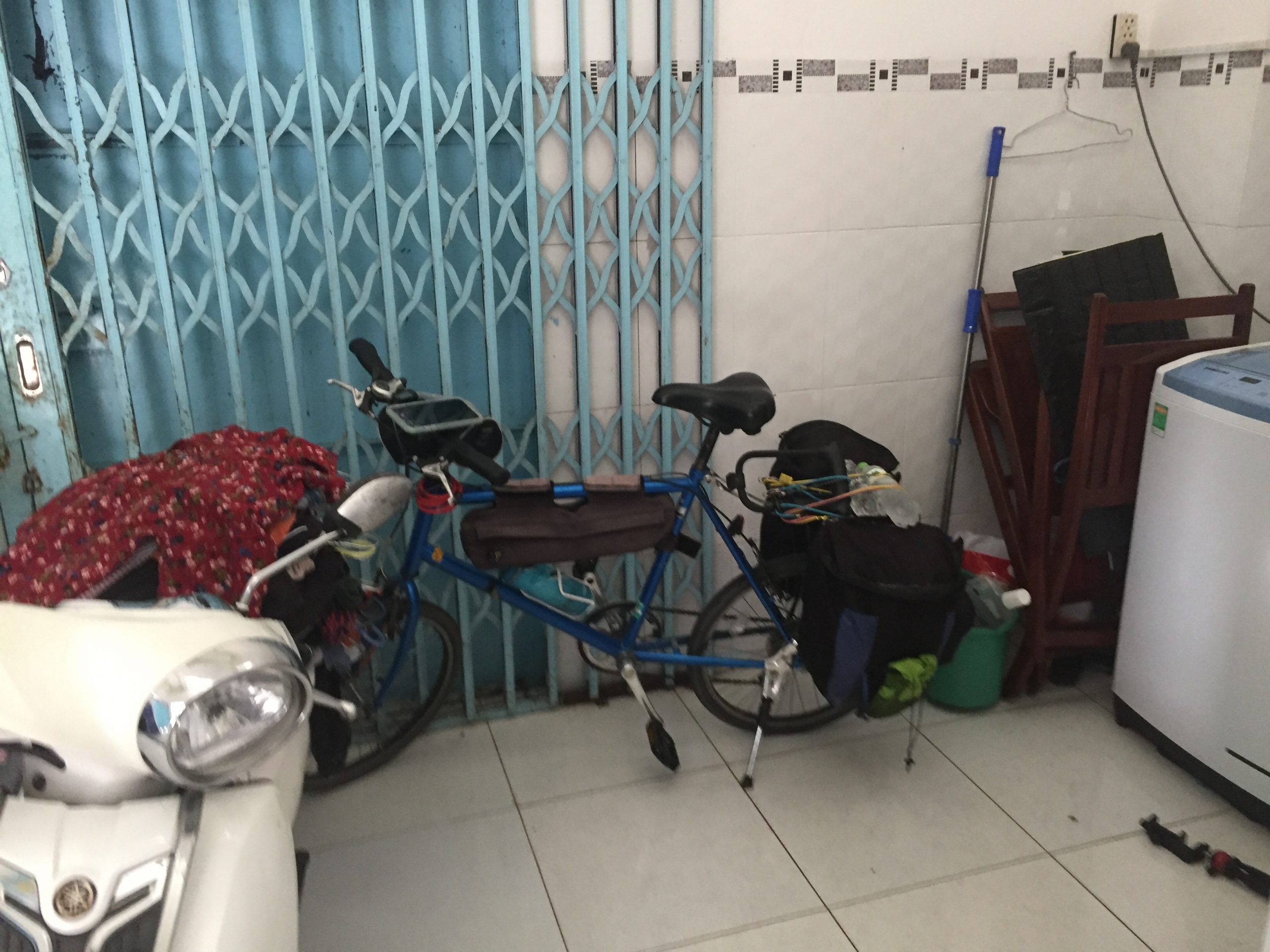
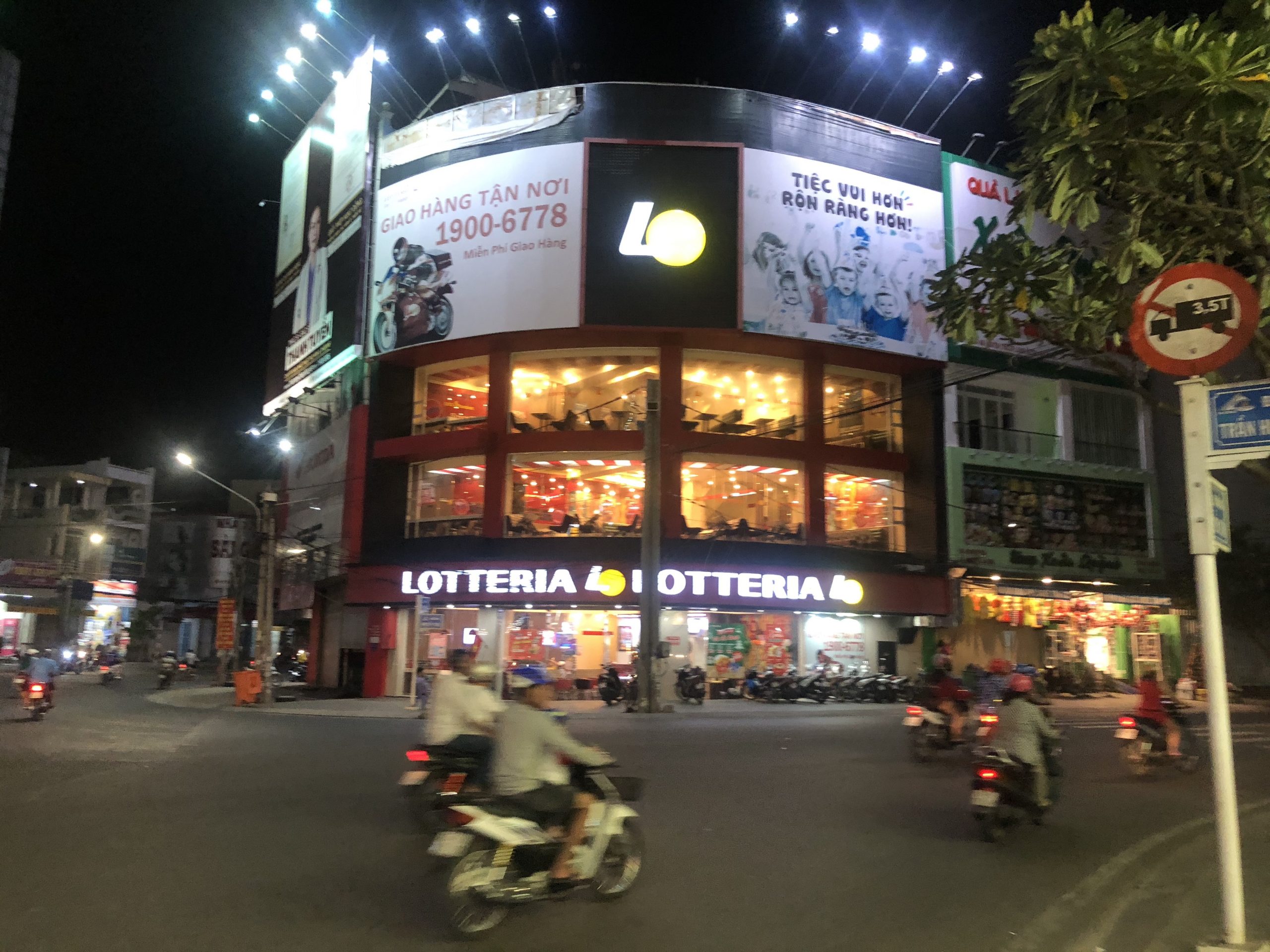
Thanks to my wrong turns and detours in the morning I road 80 plus kilometers. I arrived in Long Xuyên in late afternoon. Fortunately, I was able to find my hotel without too much trouble. I stayed at a place called Amidi Cafe and Homestay. The name is a bit misleading. It’s true, there was a cafe on the street level but it wasn’t a home stay. It is a good thing that I wasn’t expecting one. The girl working the front desk led me to my room on the second floor and gave me a card and a key. The card was for turning on the electricity in the room. The key was for the padlock on the door. That’s right. A padlock. The room didn’t have a proper doorknob with a keyhole. It had a handle and on both sides of the door there was a place to pass the padlock through to secure it to the door jamb.
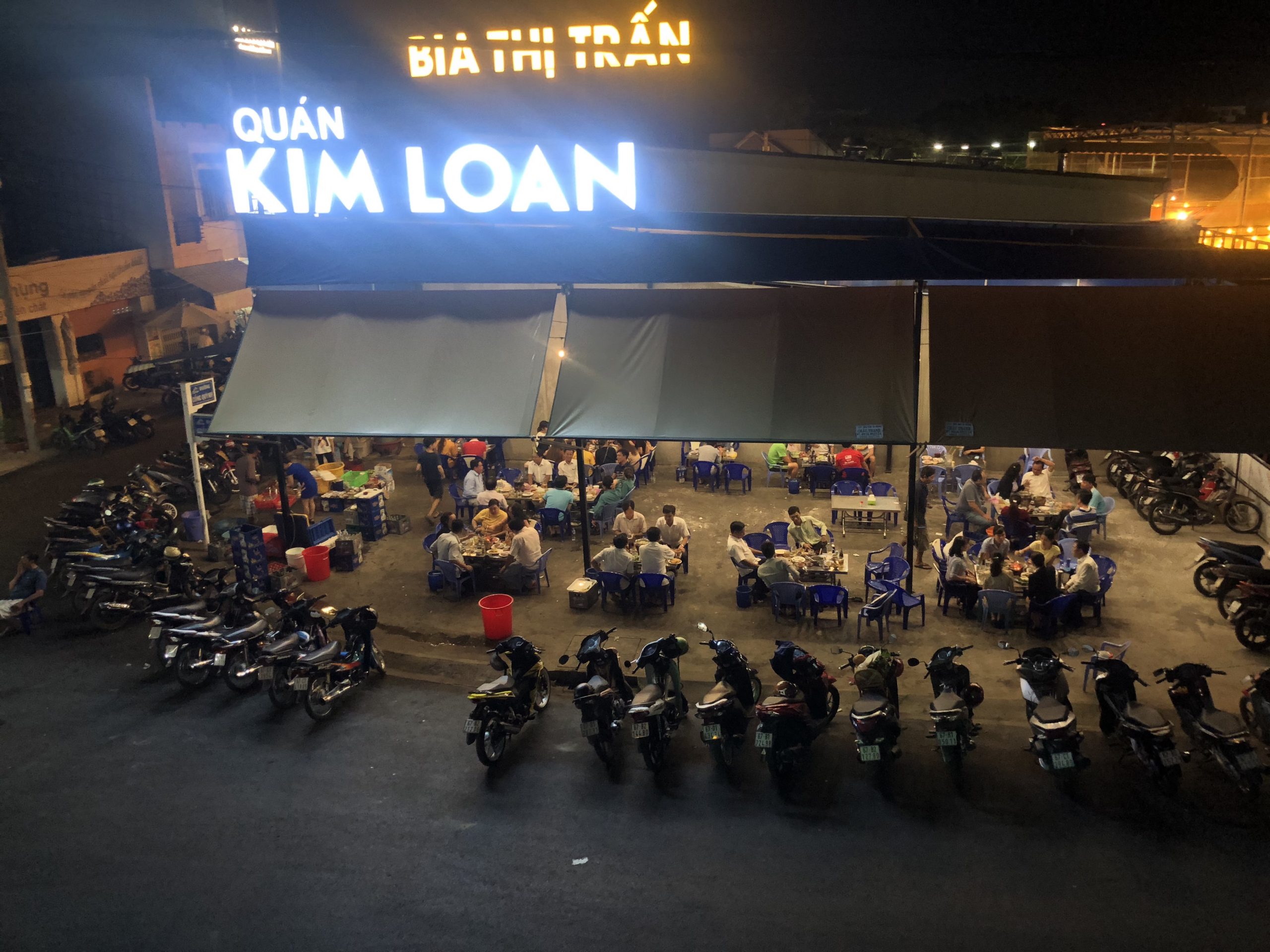
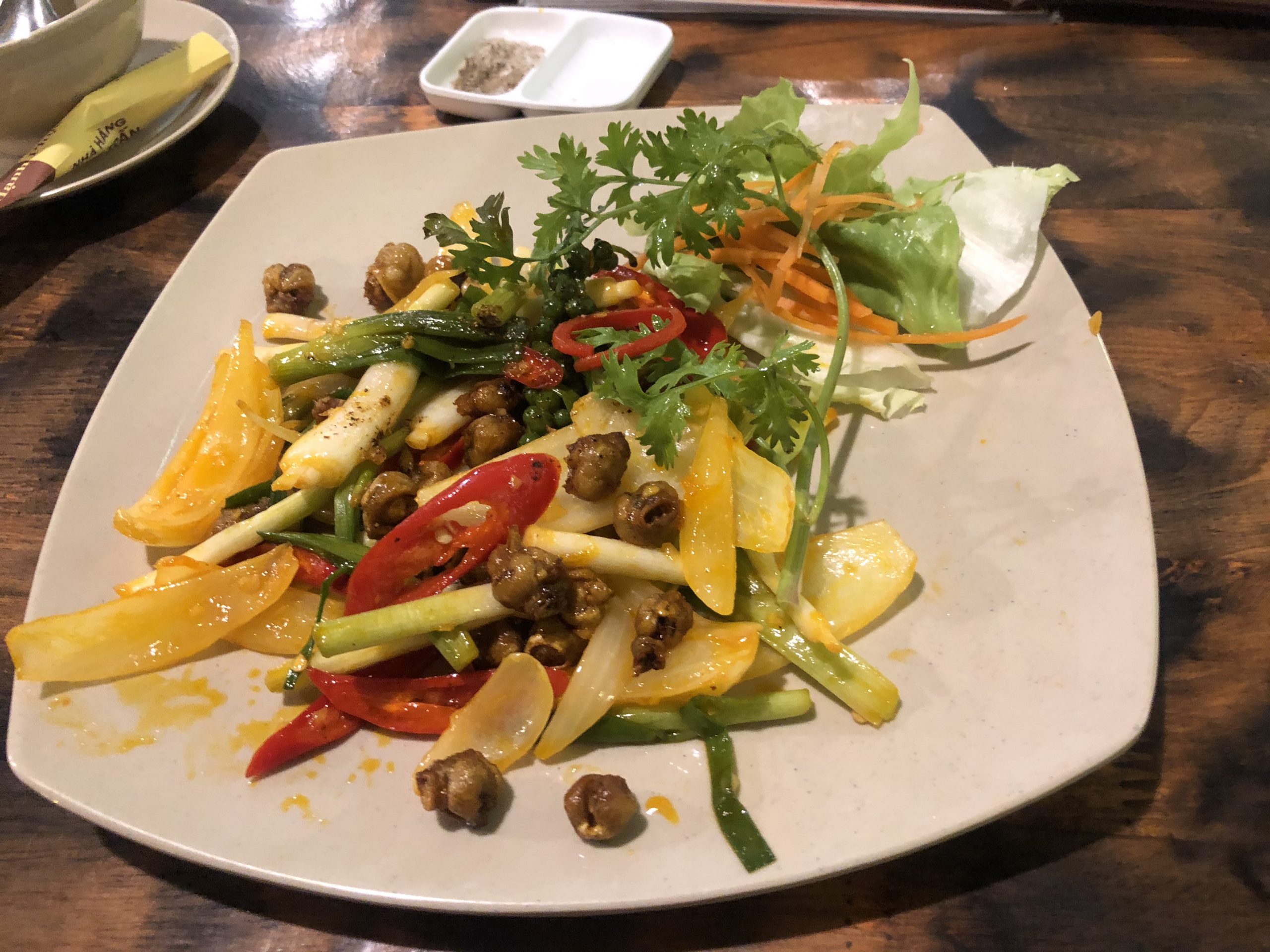
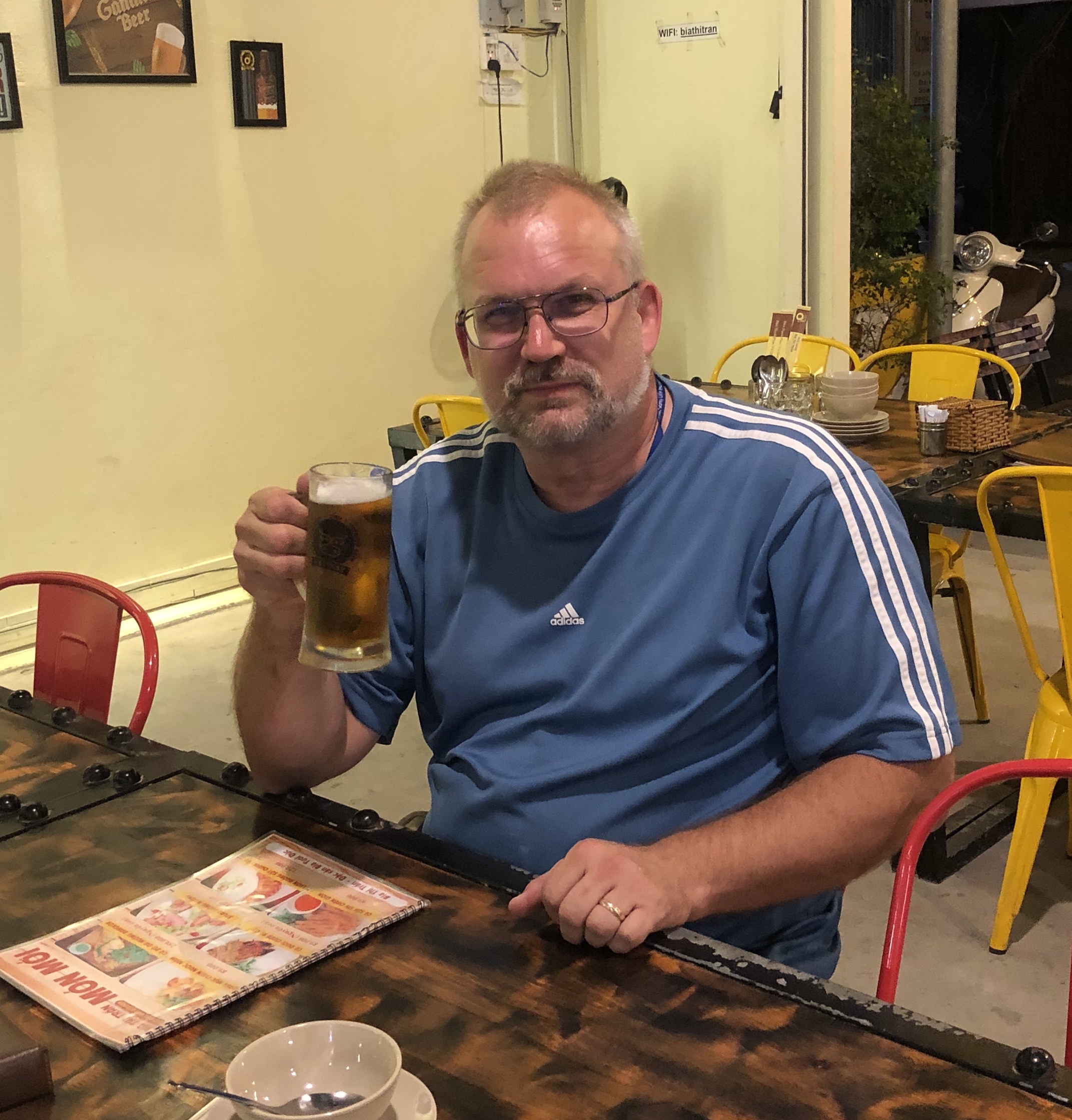
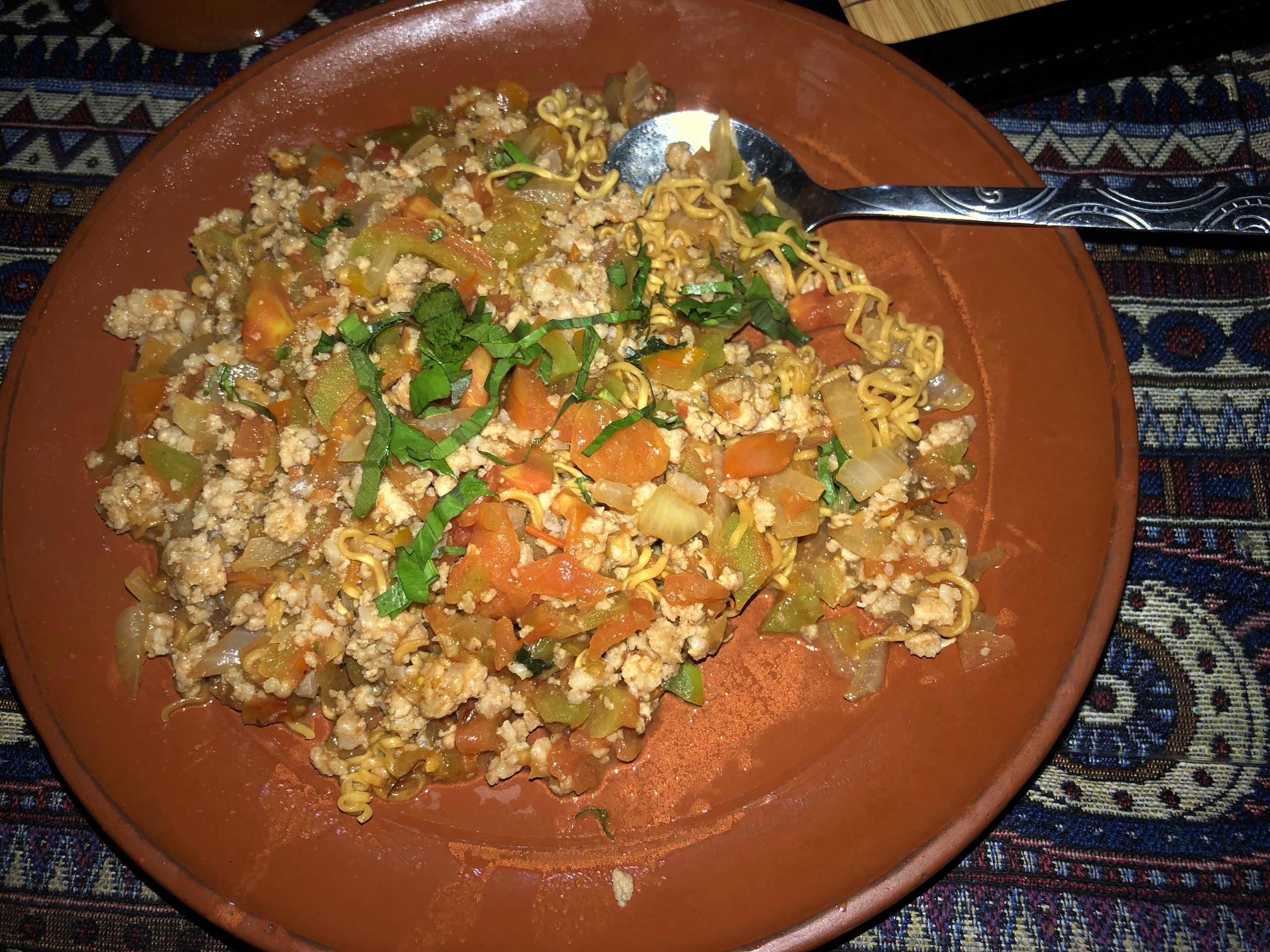
I laid down on the cool floor for an hour and inspected the inside of my eyelids for light leaks. For about an hour I found no evidence damage. As the sun went down I heard noise like a big party coming from across the street. When I looked out the door I discovered that I was across the street from 2 large open-air restaurants that were doing brisk business. I went down to the front desk to ask the girl which restaurant was better. With broken English she told me that they were the same and that there was another restaurant around the corner that was better. Taking the word of the local I went around the corner and found a very large, somewhat opulently decorated restaurant that was empty. I thought maybe they weren’t open yet but the waiter welcomed me in. That’s where it got difficult. Problem one: the menu was written all in Vietnamese. Problem two: there were almost no pictures. Like you see in many restaurants the main menu was a nicely bound book of several pages. Inserted into the menu book was one page of specials with pictures. This was kind of fancy restaurant so the prices, I feel, were a bit higher but I thought they were acceptable. I ordered the cheapest thing from the specials menu because the food in the picture looked like some kind of stir fry and I ordered a beer. It is good that I ordered a beer because the dish I ordered was a bit too spicy for me. I did my best to eat as much of it as I could but I had to order another beer to put the fire in my mouth out. I also spent about 20 minutes looking up words on the main menu with Google Translate until I found a dish I could understand. Spinach! I ordered the spinach dish as well. I was expecting a small to mediumish dish of boiled spinach. What I got was a large, heaping plate of spinach. It was good but far too much for me to eat. When I asked for the bill the waiter asked me if I wanted to take it with me. I considered only for the briefest of moments but I rejected the idea because I had no way to carry it.
Lessons Learned
1. Properly map out any side excursions and the route to and from your hotel in advance.
Photo Gallery
Podcast
Video
[yotuwp type=”videos” id=”Dh9pOmpKCf8″ ]
Home | Photo Gallery | Podcasts | Videos
]]>2019/12/15
Day 1
I give the Ngoc Lan Hotel 5 stars. What qualifies a hotel for 5 stars? That’s a fair question. I’m glad you asked. I was able to check in at 11:00 at night even though my reservation was canceled. The room was clean, free Wi-Fi, air-conditioned, on the first floor, spacious, everything in the room functioned properly. What more could you ask for? Maybe you would downgrade the rating because the fixtures weren’t solid gold, no concierge service, pool, workout room, breakfast or caviar in the mini fridge or a newspaper hanging on the door in the morning. Those are good things and who doesn’t like to be pampered once in a while. But none of that matters when you tired and sweaty and on the verge of a what may be an epic great trip or an epic failure. A comfortable bed, a warm shower and a safe room to sleep is all you really need. You can hear all about how I got to the Ngoc Lan Hotel in Soc Trăng by listening to my podcast or watching the video.
I awoke to to the rooster showing off his vocal abilities somewhere in the distance. I thought it was curious that there would be chickens in town but gave the topic no further thought. What I didn’t know is that chickens are everywhere in Vietnam except maybe Ho Chi Minh City.
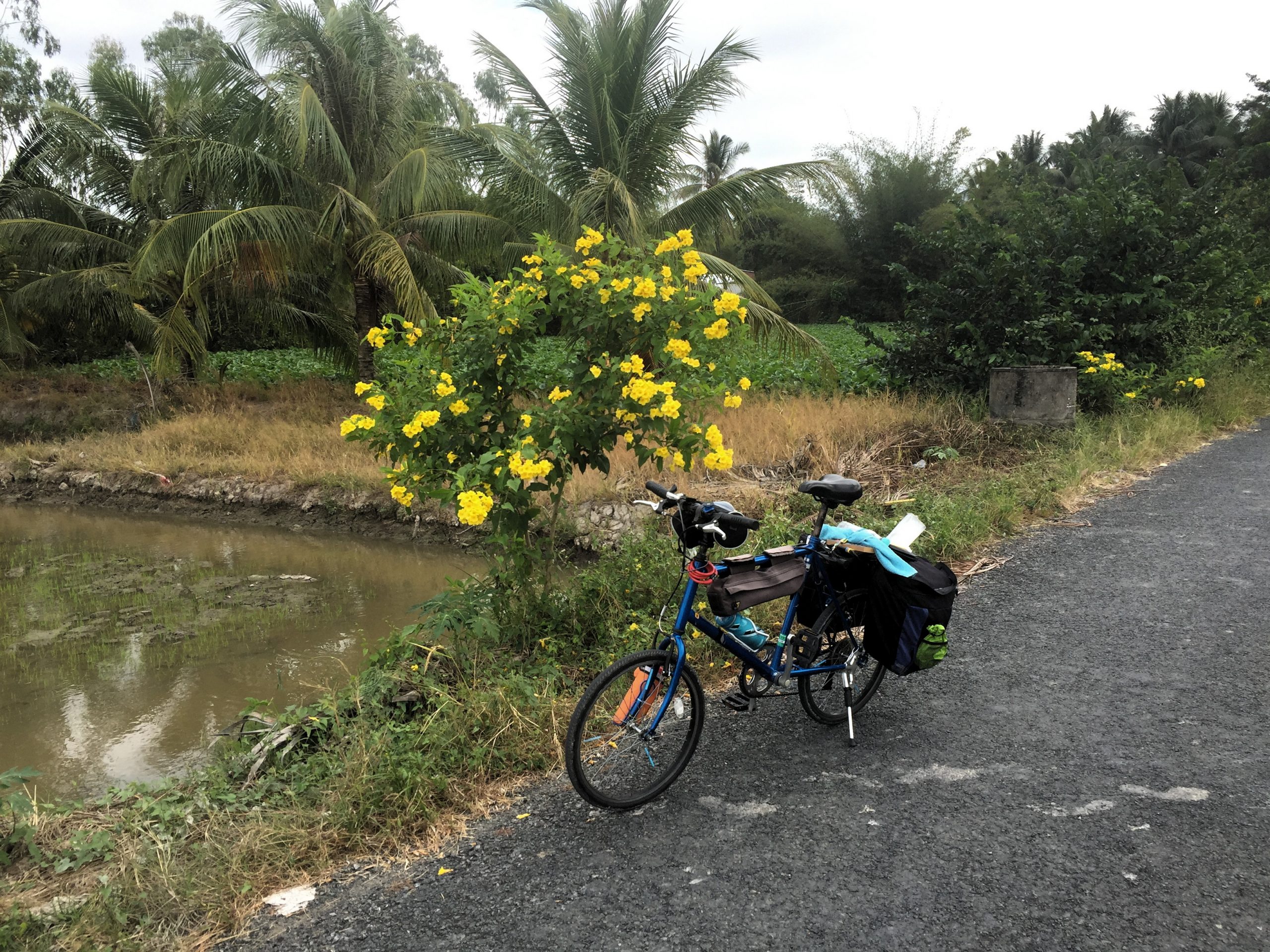
The first order of business was to reassemble Mini-V. I took her and most of my gear out of her cardboard enclosure. I was grateful that she wasn’t any worse for the wear. It took me about an hour to get the old girl back together and loaded up with my gear. Since the hotel did not have any breakfast service I decided to get breakfast out on the road. I straddled my iron pony and stood at the edge of the road and watched the steady stream of traffic and I wondered two things. One, which way do I go to start my journey? Two, how was I going to get across the street if my route required a left turn. I convinced myself that the way I needed to go was to the right. I think I was just intimidated by the traffic and wanted to ease my way into the flow. As soon as I started rolling the GPS on my phone got a solid fix and showed that my instinct to go left was right and my desire to go right was wrong. I took a right turn down a side street hoping I could loop back to my route. It didn’t work out that way. I ended up doubling back and retracing my tire tracks. On the way back I found the chickens and roosters that greeted me so vociferously earlier. They were under large wire cages that looked like a basket turned upside down. The owners can easily lift up the basket cage when it is time to take their chicken for a walk or steal their eggs.
I could no longer avoid making a left turn across traffic and you know what? It wasn’t so bad. I definitely survived. With that small victory behind me I gained confidence that carried me through the next couple turns. Uh oh! Trouble ahead. A huge roundabout! Thanks to my deep research on the topic of roundabouts (I listened to a Stuff You Should Know podcast about roundabouts and I have experienced roundabouts in such exotic locations as New Jersey, Australia and Kunitachi), I was ready for this. I boldly went where no mini-velo has gone before…across the street. It was a piece of cake. The traffic just flowed around the idiot on a bicycle. More evidence to back up my theory that no sane motorist really wants to run you over. So long as you are a predictable and visible bicycle rider your odds of surviving are better than your odds of surviving a double tall triple mocha espresso at Starbucks are?
As I rolled on to the National Highway 1 I couldn’t believe I had actually done it. Somehow, I had gotten myself and my bicycle all the way from Kodaira, Japan to Soc Trăng, Vietnam using trains, buses and taxis. I was cycling in Vietnam! I was so excited and fascinated by everything I saw during those first couple of hours that time and the miles flew by. As the morning began to warm up I realized I hadn’t filled my water bottles before leaving. I pulled off the road at a little general store where I could buy a couple bottles of water.
At this point I think it would be enlightening to talk about National Highway 1. It isn’t a highway in the same way that I-5 is or the Autobahn is. There is a toll but there are no exit ramps or entrance ramps, no high speed traffic. The road is lined with street vendors, cafes, motorcycle shops and businesses pressing hard on to the edge of the road. It is easy to pull off at any point for an ice coffee, a motorcycle repair or load up your motorcycle, pushcart, bicycle or ox cart with goods and materials.
Around 11:00 a.m. I realized that in my excitement I had forgotten to eat breakfast. I took a break at a roadside cafe. A word about Vietnamese architecture. Most buildings are wide open on the side facing the street. They may or may not have a shutter to close them up at night. This design allows for easy access from the street and breezes to cool off the interior. Many establishments have hammocks strung up. Sometimes the hammocks are for customers sometimes they are not. It appears most establishments are family run and the building does double duty as business and home.
Back on the road I pedaled for another two hours before the heat of the day started to wear me down. I took a break at a petrol station to rest for a bit in the shade before continuing on. I eventually left National Road 1 and the Sông Hậu River to find my lodgings.
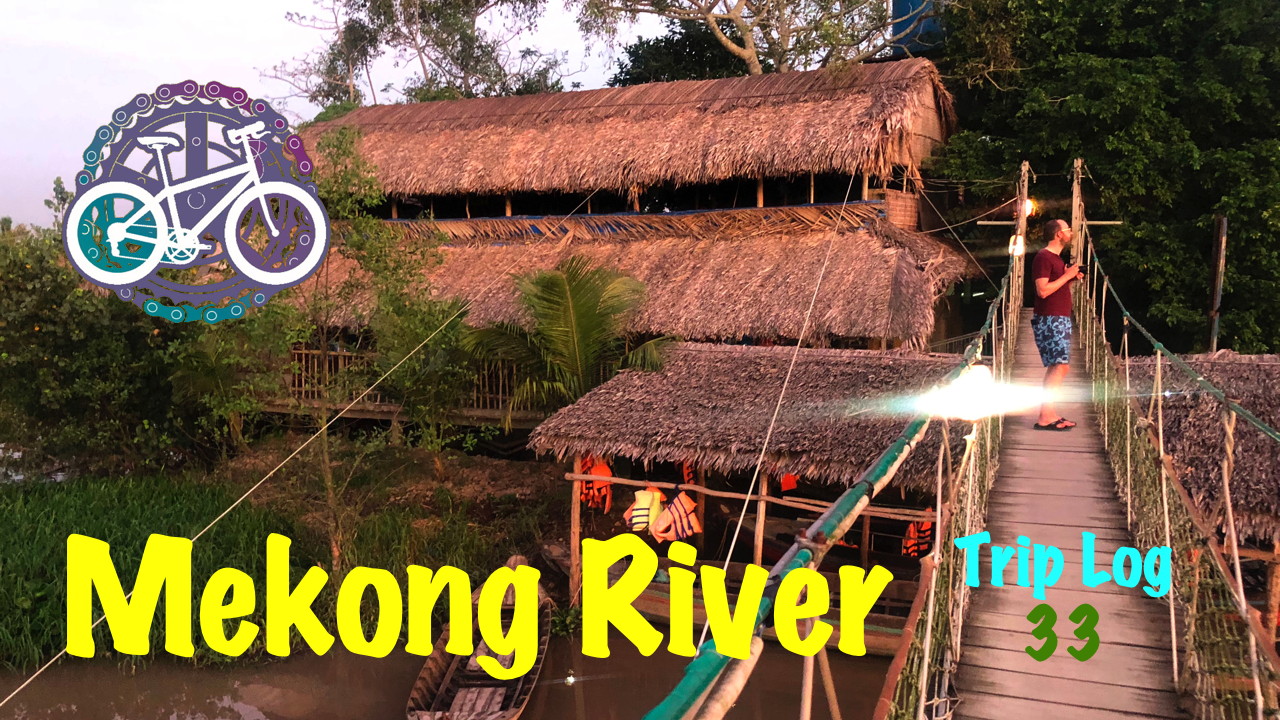
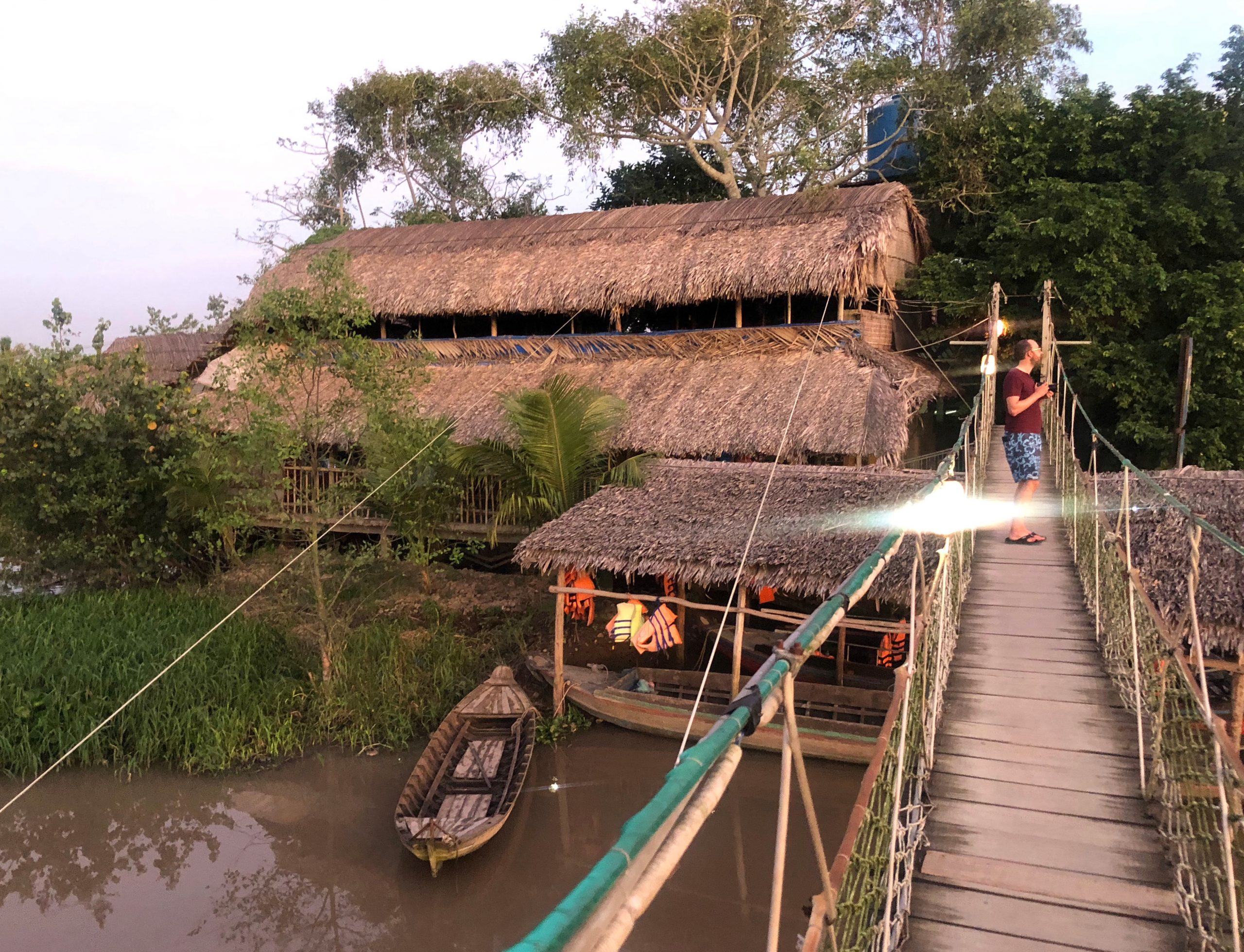
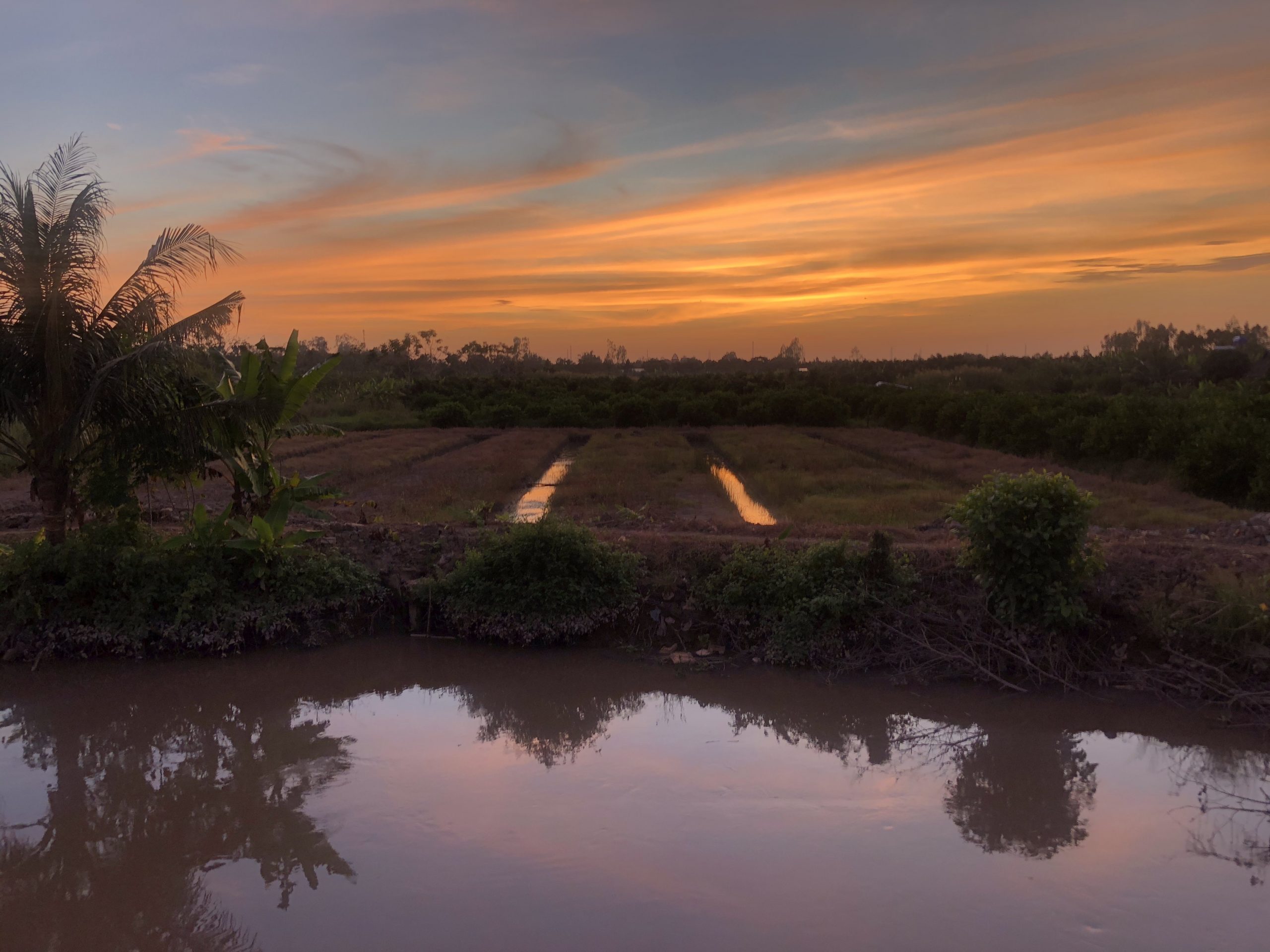
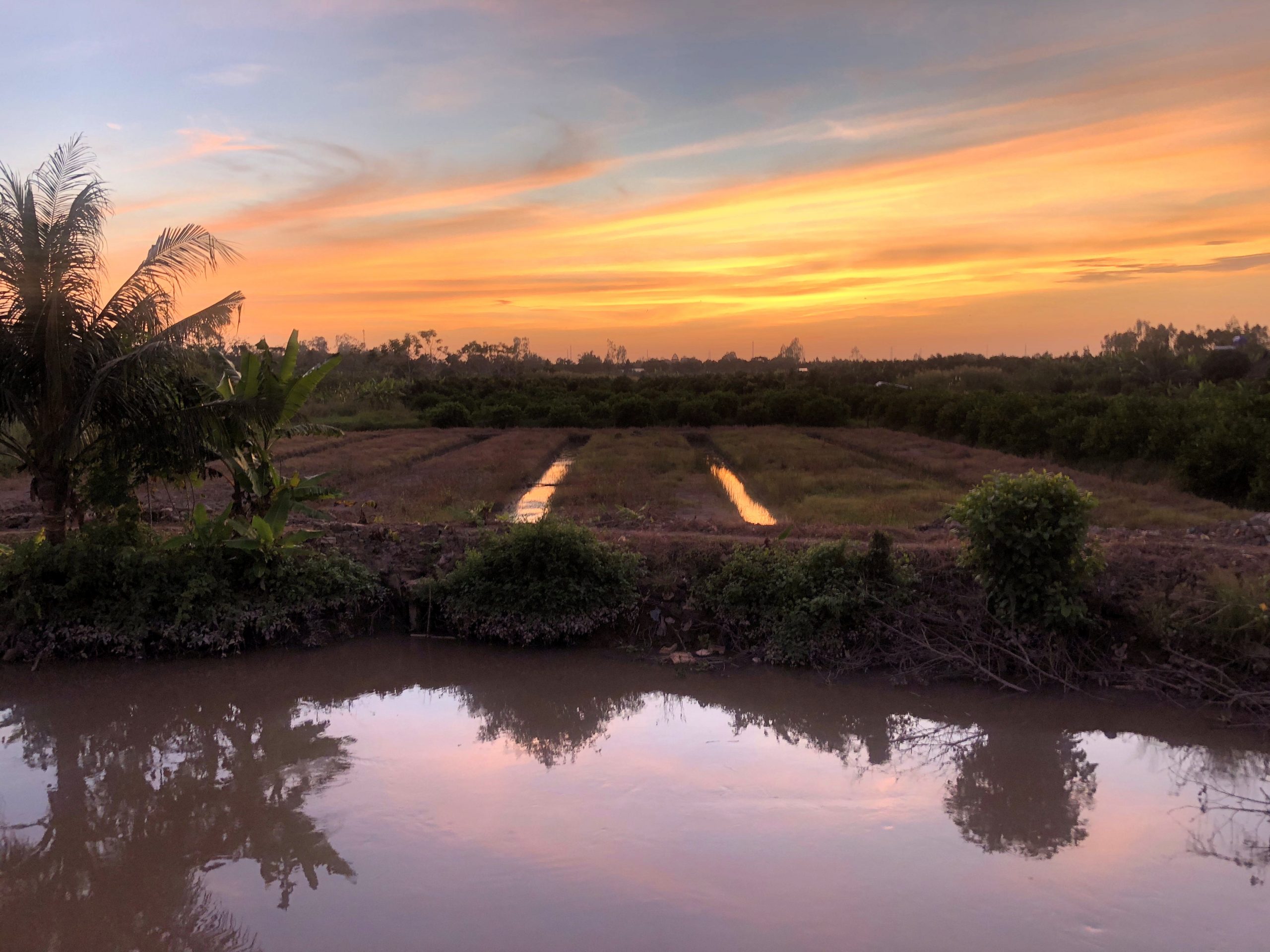
I booked a bed at a hostel called Nguyen Shack. From the time I made my reservation I knew this place was going to be a great place to stay. The reviews for it on the booking site were all lavish with praise and the pictures were enticing. Nguyen Shack did not disappoint. The staff spoke English and were very friendly and helpful. The food was delicious and the atmosphere was relaxing and homey. Nguyen Shack is a hostel so it might not be everyone’s cup of team. While there were private rooms I opted to share a 4 person room. There were two men whom I guess were German but were listening to French music and what sounded like French language lessons. I don’t know what was up with that. I didn’t ask. They kept to themselves and I didn’t intrude. Amiable indifference. The other fellow was a Frenchman named Fabrice. We had a wonderful evening swapping stories and playing the hostel’s acoustic guitar. He was truly talented while, at my best, I’m just a ham-handed hack. I met other interesting travelers in the dining/lounge are. A retired couple from Washington DC who were traveling with a Vietnamese fellow who seemed to be working as their private guide. The American man was stationed in Vietnam during the war and seemed to be genuinely interested in how the places he knew as a soldier had changed. Then there was the young British couple that had been traveling in Vietnam for 9 weeks. They would stay in a city until they had seen and done all there was to do for touristsand then move on to the next. I also met a Spanish family of 4 who had come to Vietnam as part of a larger tour around Asia. For more about my stay at Nguyen Shack check out my videos and photos.
Lessons Learned
Sometimes you have to leave a place when you don’t want to. If you can, build some extra days into your schedule so you can be more flexible.
Photo Gallery
Podcast
Video
[yotuwp type=”videos” id=”i4cVCJOrH1M” ]
Home | Photo Gallery | Podcasts | Videos
]]>2019/12/14
Tokyo to Ho Chi Minh City
Just Getting to the Start
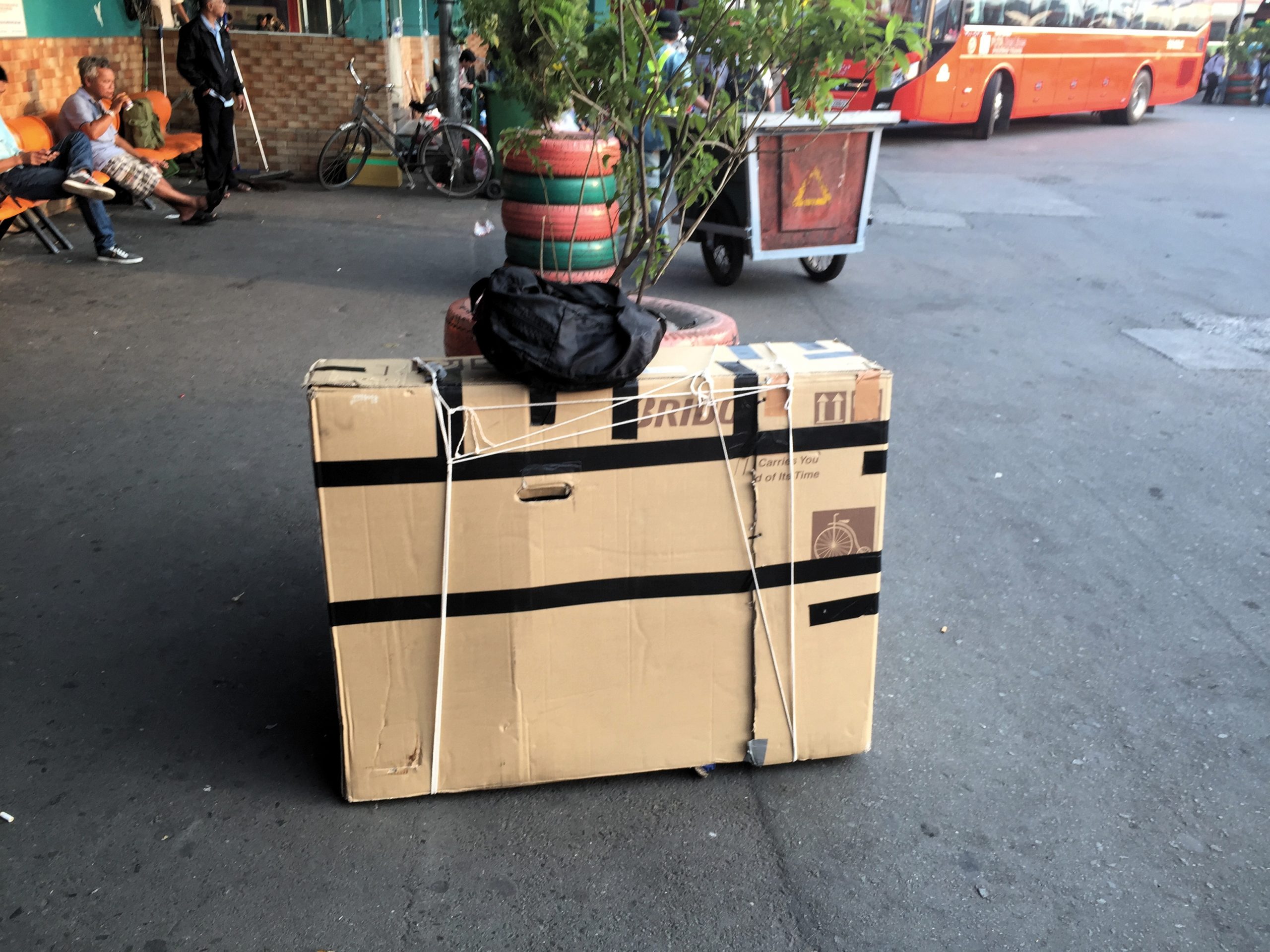
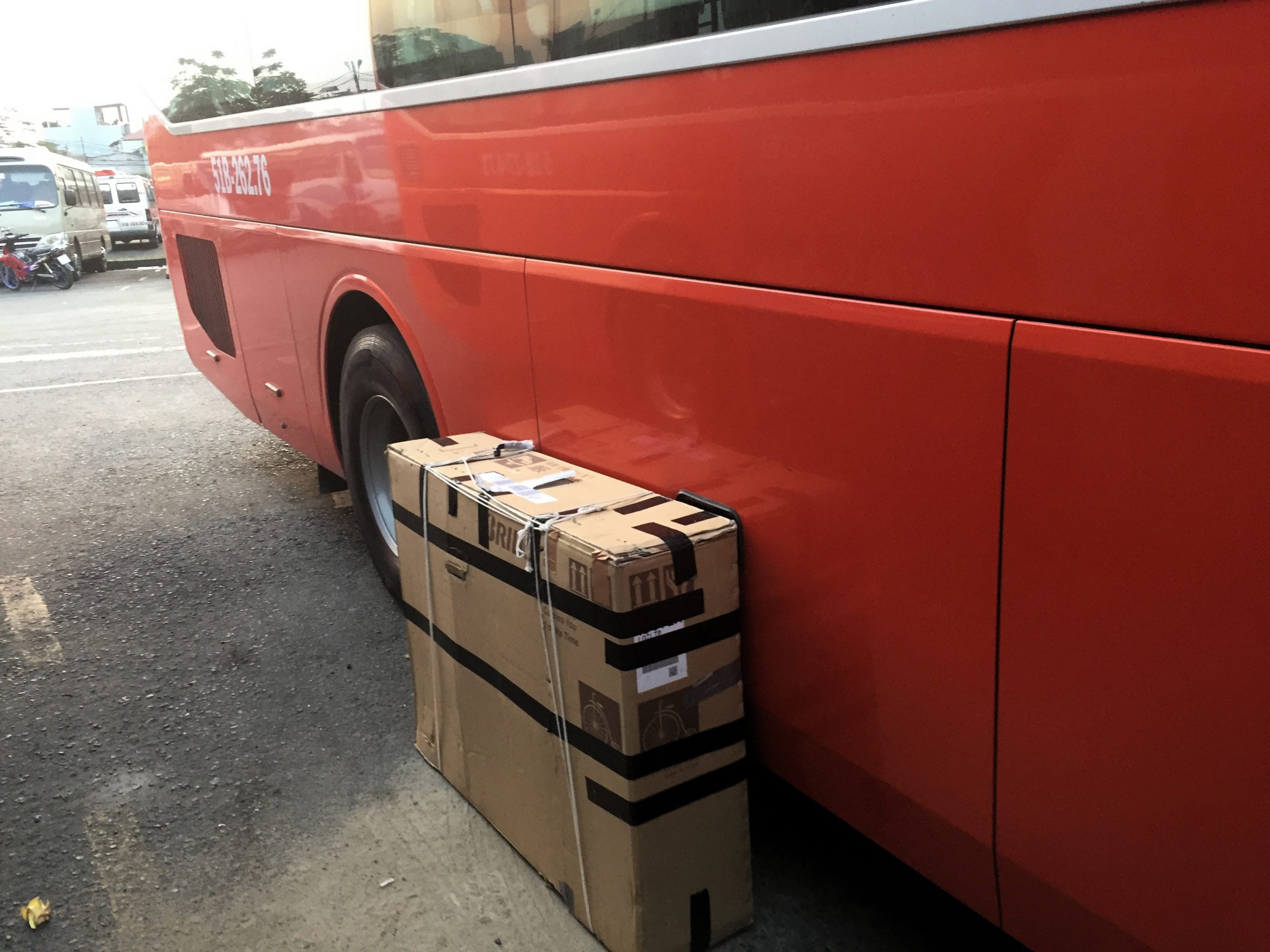
The day started way too early. I had to be at the Palace Hotel in Tachikawa by 5 am to catch the shuttle bus to Narita. My wife gave me and my big box a lift. I loaded it into the car the night before so I could get a few more minutes of sleep. I slept most of the way to the airport so the time went by quickly.
At the check in counter I hit the first snafu of my trip. I was informed by the check-in clerk that my big box of bicycle was going to cost me extra. I was expecting that. What I wasn’t expecting was how much extra. It was about twice as much as I was told when I called the airline. The box was 27 kg. Before the clerk told me how much extra I was feeling pretty good about how well I had done keeping the total under 32 kg. That feeling of euphoria disappeared quickly when I heard how much I would have to pay. I couldn’t even pay by credit card. At this point there was nothing I could do about it. I paid in cash.
How Much is Enough
That led to my next challenge. I had only withdrawn 60,000 yen the day before and part of that was already gone. How much currency should I exchange? When I was planning the trip I was keeping track of how much everything would cost and making estimates when I didn’t have actual numbers. My goal was to keep the entire trip under 100,000 yen including airfare. The biggest single expense being the airplane ticket and visa fees which were paid in advance. So how much should I exchange? I had to take into account that if I am able to stick to my itinerary I would be spending a couple of days in Cambodia. I would need some Cambodian currency too. I don’t even know what Cambodian currency is called let alone the rate. I did a little back-of-the-envelope calculation and decided on 20,000 yen for starters. I wanted to hold back some yen for later. While I was doing all of my desktop planning it didn’t occur to me to check if I could get Vietnamese and Cambodian currency at Narita. It turns out that Vietnamese Dong is available but not Cambodian mystery script. No worries. I will cross that bridge (or border) when I come to it.
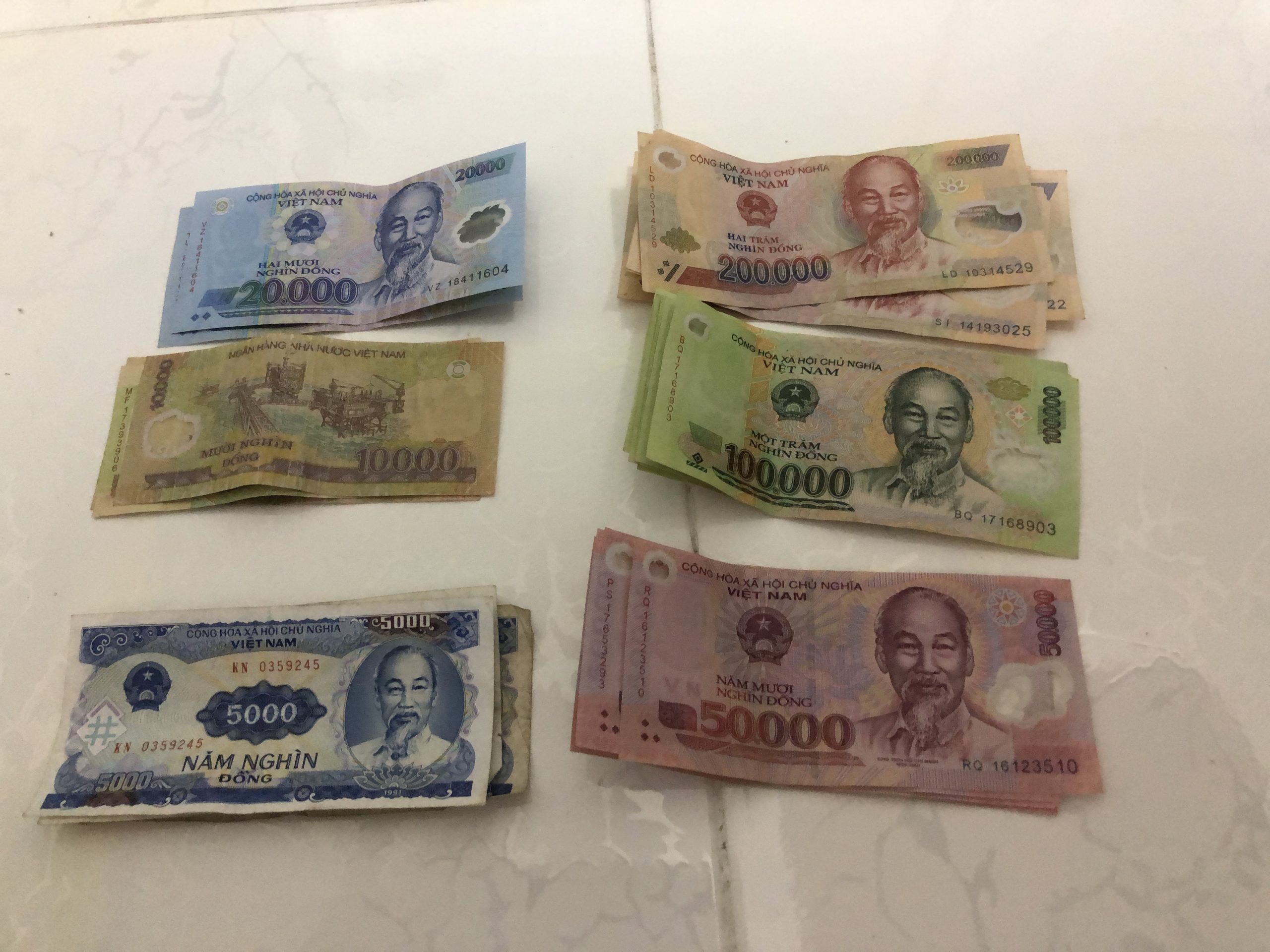
I changed 20,000 yen and instantly became a millionaire. I received 3.6 million dong in exchange. A wad of bills so thick I had trouble closing my wallet.
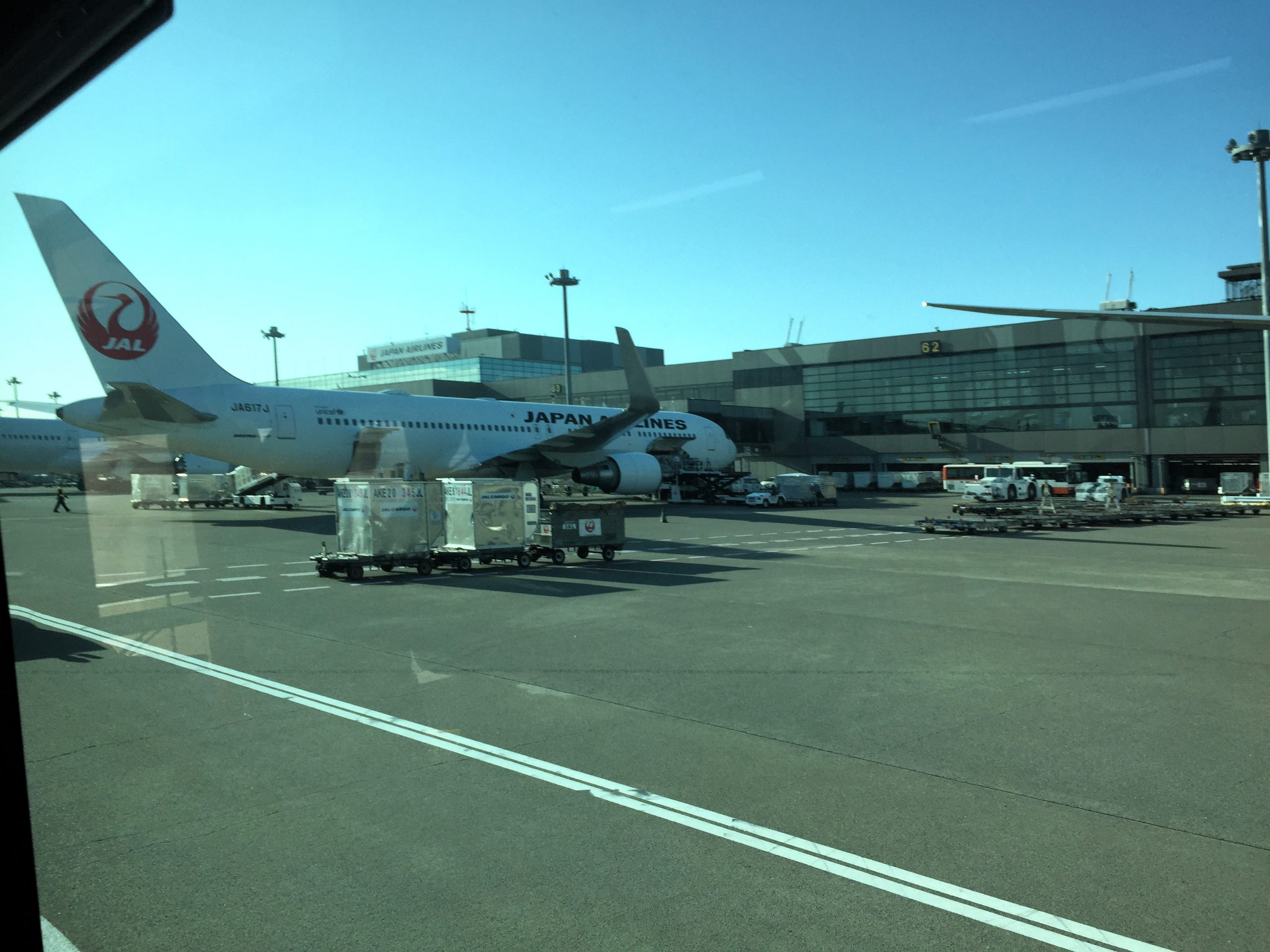
The airline for this trip is Viet Jet Air. A budget airline for sure. The Viet Jet Air gate didn’t service the really big jumbo jets. The planes don’t taxi all the way to the gate. You have to take a shuttle bus from the gate to where it is parked out on the tarmac. A new experience for me. Even smaller jets seem really large when you are on the ground level looking up at them.
I was lucky. I got a seat by the exit so I had plenty of leg room.
I arrived in Ho Chi Minh famished. When I bought my ticket I didn’t realize my airfare didn’t include a meal or even an in-flight movie. I munched on trail mix and drank some water. I’m glad I packed trail mix. At the time I didn’t know how often it would be a lifesaver during this trip. Outside the airport, I went to the first restaurant I saw, a Pho restaurant called Big Bowl. The sign boasted that it was made with wagyu (Japanese beef). I don’t know if that’s true or not but it was tasty, nonetheless.
Taxi Ride
My original plan was to catch the yellow bus from the airport to the center of the city and from there get a taxi to the Futa bus terminal. When I saw that the yellow bus didn’t have a cargo bin underneath I decided it would be more efficient and easier to just get a taxi all the way to the bus terminal.
I was approached by one man who was asking 450,000 dong. I turned him down because I was looking at a sign that said taxi ride for 90,000 dong. I also remembered that there was a warning about unsanctioned taxis that would rip you off. I didn’t take the 90,000 dong taxi. I eventually settled on a 300,000 dong taxi. I don’t know why I didn’t even try for the cheaper taxi. Maybe I was just tired. There was a guy offering me and my big box a ride. I think the box was the deciding factor. I knew it wouldn’t fit in just any taxi and since the guy saw the size of my luggage I felt confident that he would be able to find a taxi that fit. Additionally, he wrote down the amount on a receipt so I felt that I probably wouldn’t be hit by any sudden and inexplicable inflation once I got in the car.
The driver didn’t speak any English but the man that set up the ride spoke a little English and I told him that I wanted to go to the Mien Tay Futa Bus Terminal. Despite this, I was still worried that they driver didn’t know where I wanted to go. We spent the majority of the trip trying to communicate. He had an app on his phone that he would speak into and it would translate his words into English. I could speak into it and it would translate my words into Vietnamese. Very convenient. This was my first time on the streets of Ho Chi Minh City and they seemed so crowded and chaotic to me. I was worried that the driver was going to hit someone every time he took his eyes off the road to look at his phone. At one point, we had a moment of levity when the app on his phone failed to transcribe his words correctly. The English translation said something like “Lin’s head is crazy”. I assumed that his name was Lin. It was clear there was an error but I couldn’t figure out for the life of me what he was trying to say. The driver must have realized that something had gone wrong from the confused look on my face. He looked down at his phone. He must have seen how crazy the transcription was because he started to laugh. I did too. The core of the communication hurdle was that the ticket booth for the bus and the actual terminal were not it the same place. When we were both satisfied that we understood each other I was free to watch the scenery as we drove through town. I was glad that I was not starting my bicycle ride here in Saigon.
We eventually arrived at the ticket seller. Mr. Lin offered to wait for me while I bought my ticket. That was nice of him. I admit the thought crossed my mind that this was a ploy to get more money from me. But I had no viable option. I negotiated the ticket transaction and returned to the car without any mishaps. He drove me to the actual terminal. There was an entrance fee for entering the terminal lot. It was my understanding that I would have to pay this and I was fully prepared to. When the time I see Mr. Lin struggling in his mind over how to tell me but then I saw him give up. Perhaps, he decided that the effort to communicate the request was not worth the result. Thus, I arrived at Mien Tay Futa Bus Terminal.
On the Bus
The Futa Bus Company runs highway buses from Ho Chin Minh City to many other cities in Vietnam. The bus terminal was a large and very busy place. The bus number was written on the back of my ticket. I was told the bus would be leaving a 5 pm. The trip from Mien Tay to Soc Trăng is a 6 hour journey so I was beginning to get concerned about my hotel reservation. Especially as 5 pm rolled around and there was no sign of my bus. While I waited I bought a soft drink from a woman selling drinks and other stuff in front of the waiting room and I bought 2 loaves of french bread from a man who was working his way through the bus stop selling bread out of a big plastic bag. The bread seemed like a particularly good deal.
The bus finally arrived. Futa buses are like no other bus I have ever ridden on. The buses are clean and air conditioned but they do not have a bathroom on board. That is not the exceptional part. They are unique in that they do not have regular bus seats. Instead they have something that resembles bunk beds. You cannot fully lie down but you can recline with your legs straight out in front of you or you can lay down with your legs bent. All in all it was reasonably comfortable. The only downside is that I had a top bunk which was very close to the ceiling of the bus and put me in danger of going into a coma from a head injury every time the bus hit a bump. You can see what the inside of the bus looked like if you watch the video or look at the photo gallery.
The despite leaving a half hour late we got to Soc Trang faster than I expected. Fortunately, the walk from the bus terminal to my hotel was only about 500 meters. At just a little bit before 11 pm there were few people out on the street to see me humping my 27 kg big box along the street to my hotel.
Photo Gallery



Video
[yotuwp type=”videos” id=”t3t3hd6_DWg” ]
Home | Photo Gallery | Podcasts | Videos
]]>