2020/08/11-2020/08/12
I just had to break out, bust loose, escape. I started a new job in January and my bicycling habit changed drastically. My new office was too far to commute to by bicycle and even if wasn’t I was putting in too much overtime. Then COVID19 hit. I followed government guidelines and stayed home. Working from home 5 days a week just made it easier to work more. I thought I could take a little time off during Golden Week in the beginning of May but it didn’t happen. Too busy. Then June brought an unusually long and wet rainy season that went all the way into July. August didn’t get any better but I was ready for a break. I had been working from January without taking any time off, not even for national holidays. In the immortal words of Popeye, “I can takes it no more.”
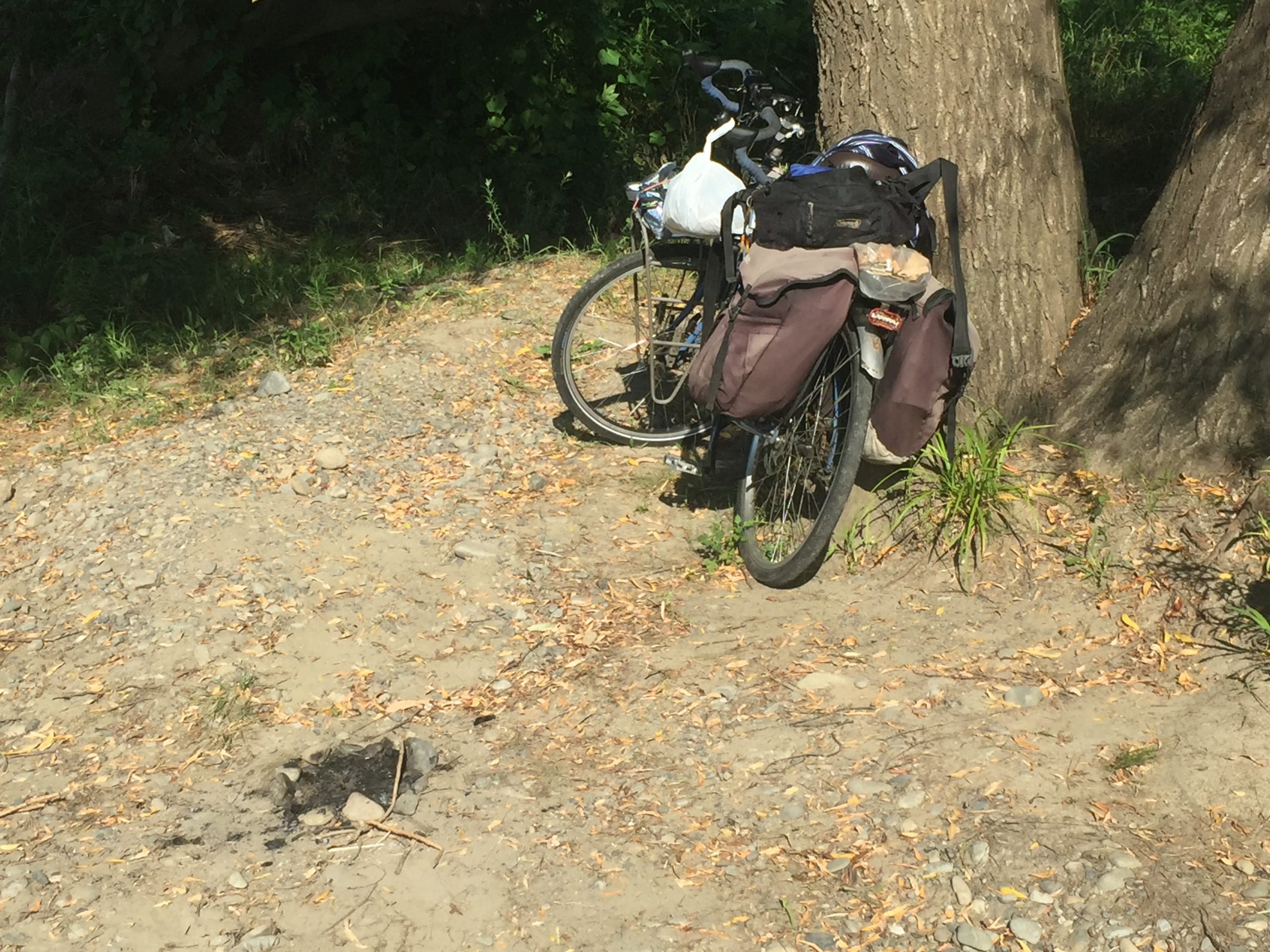
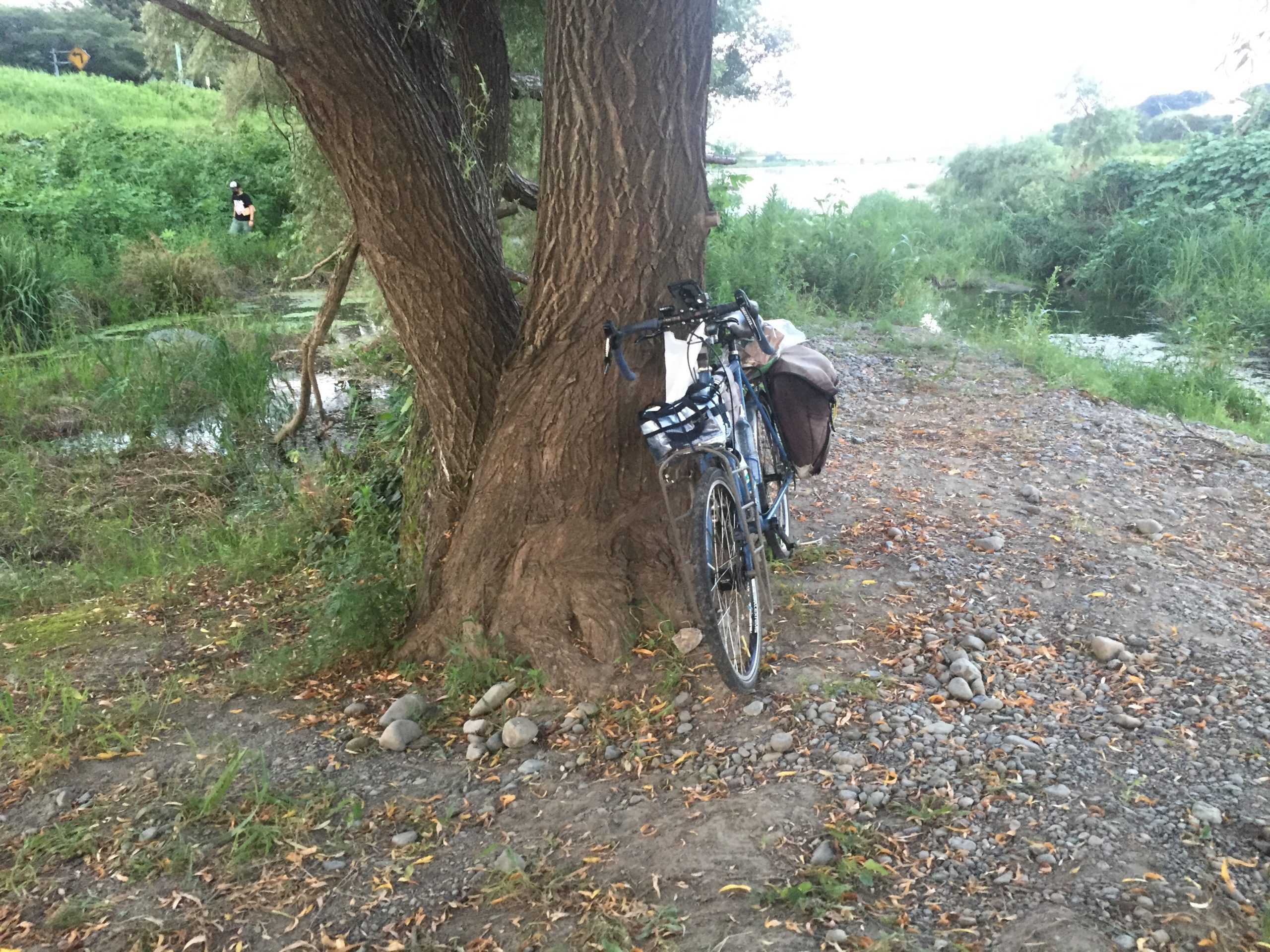
I packed up my gear and headed to the river for a bit of cycling and stealth camping. The city or maybe it was the prefectural government fenced off the river bank by Kyodo no Mori Park but I found a place upriver from where I usually camp. It was only about 8 km from home but it was far enough away to feel like a trip. Just far enough into nature to feel like I was out of the city even though it was usually just out of sight. This little trip offered a welcome respite from the cabin fever I was feeling.
During April and May we were encouraged and, in some cases, required to work from home. But from around June it was acceptable to return to the office up to 50% of the time. I still do part of my commute by bicycle but it is too far to go all the way by bicycle.
When I ride, I don’t wear a mask for a number of reasons. 1) In very hot weather, like a Japanese summer, it is very uncomfortable and potentially dangerous. Especially if you are exercising in any way. There is a risk of heat stroke or heat exhaustion. 2) In cold weather, it makes my glasses fog up and that, too, is dangerous when you are riding a bicycle. On the other hand, a mask keeps your face warm like a scarf or ski mask would. I have never a big fan of either of those pieces of cold weather gear. 3) And finally, I just don’t like wearing a mask. I feel more tensed up when I wear a mask. I find myself clenching my jaw more often. I don’t see that not wearing a mask when I ride is a problem. When you are riding a bicycle you naturally social distance from others. If you are not, it probably means you just had a collision with a pedestrian or vehicle. I hear that bicycles colliding with other road users is a bad thing so I try to avoid them. They can mess you up just as much as a virus infection. I do try to maintain my distance from other road users when I stop at intersections.
Hopefully, next year will be a better year for bicycle touring. I still want to take a trip around Mt. Fuji along the Olympic road race course.
Photo Gallery
Video
[yotuwp type=”videos” id=”98PqOd7q5Lc” ]
Home | Photo Gallery | Podcasts | Videos
]]>2019/08/17 – 2019/08/18
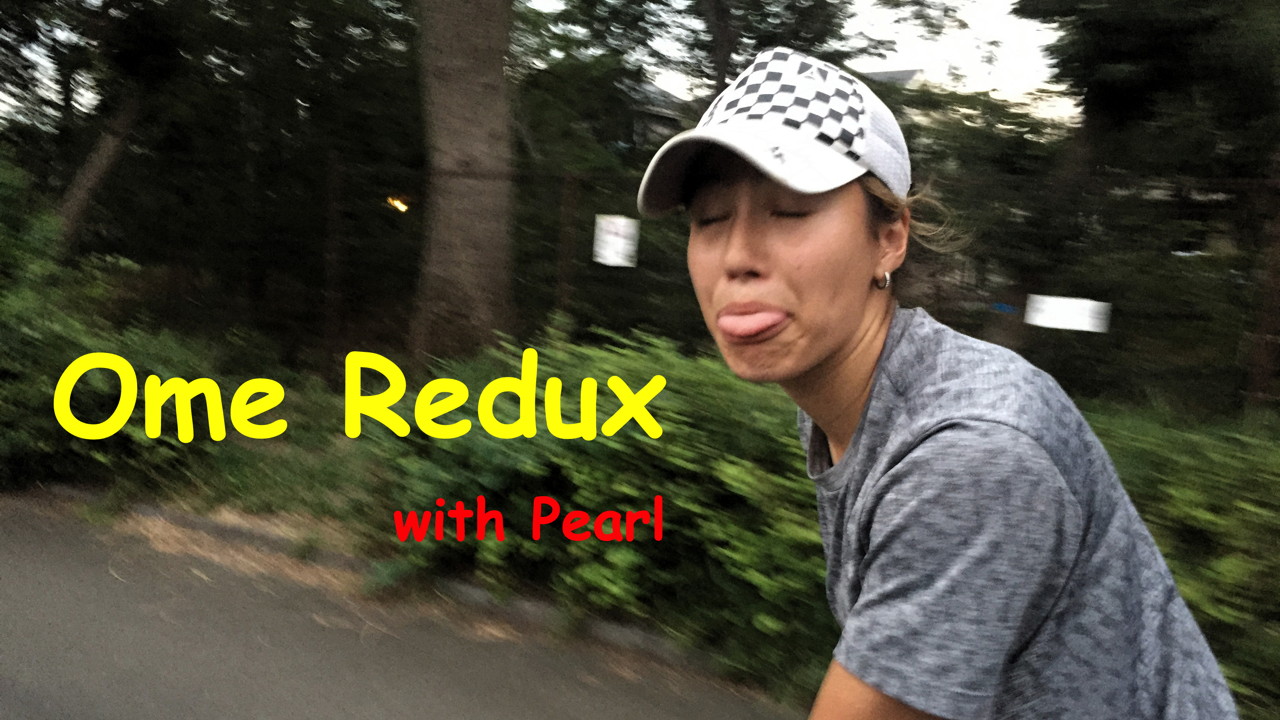
I returned to Ome hard on the heels of my trip the previous weekend. This time with my daughter, Pearl. We left late in the afternoon and arrived in Ome well after dark. Having been to Ome the previous weekend the route was fresh in my mind and we found our way to Kami no Fuchi Park on a peninsula jutting into the river in the midst of Ome City with no trouble at all.
Day 1
We both had prior appointments barring us from an early start. The plan was that we were going to meet where Tamagawa Josui Canal crosses Tachikawa Dori. I was busy during the day and forgot to attach the rack to her bike. She had to do it on her own. It is a hassle because a rack and her kickstand can co-exist on her bicycle. In order to remove the kickstand you have to remove the rear axle. Despite this, she handled the task on her own. When we finally met up I did have to tight her quick release axle but other than that she did the job.
We rode along Tamagawa Josui until we got to Haejima. It used be there was a traffic light on highway 16. That was the only safe way to cross the road. But some time in the last few years they replaced the traffic light with a bicycle and pedestrian tunnel under the highway. On the west side of the road the trail becomes very narrow. Basically single track going through a wooded greenway. It was my first time on this path. After dark is probably not the best time to go down a unlit path for the first time. But it wasn’t far and we didn’t have any problems.
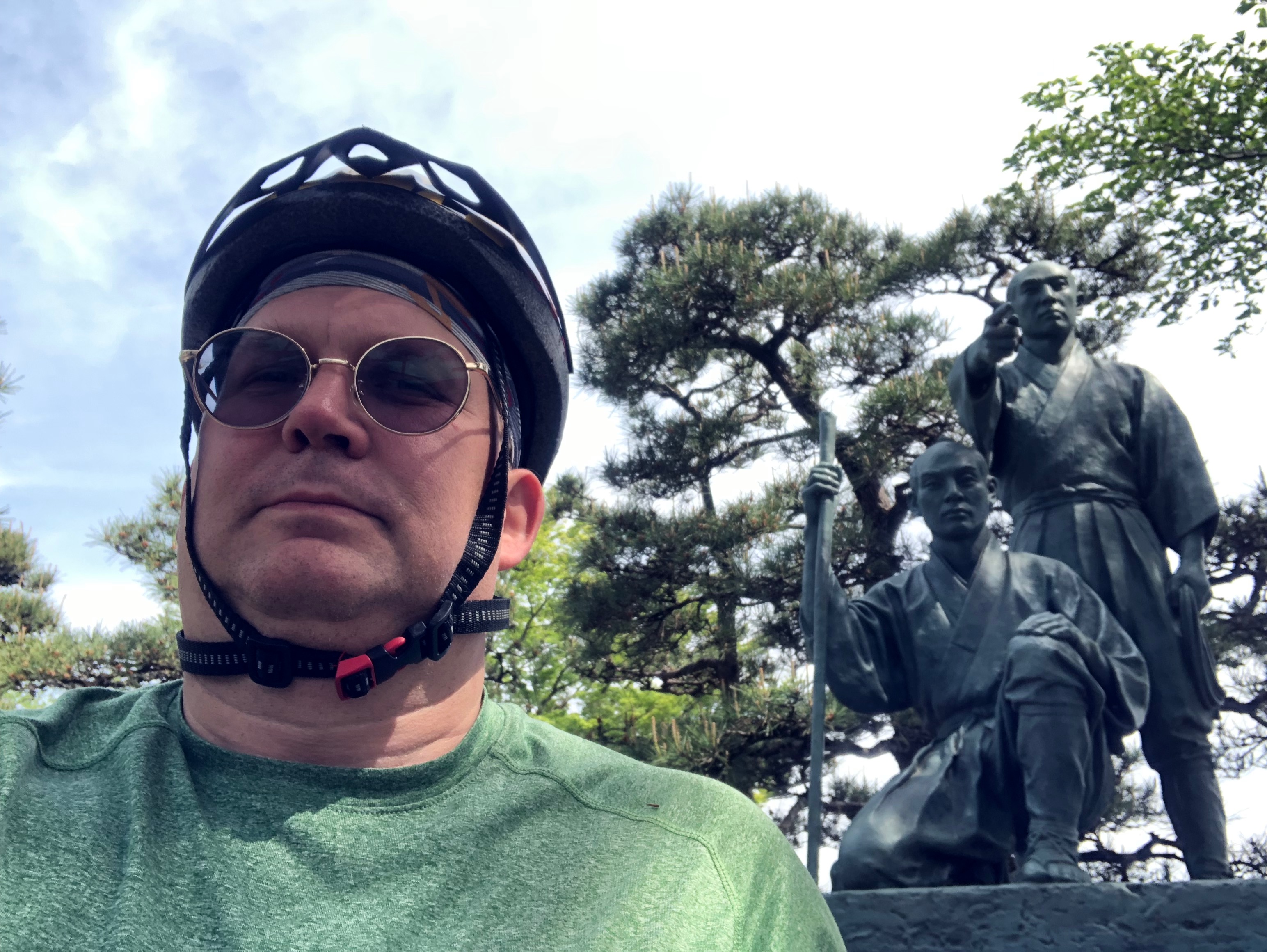
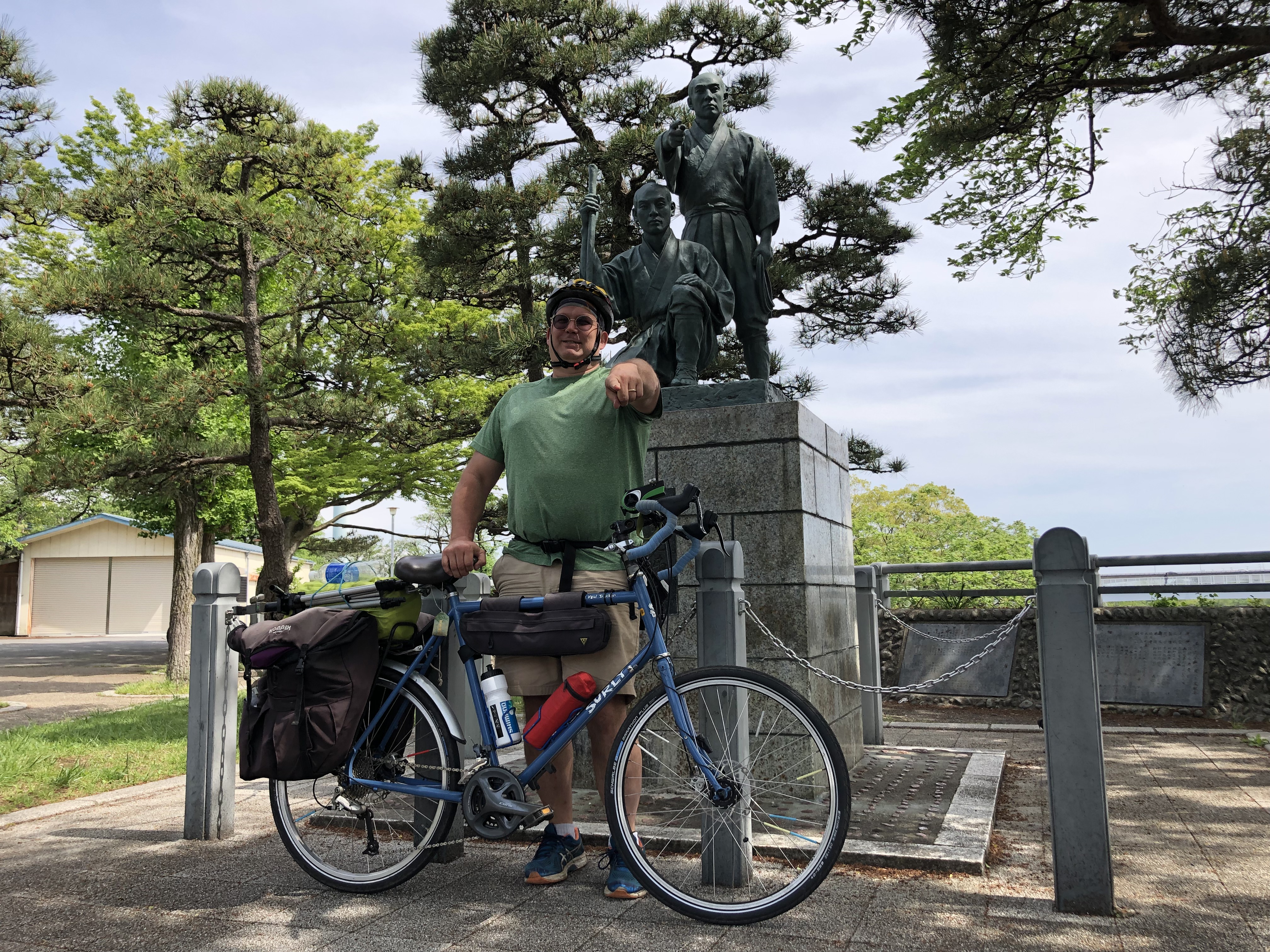
Serendipitously, I found Kumagawa Gocho-Bashi Dori, the road that cuts over to Okutama Kaido and eventually the Tama River. It was my first time riding the western end of the Tamagawa Cycling Road at night. It is not lit at all. Fortunately, it is not heavily used after dark. We took a brief rest in Hamura where water is diverted from the Tama River to make Tamagawa Josui Canal. It was too dark to see the Tama Brothers statue. From Hamura it was less than an hour to Kami no Fuchi Koen where we made camp.
One of our camping neighbors had a dog with a nervous disposition. The slightest disturbance set it to barking its head off. I got up in the middle of the night to go the bathroom and had to walk past barking mutt’s tent. It had finally stopped barking for a while but when it heard me walk past the tent it starting yakking again. Somewhere on the other side of our tent there was another family with a dog. At times bother were barking like they were have a long distance gossip session or were trading smack talk. It was a noisy night.
Day 2
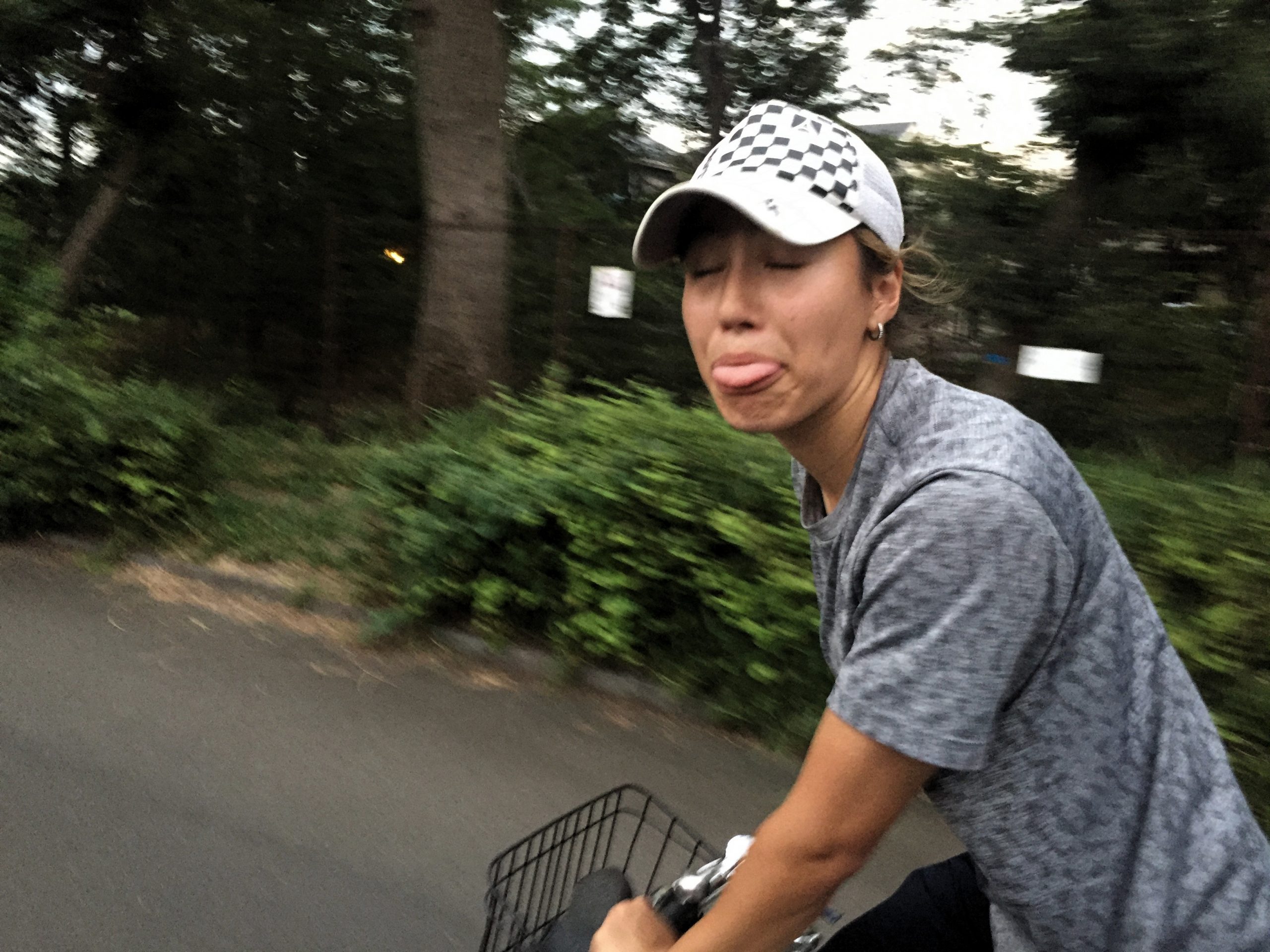
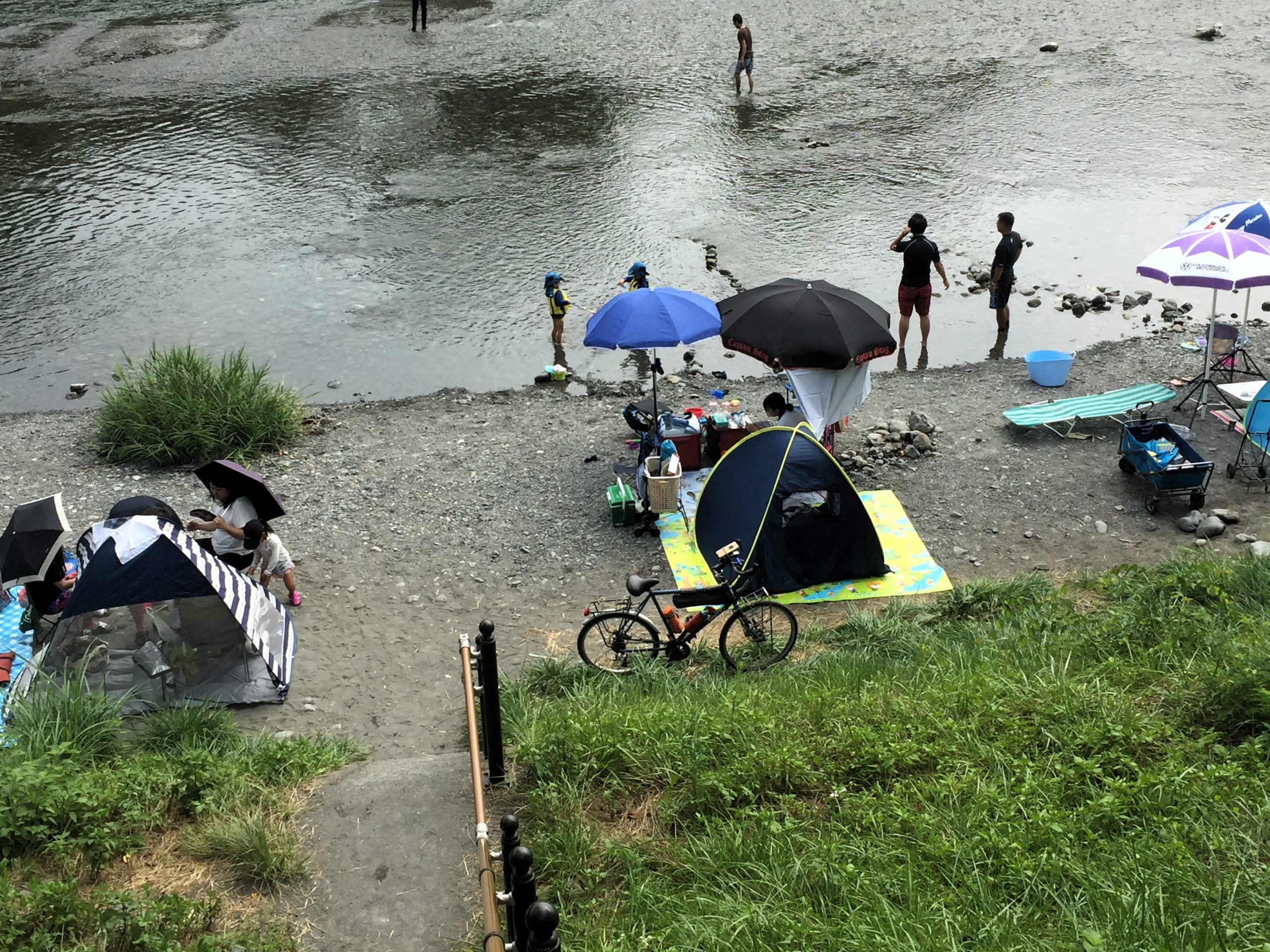
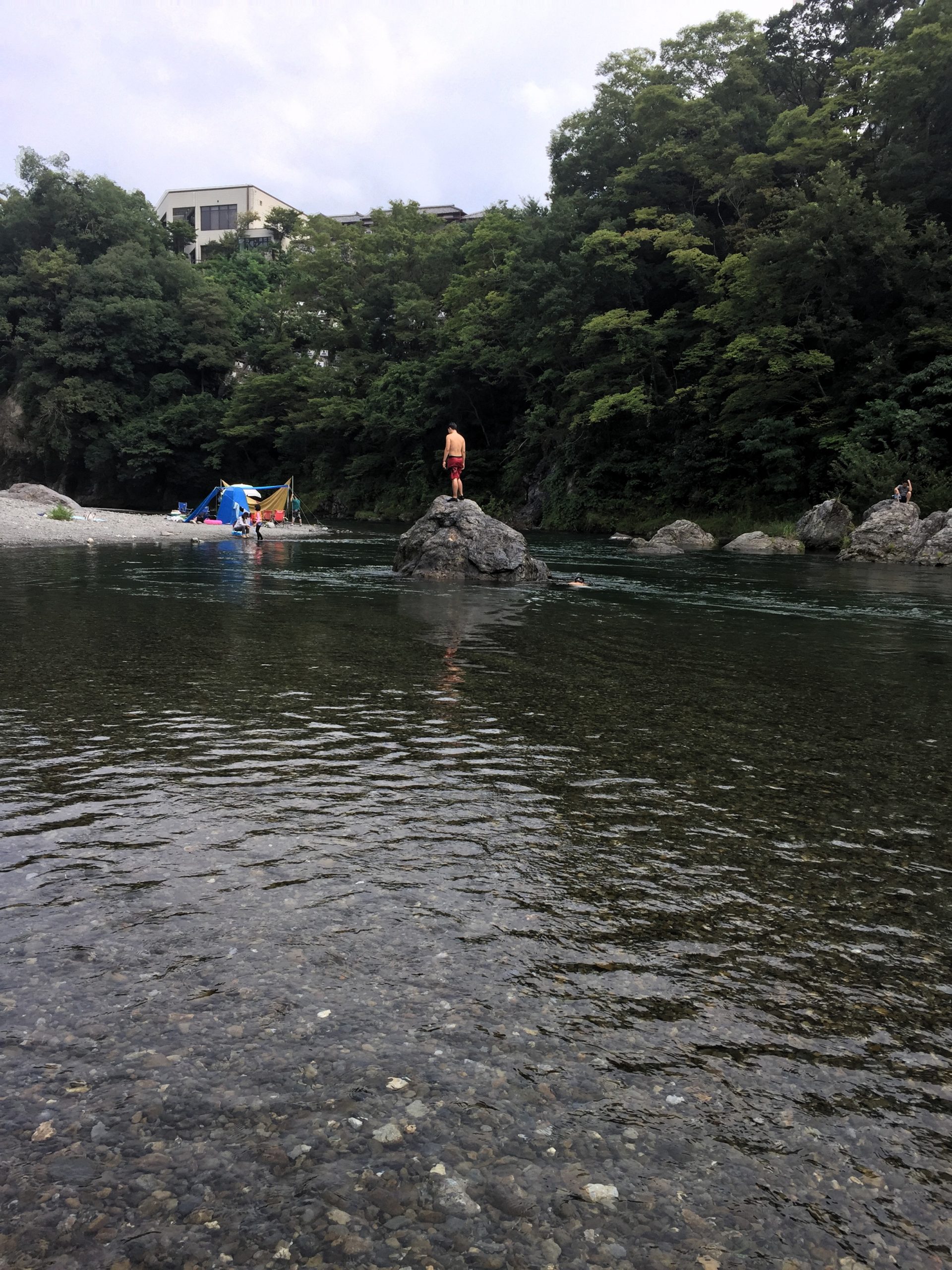
I tried to sleep in but between nervous mutts and early day campers I couldn’t sleep much. We hung out in the park for a while and Pearl waded into the river. The river bed is rocky and not easy to walk barefoot on. I forgot to bring flip flops so I stayed out of the water for the most part.
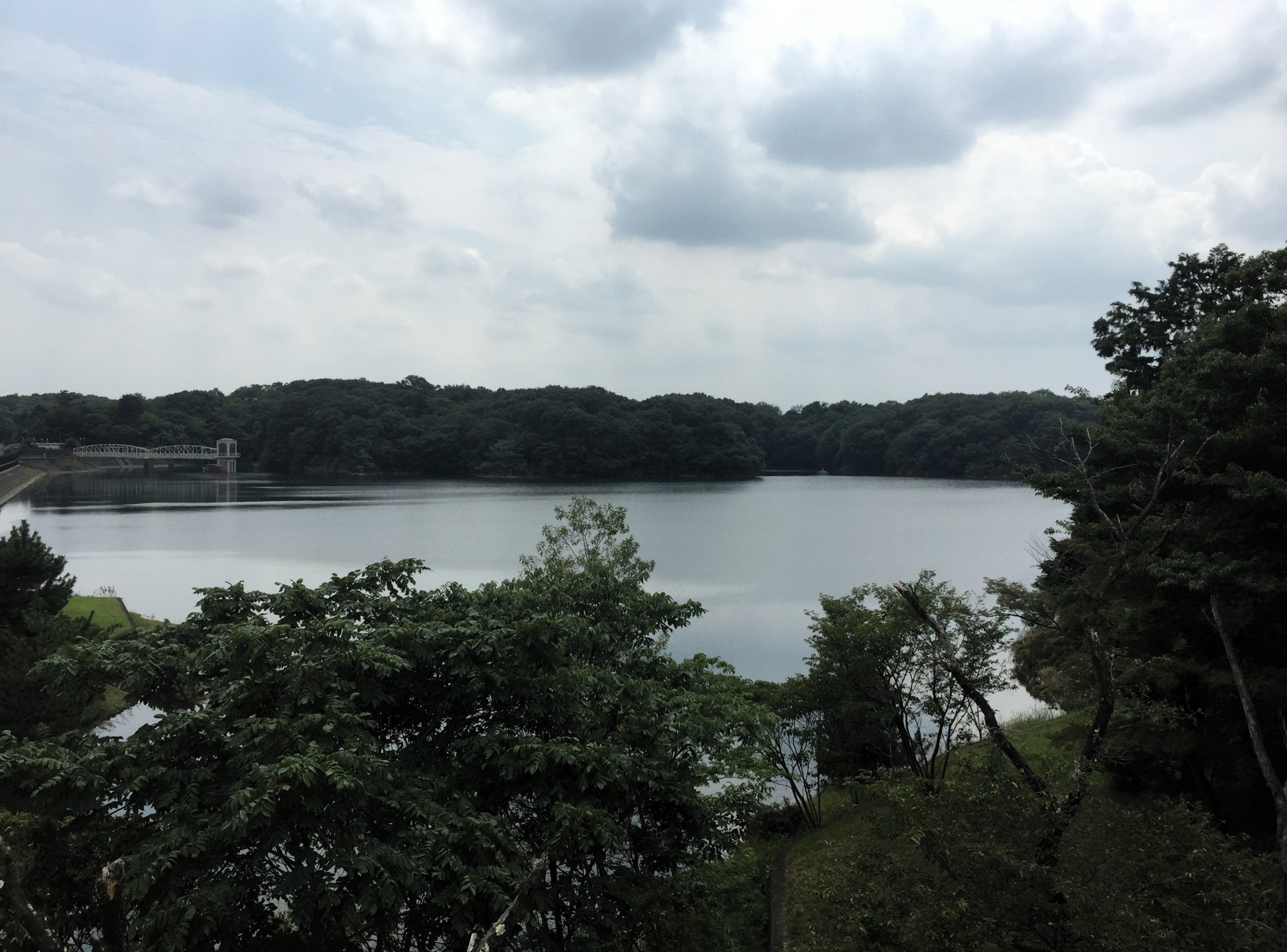
We didn’t have a fixed plan for our second day. Maybe we would go to Okutama and Ogochi Dam, maybe not. In the end we decided not to go to Okutama. Instead of going home directly we detoured due east to take a loop around Lake Tama on the Tama Cycling Road. That was really nice and going clockwise around the lake is a rare experience for me.
Lessons Learned
Don’t forget flip flops or some kind of shoes to wear in camp. Something that will dry quickly or it doesn’t matter so much if they get wet.
Photo Gallery

Video
[yotuwp type=”videos” id=”ynbnKVx2RiY” player=”loop=1&playing=1&playing_description=1″ effects=”video_box=ytef-grow”]
]]>2019/08/09 – 2019/08/11
In mid-August I took the opportunity to go for a weekend bike tour. I had 2 nights of stealth camping. After work on Friday I rode about 50 km to Ome. This time I was rolling without a plan for the most part. At best it was very vague. Ride to Ome, spend the night. The next day, ride to Okutama and Ogochi Dam. Either stay the night there or continue on around Okutama Lake or return to Ome or go home. See? A very nebulous plan.
Day 1
There is a campground outside of town up in the foothills surrounding Ome. Before leaving I noticed I noticed on a park inside the bend of the river right in the center of town. The park looked like it might be a good place to do some stealth camping. The campgroundin the hills is called Kaze no Ko, Taiyo no Ko campground. (The name doesn’t exactly roll off the tongue.) I stayed here once a couple of years ago when I participated in the Lake Okutama century ride. It only costs 300 yen a night. Like most other campgrounds in Japan you need to make a reservation. This particular campground only has a few camping spots. I called city office which manages the campground to make a reservation. There were openings the problem was that you have to check in by 4 pm. That wasn’t going to happen as I was leaving after work. I decided to take my chances and go anyway. In the worst case scenario where all the official camping spots were taken I could probably still find a place to pitch my tent. As it turned out I needn’t have worried. There was only one other family in the campground when I rolled in around 9 o’clockish. I pushed my bike up the steps to the spot farthest from the family so that we could both have a modicum of privacy. They were curious and probably a bit worried at first about my late arrival but after talking the father a for a minute they seemed to be reassured that I wasn’t some crazy criminal (just a crazy foreigner). When I packed up and left about 7:30 in the morning the camp administrator still hadn’t come by to check so I stealth camped in an official campground for free. I would have gladly paid 300 yen if asked but nobody asked.
It was very humid. I noticed that the humidity went up as the temperature dropped during the night. When I finally tucked in for bed around 11:30 there was a 85% humidity. The humidity made it hard to sleep. I’m glad I didn’t bring a sleeping bag on this trip. It was not needed at all. Trying to sleep inside a sleeping bag when all sweaty would have just stunk the whole thing up. I just laid out on top of my air mattress. It took me a long while to sleep.
Day 2
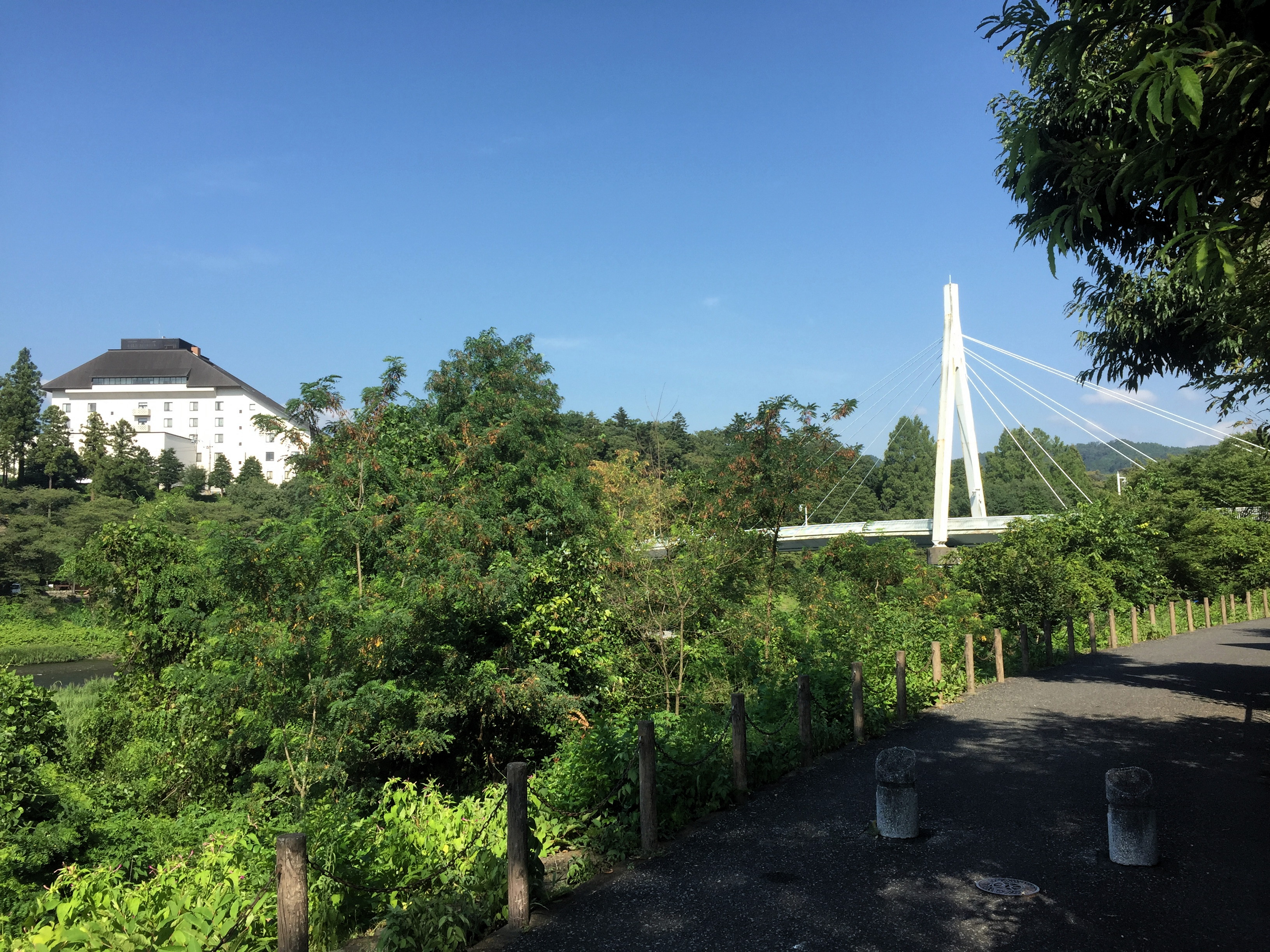
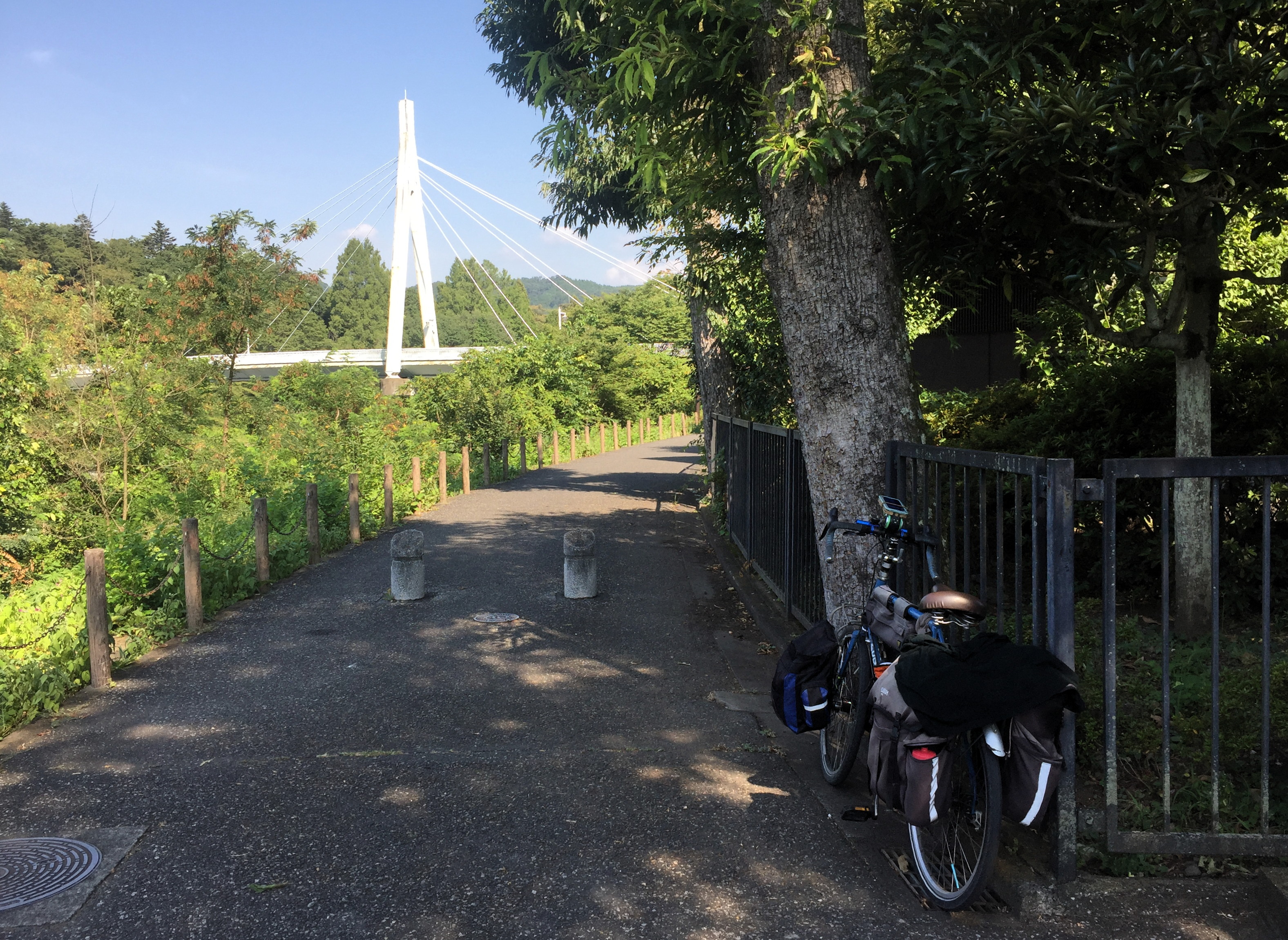
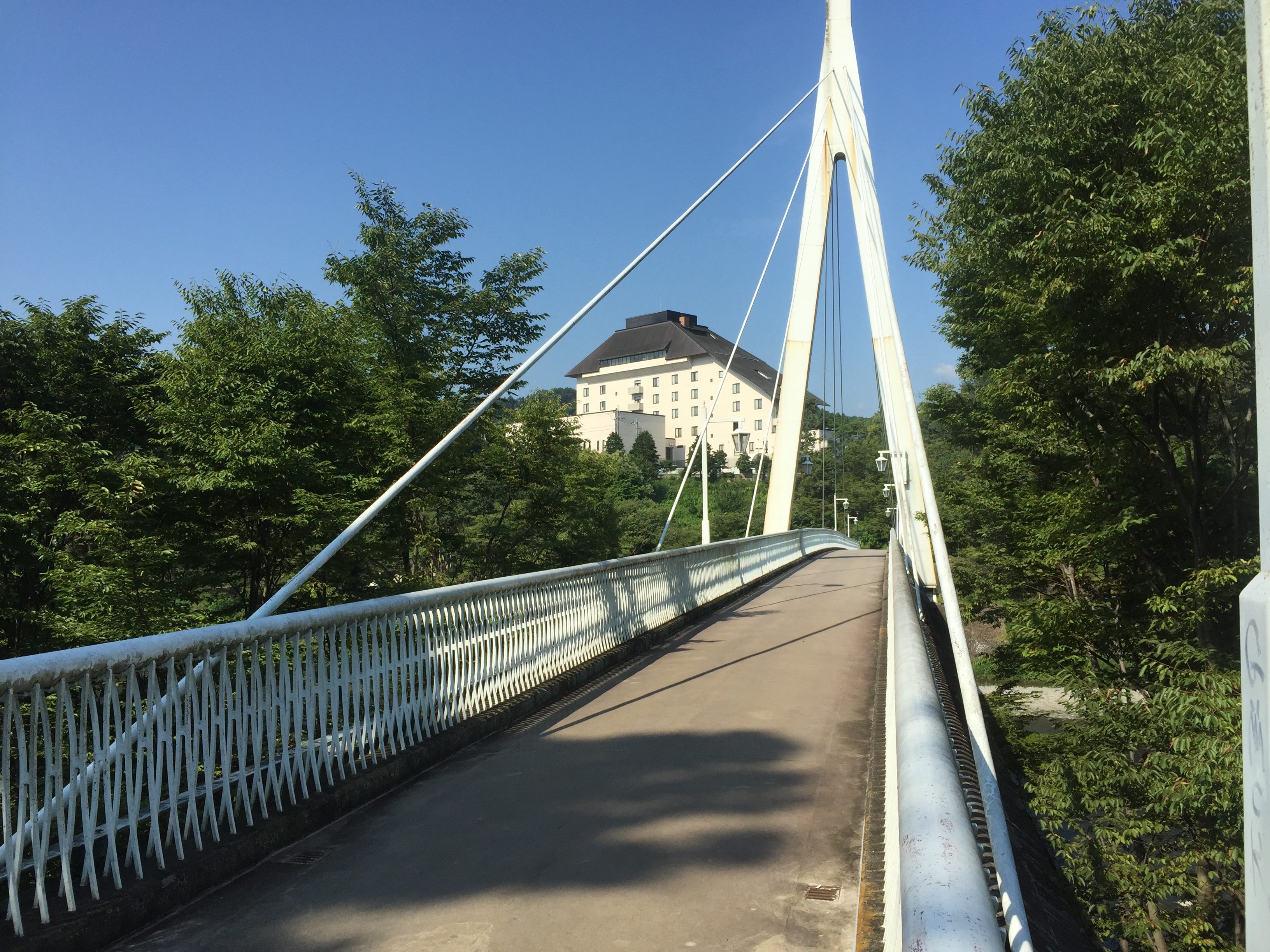
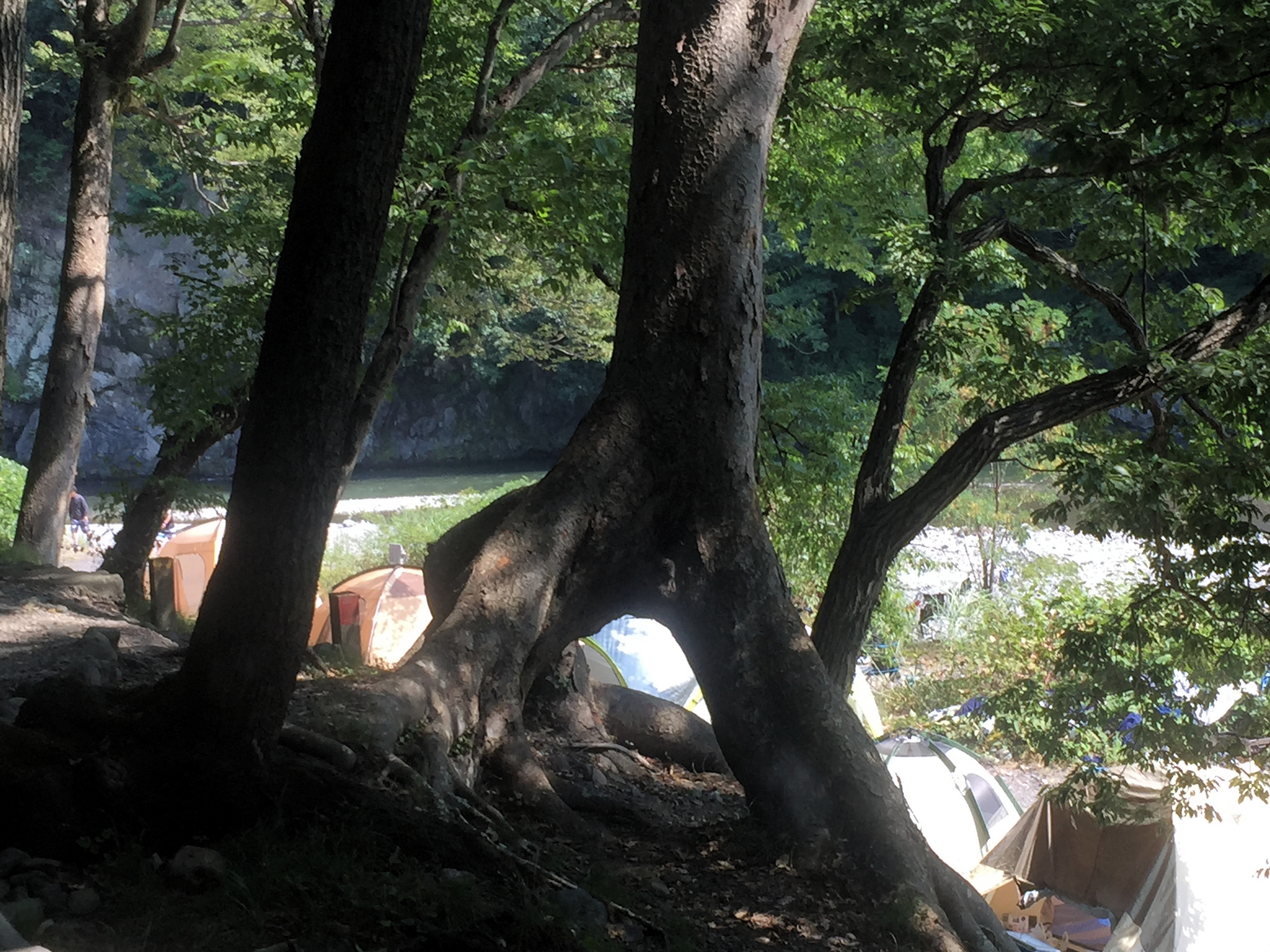
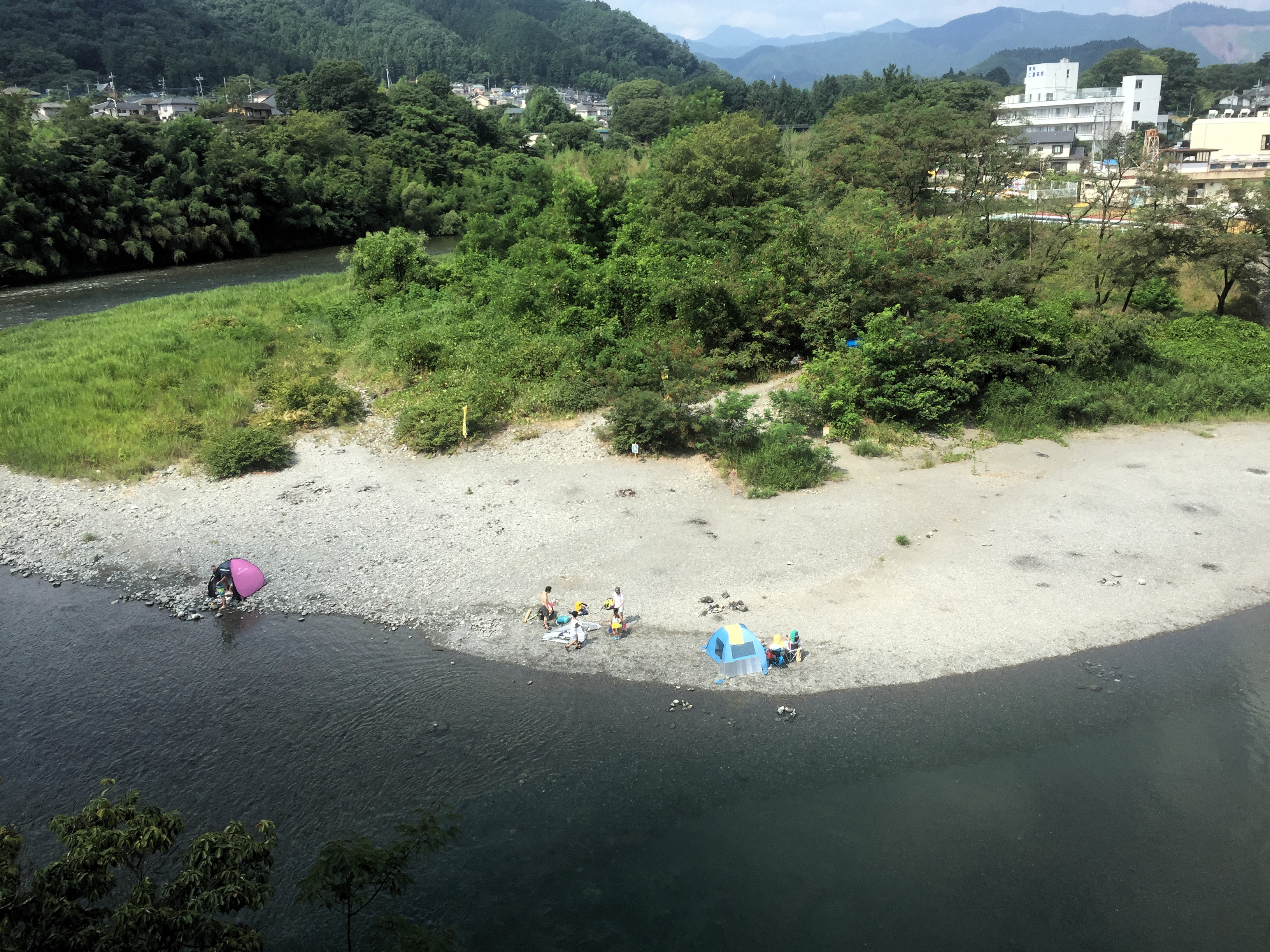
Before starting for Okutama I decided to checkout the park nestled within the bend of the river in the center of town. The park is called Kami no Fuchi Koen. It wasn’t that far from the campground and it was mostly downhill to get there. It turns out the park is quite nice. The river makes a large u-turn which creates a peninsula shaped feature that is surround by the river on three sides. The park is accessed by two footbridges and a path from the fourth side. There is a grassy area up on the banks of the river under the shade of trees and rocky beach along the waterline. I thought I could stealth camp in the wooded area but it turns out that camping is allowed – for free – on the beach.
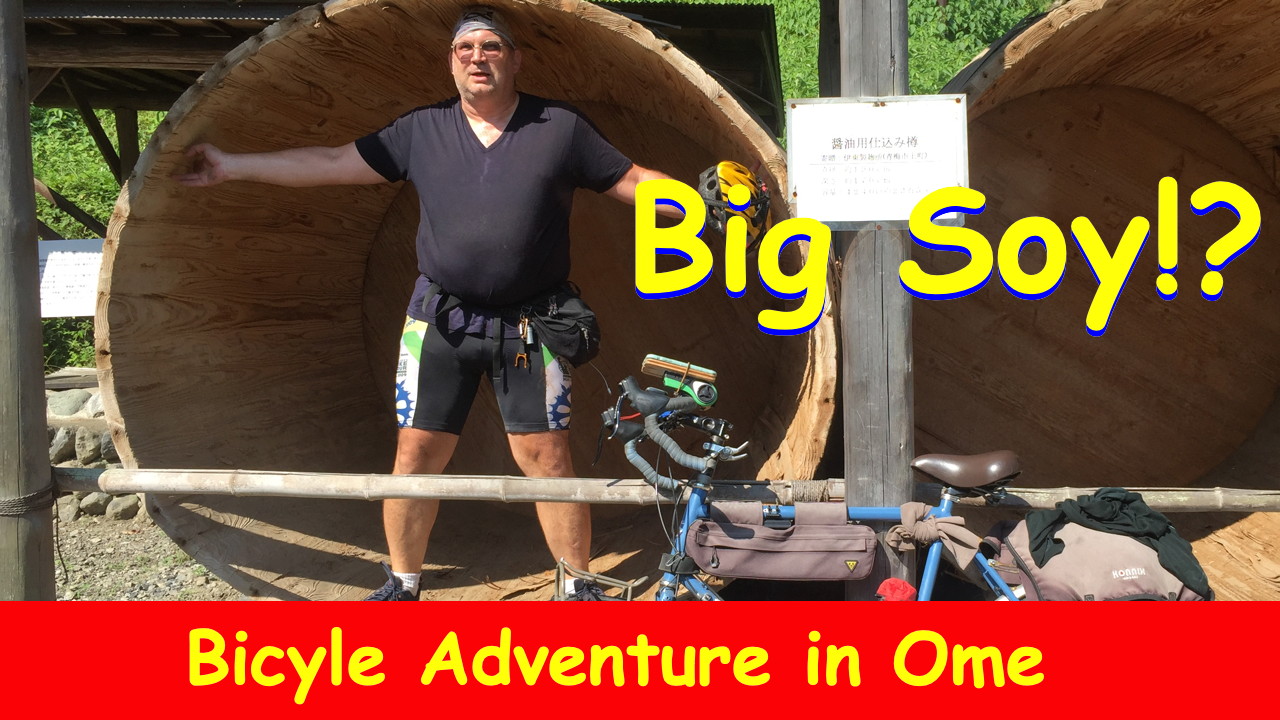
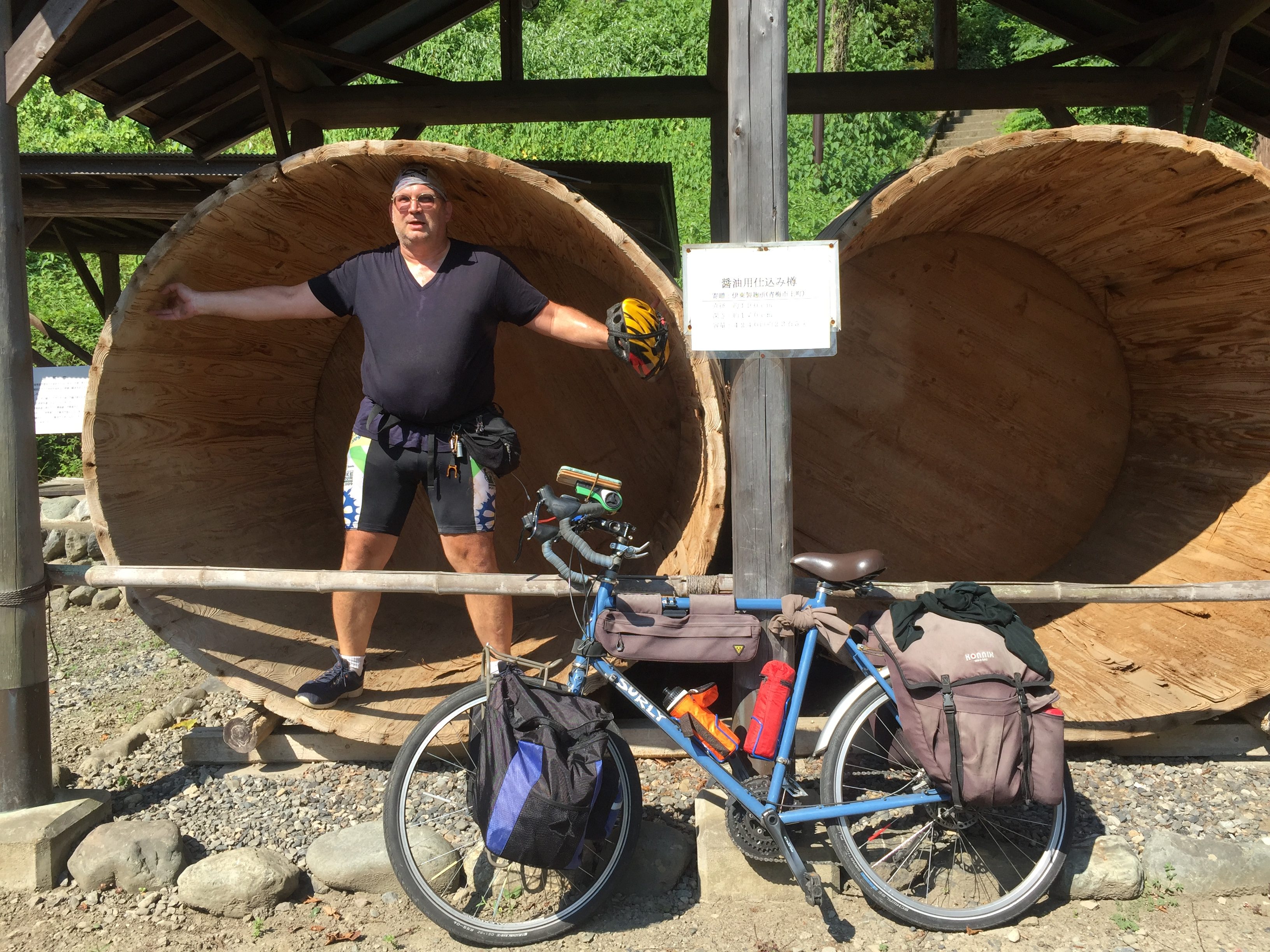
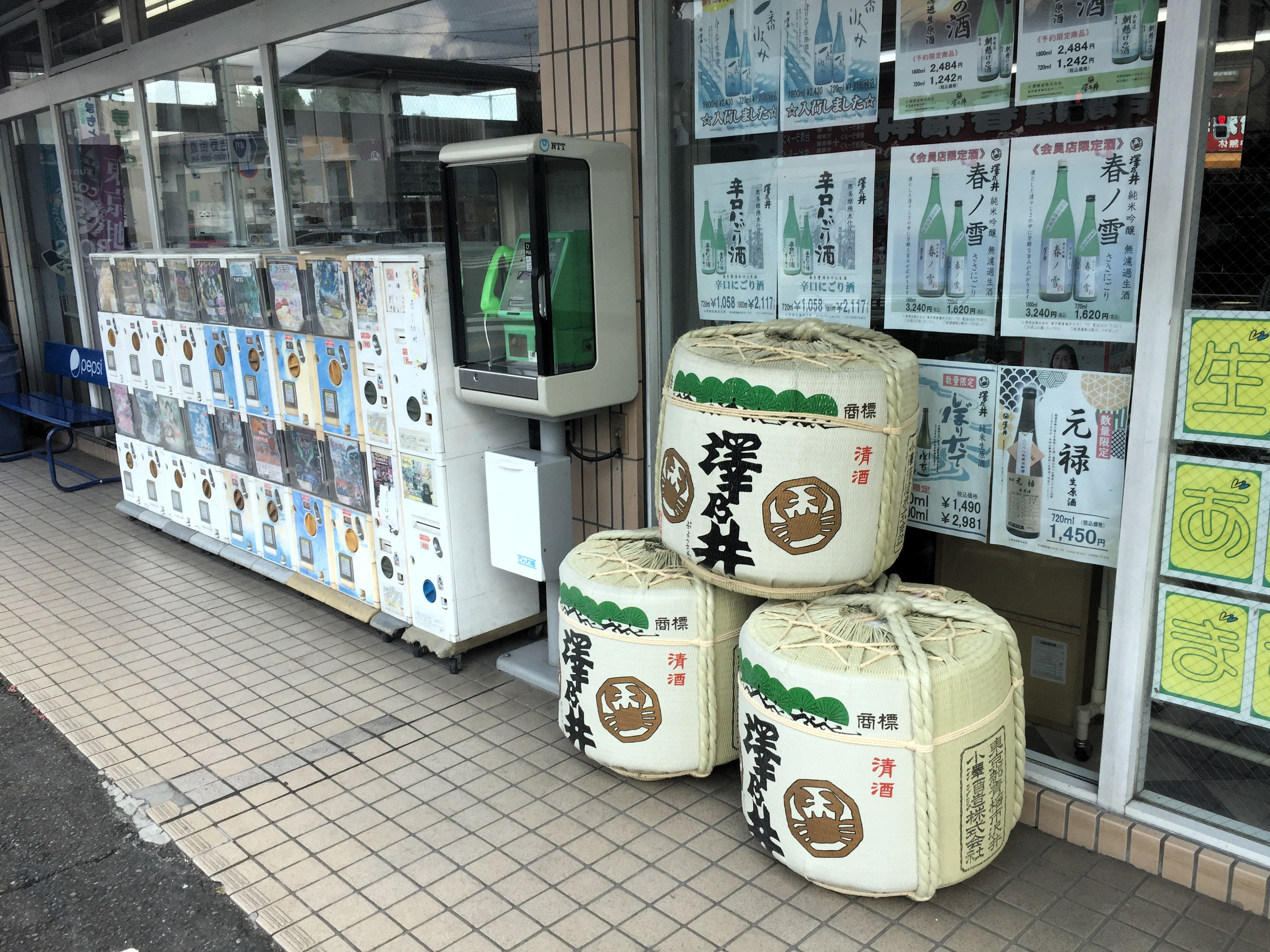
At Kami no Fuchi Park there are two huge wooden barrels on display for making shoyu (soy sauce). They are turned on their side so you can see inside them. I can’t image how and when people would need so much shoyu. It is unquestionable that Japanese people use a lot of shoyu but these barrels would make enough for everyone in the town of Ome to put shoyu in their cooking for a year. How often are these barrels used? I don’t know. There wasn’t any explanation displayed with the barrels.
I hung out at the park a few hours and then decided to head further upriver to Ogochi Dam and Lake Okutama. There was a possibility of rain in the afternoon but I went anyway in the hope of getting somewhere before it started. I thought that maybe I could camp somewhere near the dam.
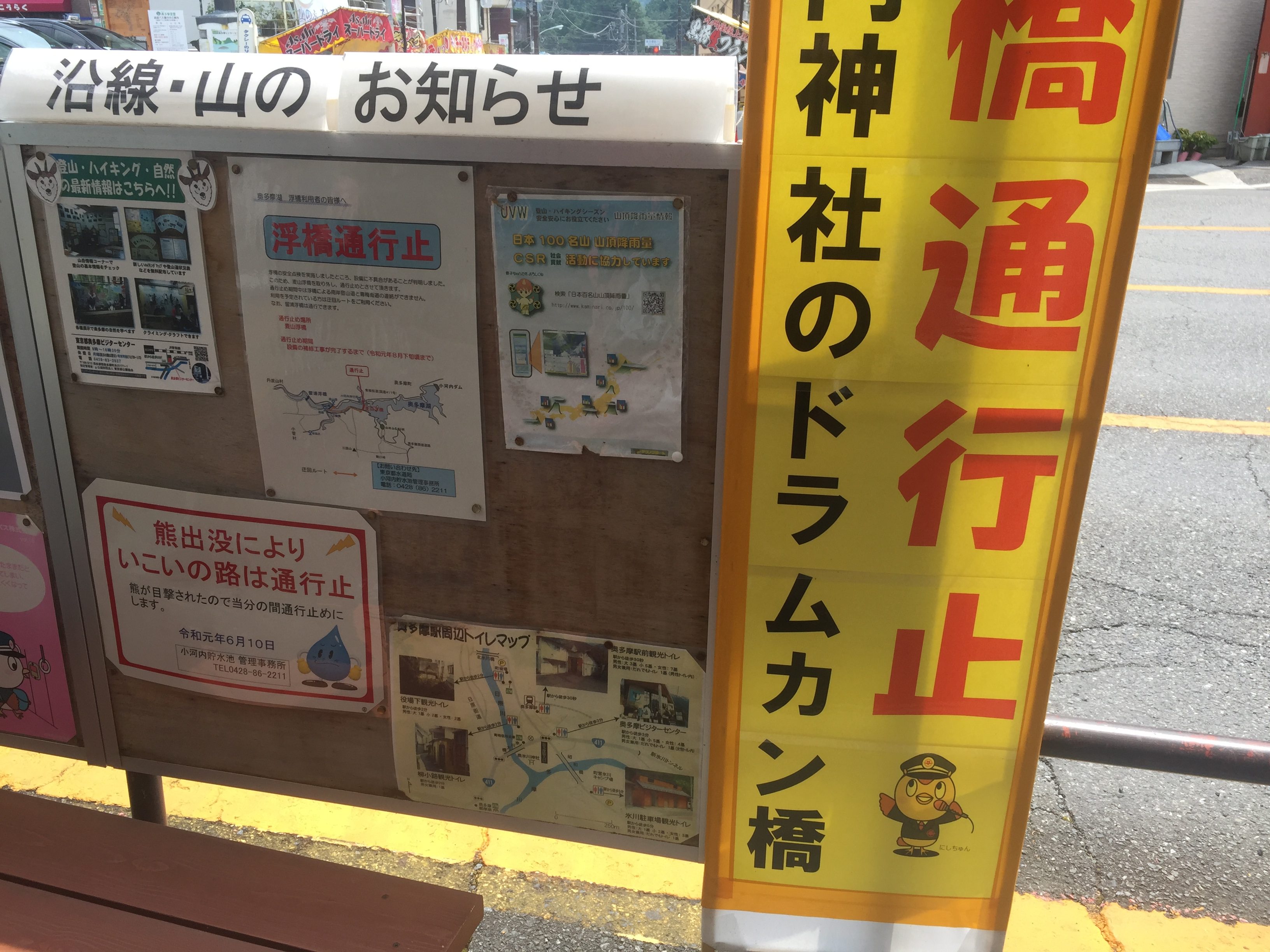
It was a gradual but steady uphill climb to the village of Okutama. Okutama is the last station on the Ome Line and is a well-known starting point for hiking into the nearby Okutama mountain range and Mt. Kumotori in particular. The day I arrived the village was preparing for a festival so it was more lively than usual. The street vendors were still setting up when I arrived. I took a break at the bus stop and information center across from Okutama Station. It was there that I noticed the beware of bears sign. I was hoping/not hoping for a friendly encounter with a bear. It was highly unlikely since I wouldn’t be leaving the road or developed areas.
I continued the last 7 or 8 kilometers up to the dam. From Okutama the road gets significantly steeper, especially near the dam, and there are several tunnels. One of the tunnels is nearly 2 km in length. Some people don’t like going through tunnels. I can understand why that might be. Often they don’t have any shoulder or sidewalk and they are usually dark and damp. I appreciated that the temperature was significantly lower in the tunnel as it was quite hot and humid by the time I reached the tunnels.
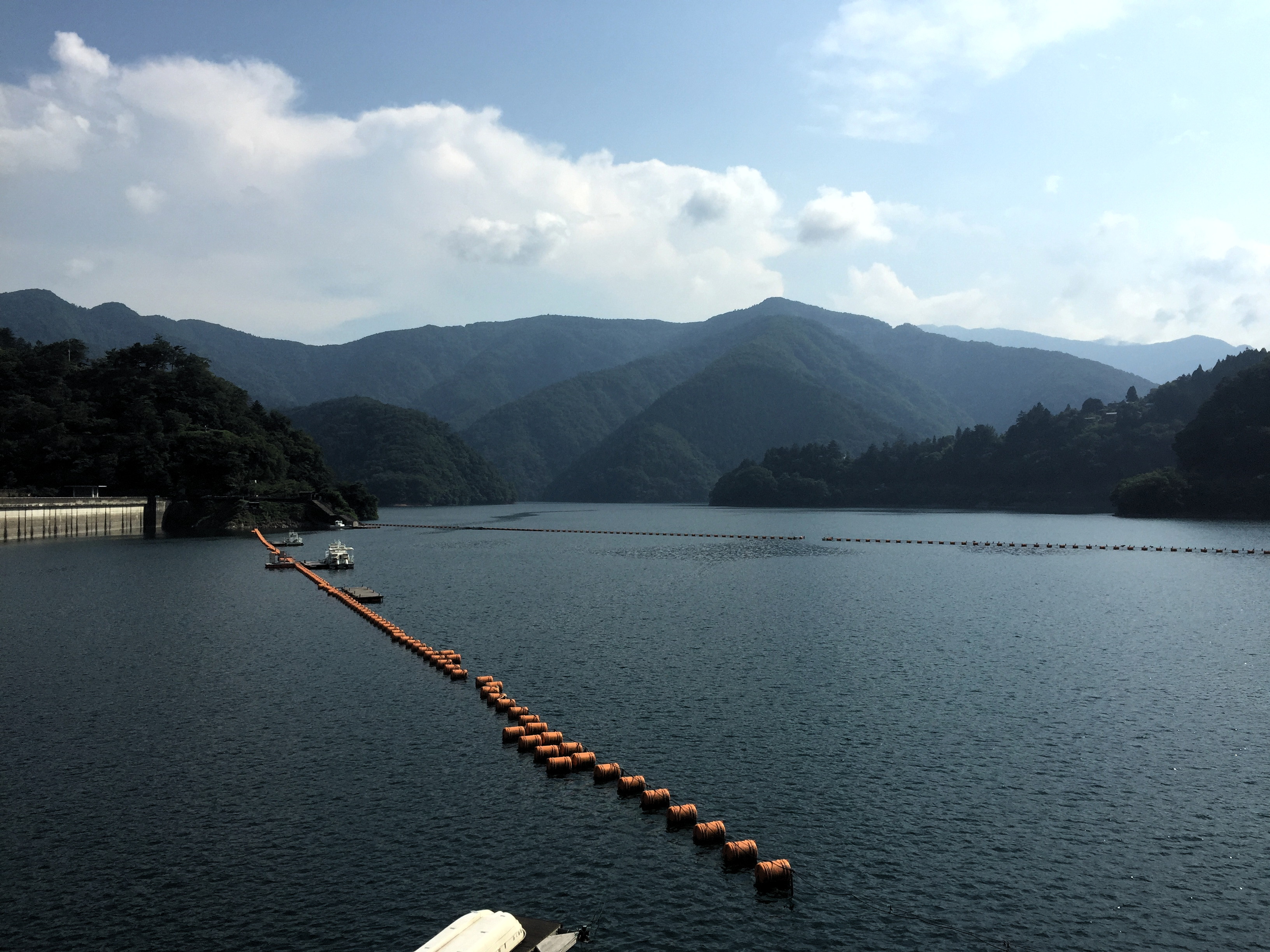
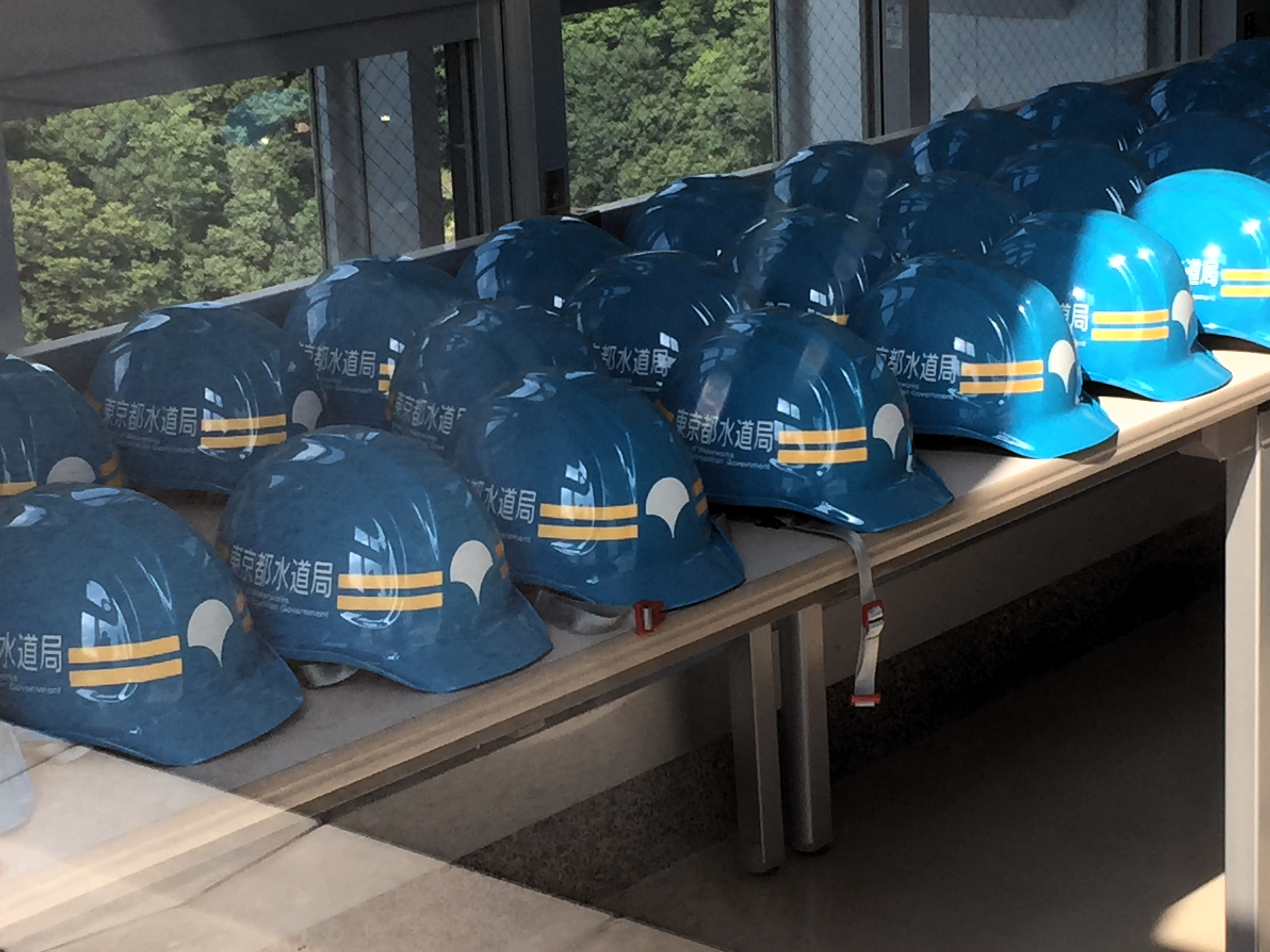
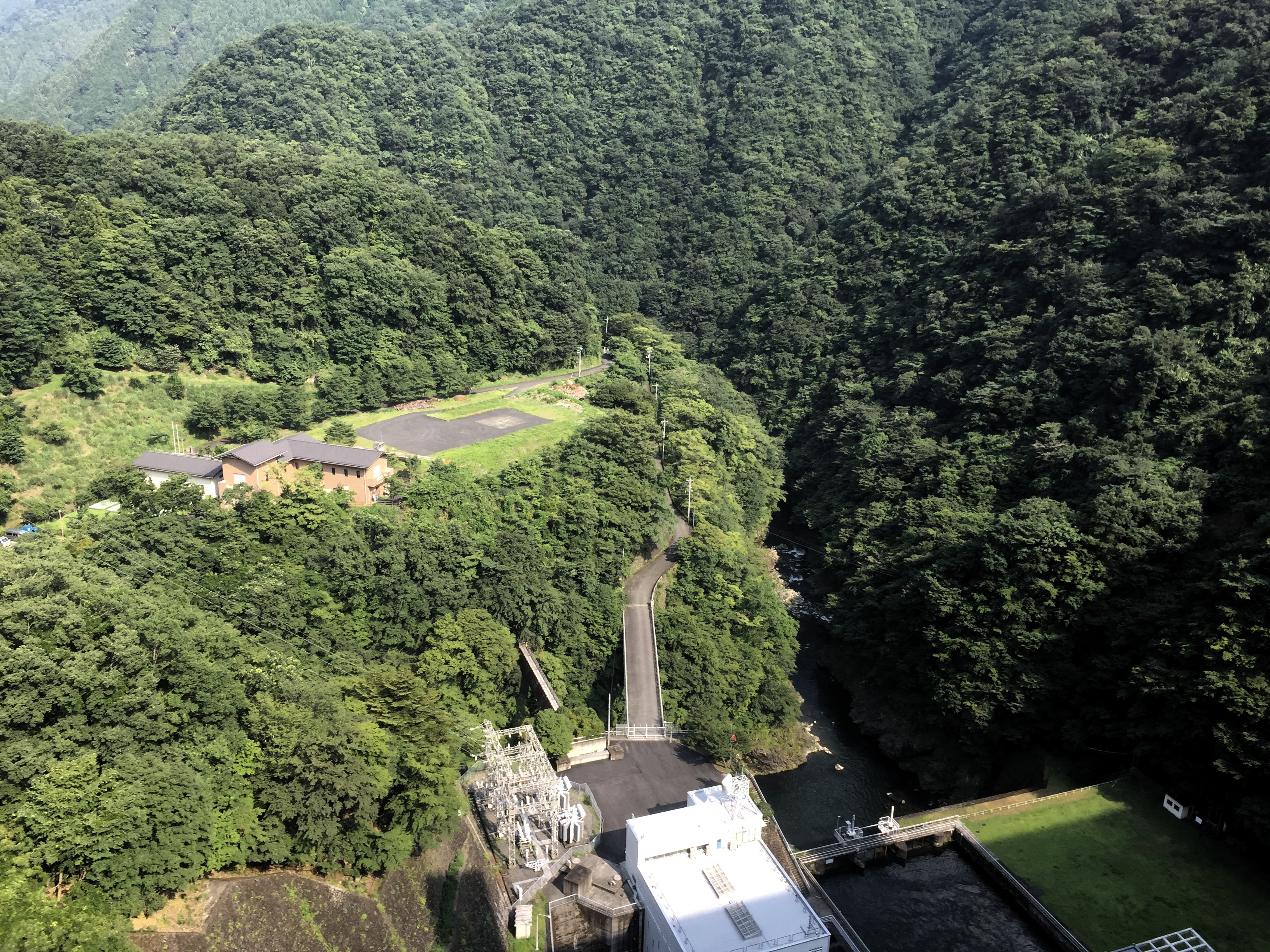
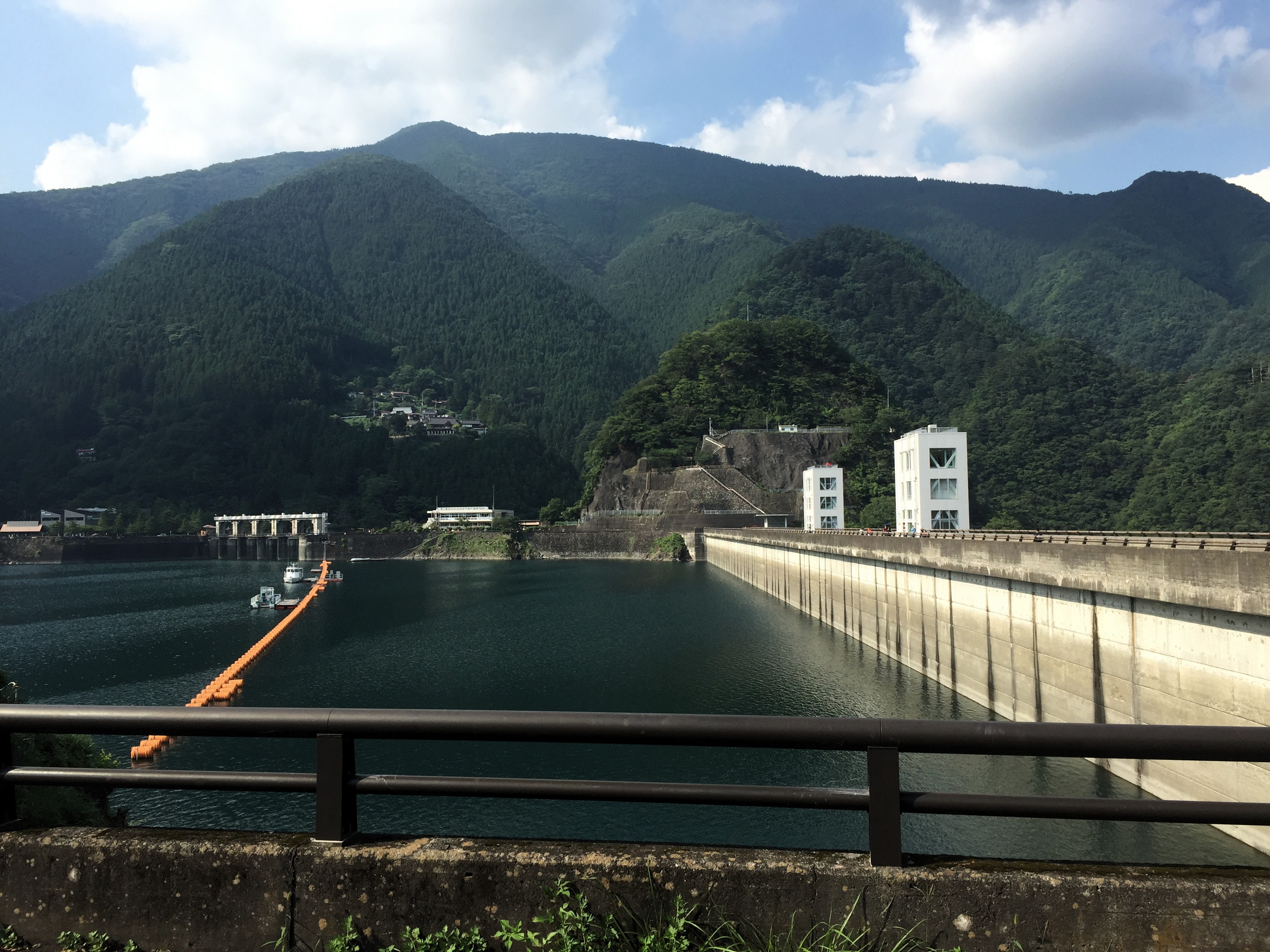
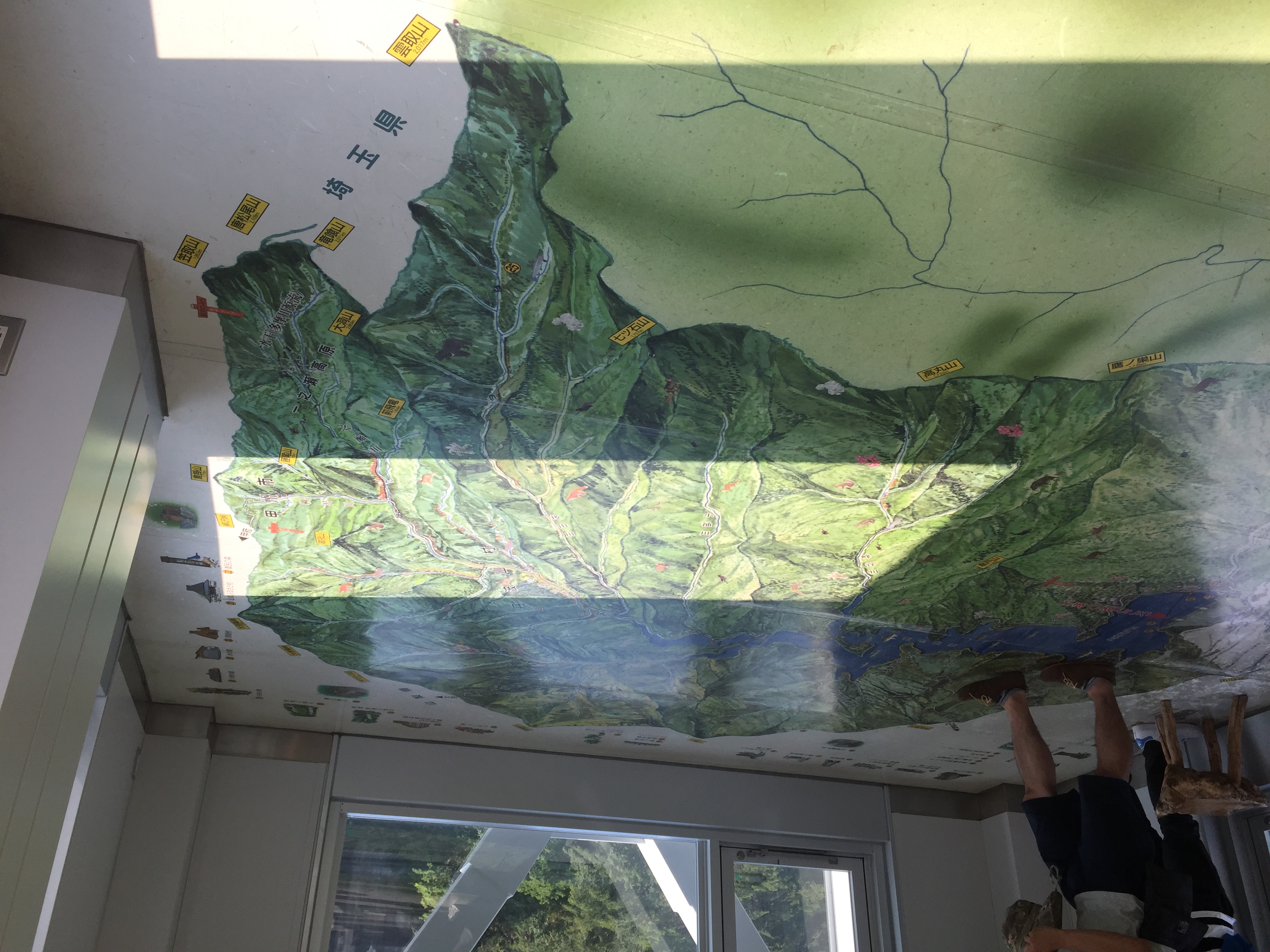
The dam, might seem like an uninteresting destination, but it has more to offer than you might expect. There is a large rest area behind the dam where you can picnic and get out from under the sun. In my case I was staying out of the rain as the raindrops started to fall just as I started to climb the last steep slope before the dam. Fortunately, it didn’t rain long at all. ¥Visitors can walk along the top of the dam and there is a little 3 story observation tower in the middle of the dam. On the second story there is a little museum, in this case “shiryokan” is an appropriate description, showing how the dam was made about 65 years ago. The real treat for me was the map room on the third floor and, of course, the view. The map room is unique. The entire floor is a map of the lake and the surrounding area. Along the edge of the map are numbered vignettes of points of interest in the area. You can walk on the map floor and find the numbers and get a feel for the lay of the land. Combined with the great view from the windows you can get a unique perspective of the area.
It was about 1 o’clock when I reached the dam and despite cycling for about 25 km uphill I was surprisingly not very hungry. I had planned to have some pasta for lunch. I briefly toyed with the idea of eating at the ramen restaurant across the street but didn’t really feel like eating very much. Maybe it was the heat. Instead, I ate the fruit I had with me and some GORP trail mix. I realized that it probably wasn’t a good idea to camp near the dam as it was clearly monitored by the police. I hung out about an hour or so and then decided to go back to Ome. I didn’t even look for a campground near Okutama. I decided to try my luck at Kami no Fuchi Koen.
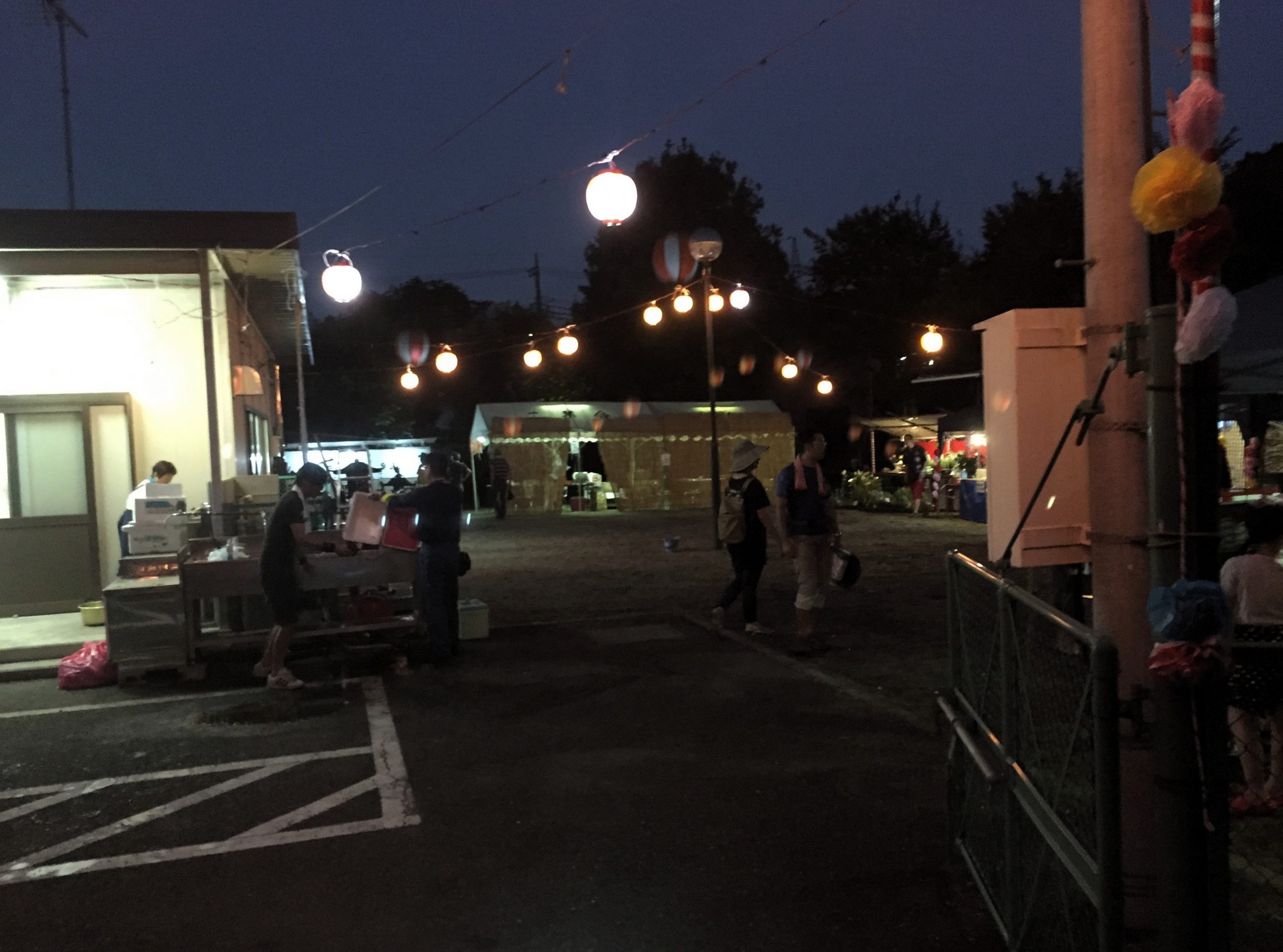
The descent from Ogochi Dam to Okutama seemed to last no time at all. I covered the 7 K in what seemed like 20 minutes or so. It was probably longer than that but the effortlessness of the descent made it seem quicker. When I got to Okutama the festival was underway and the street leading to the station was lined with food vendors and sellers of other festive goods. I found a kakigori (shaved ice) vendor in no time a had a very refreshing cola flavored sno-cone. Thus refreshed, I continued on my way to Ome.
I remembered a pizza place just outside of Ome and got it into my head that I would like some pizza for lunch. Unfortunately, when I got there there weren’t open yet and they wouldn’t be open for a couple of hours. The restaurant was good 4 or 5 km from town. Too far to return after setting up park. I decided to find something nearer to the park.
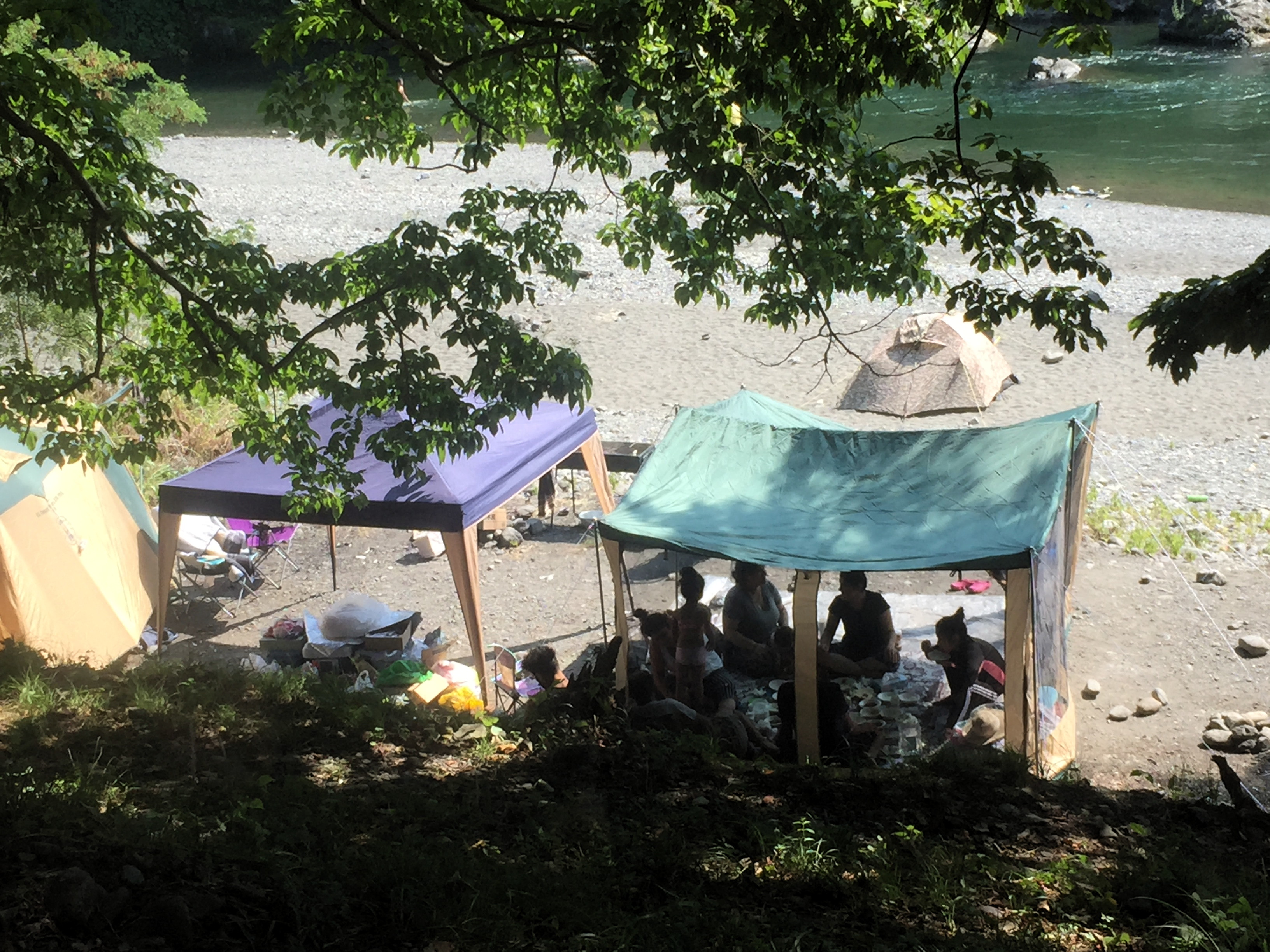
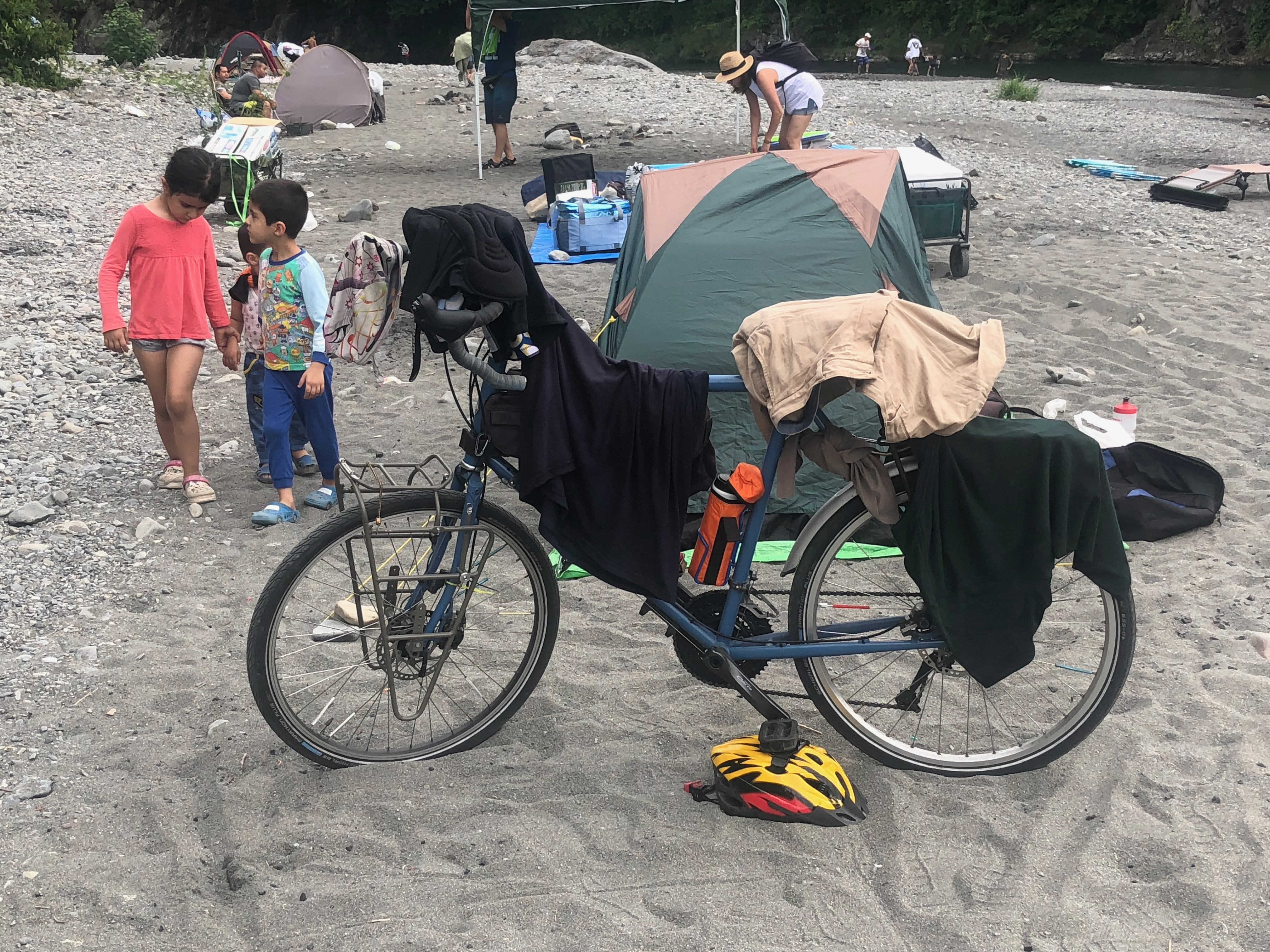
When I finally rolled into Ome it was about 5 o’clock. I found sandiest place on the beach to set up my tent. There were still many people with tents set and barbecue sets on the beach. I assumed most of them would be going home before it got dark.
I found a restaurant and a convenience store about a 10 minute ride from the park. Despite being sweaty and probably a little stinky I had a wonderful dinner of tonkatsu, shredded cabbage and miso soup. On the way back to the park I picked up some breakfast essentials at the convenience store.
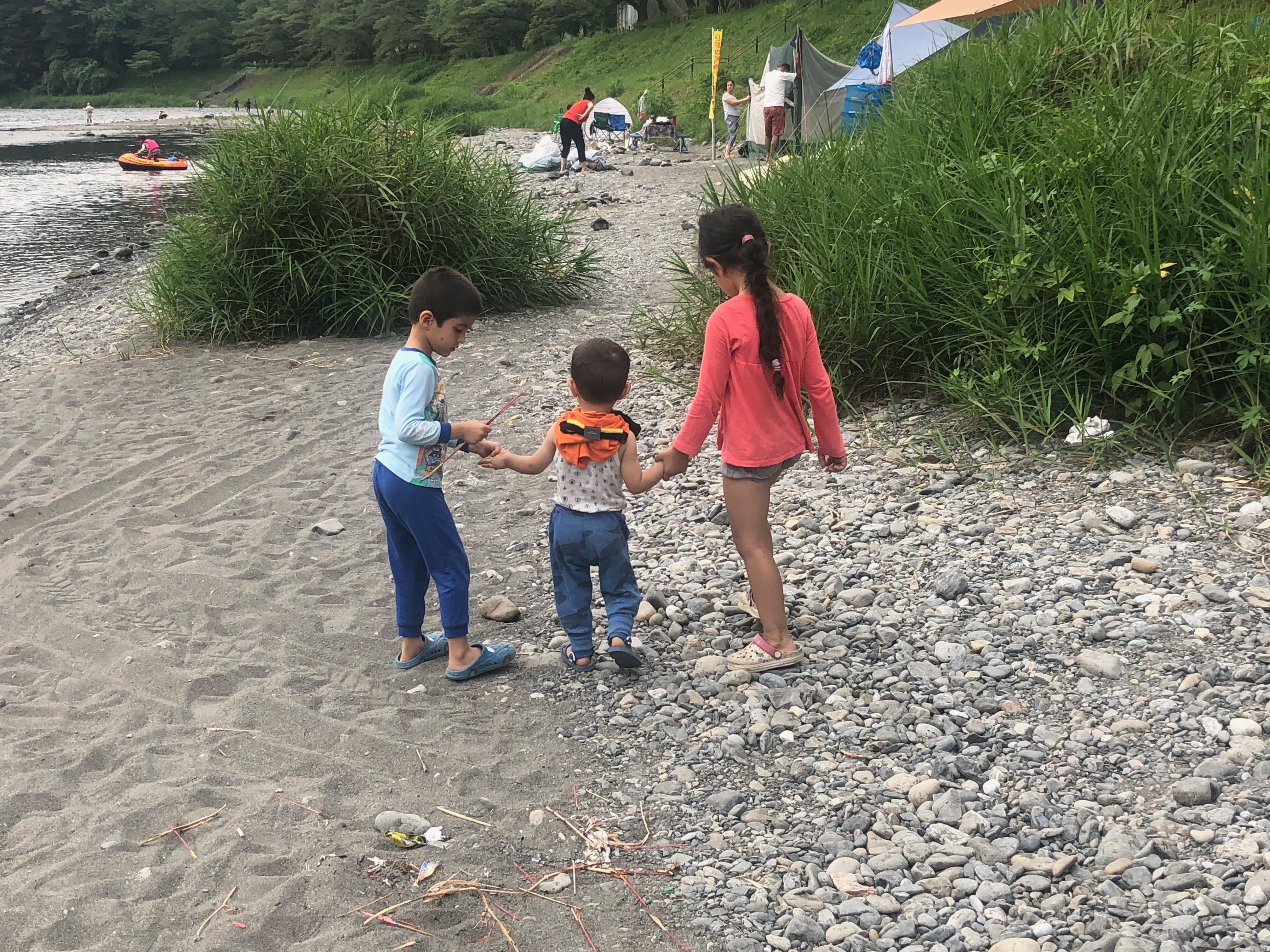
By the time I got back to the park the sun had set but too my surprise there were still many people there. They didn’t show any signs of leaving either. Also, unexpectedly, there were many foreigners around. I didn’t recognize the language they were speaking but somehow I got the impression they were Mediterranean. I have absolutely nothing reliable to based the assumption on. It is just a wild guess. There was a large group right behind my tent and it seems there was a large group of Japanese revelers on either side.
I have to say that none of the groups were rowdy or ill behaved but when you have large groups of people relaxing, talking and laughing they can get a little noisy. I assumed they would eventually settle down for the night. And they did settle down but it was later rather than earlier. I can’t say that I blame them. I would be laughing and talking too if I were with a group of friends and family camped on a river bank. So for the second night I didn’t get as much sleep as I would have liked.
Day 3
I slept in as late as I could manage but ultimately was back on the road by 9:30 or so. I plotted a course that would keep me as close to the river as possible with the intent of going to Hamura then following the generally very quiet route along the Tamagawa Josui Canal which passes just a kilometer or so from my house. My other goal was to, as much as possible, to stay of the very busy roads of Shin-Ome Kaido, Ome Kaido and Itsukaichi Kaido. The 30 KM ride back home was uneventful but I found a route from the headwaters of Tamagawa Josui Canal in Hamura and the town of Ome that has good roads and less traffic than other major roads.
Lessons Learned
I learned on this trip that I do not need a sleeping bag in the summer. I might want to consider getting a light camping blanket but a sleeping bag is unnecessary for the Kanto area in summer.
Photo Gallery

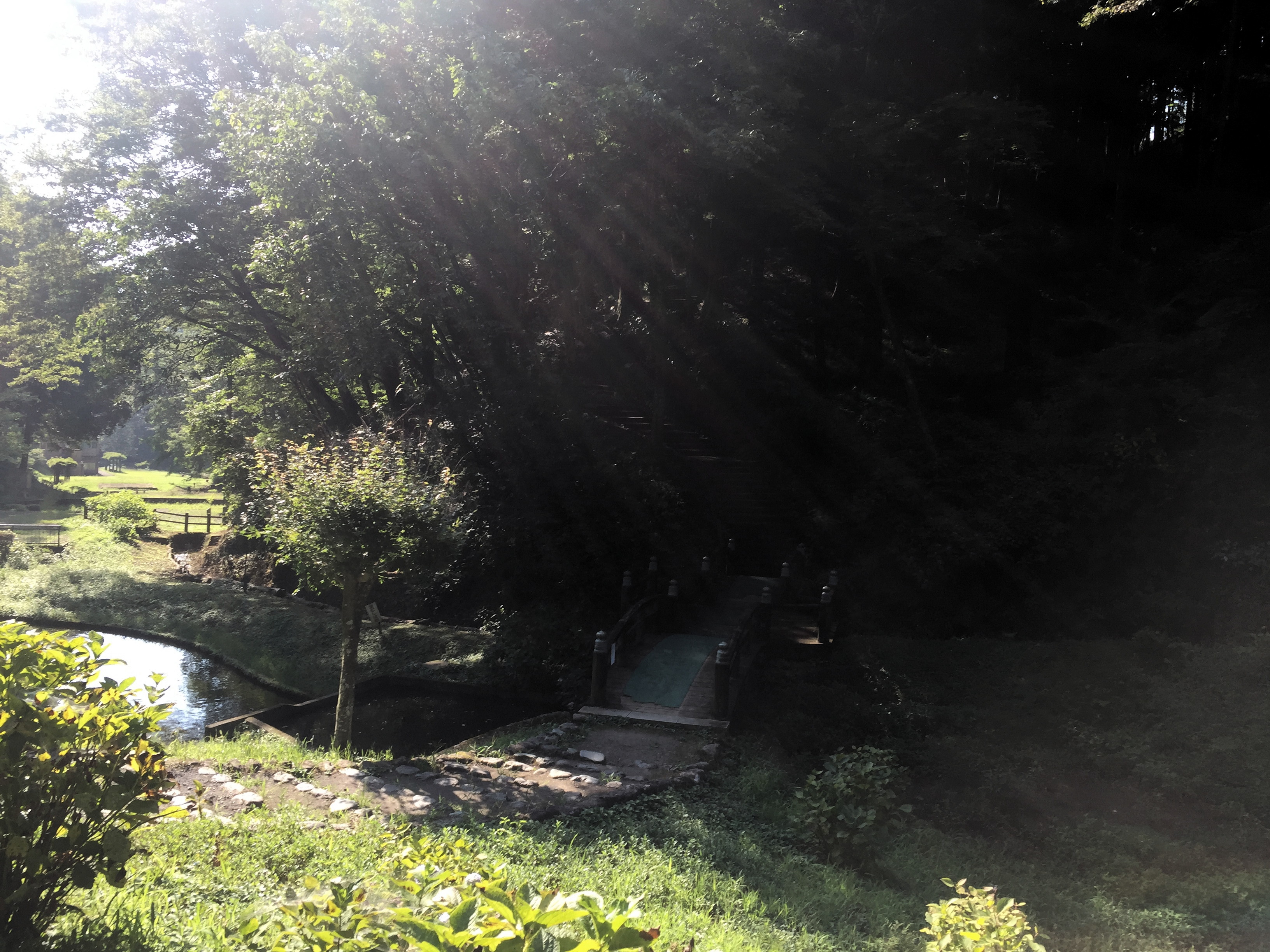
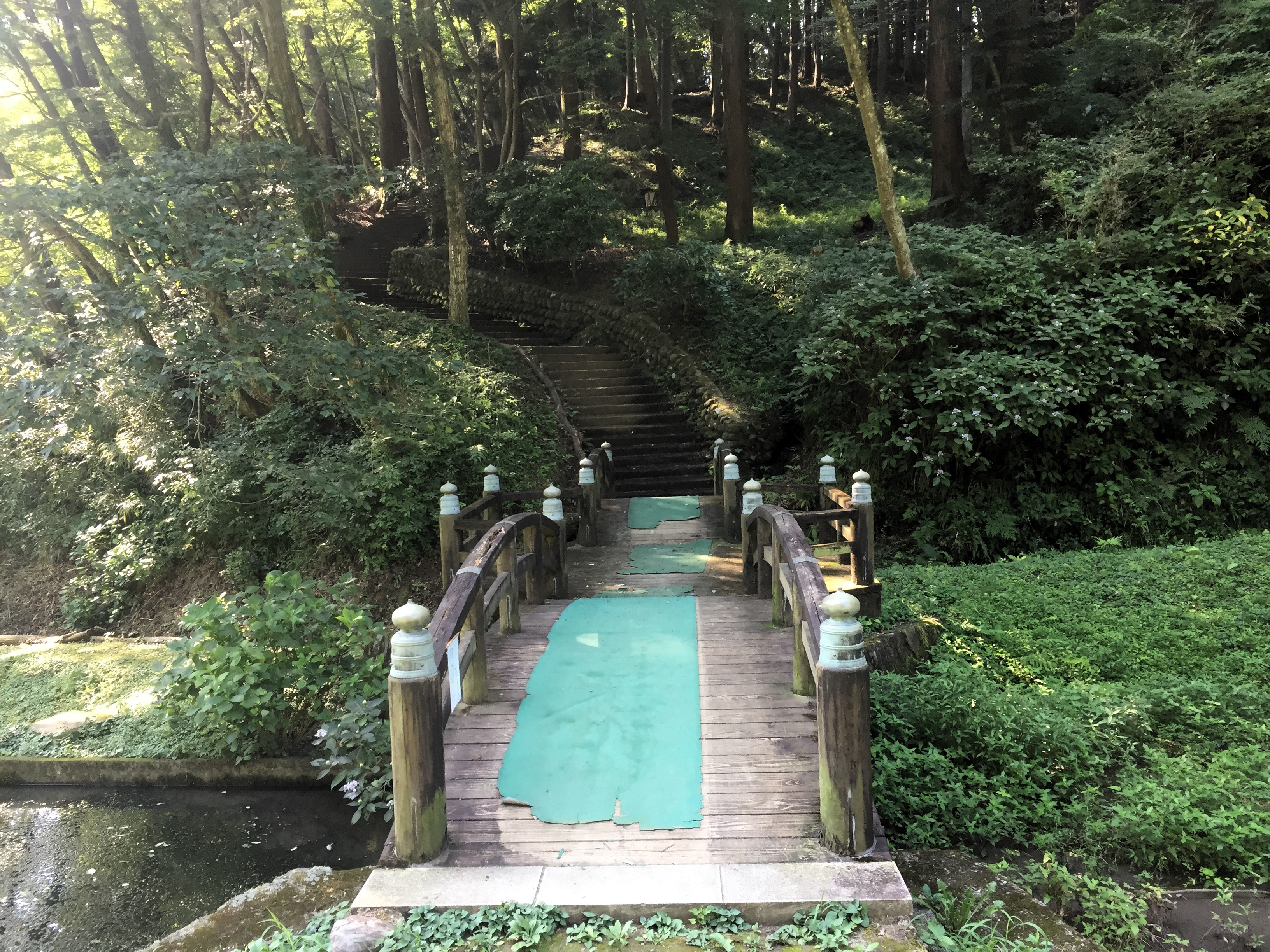
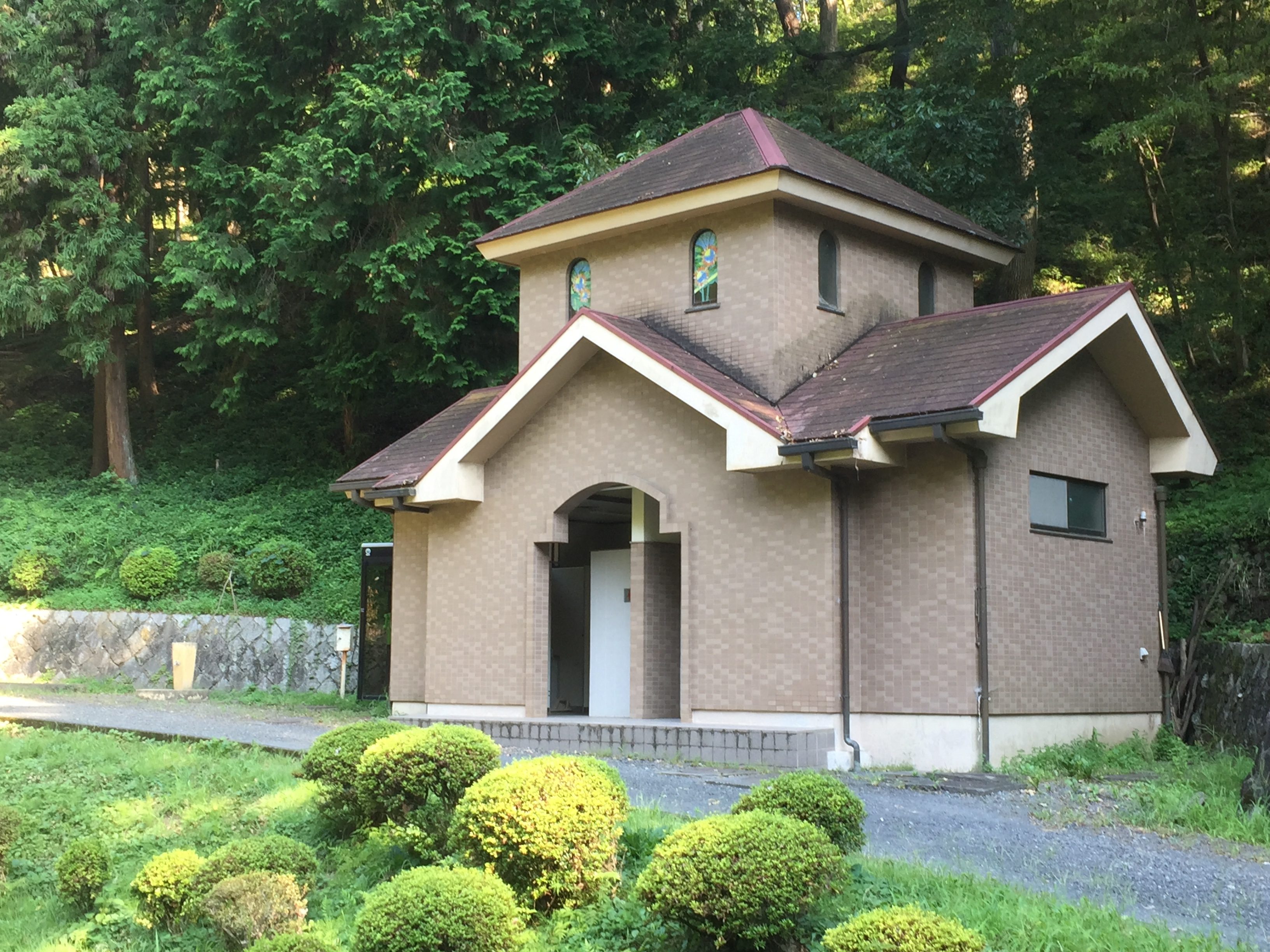
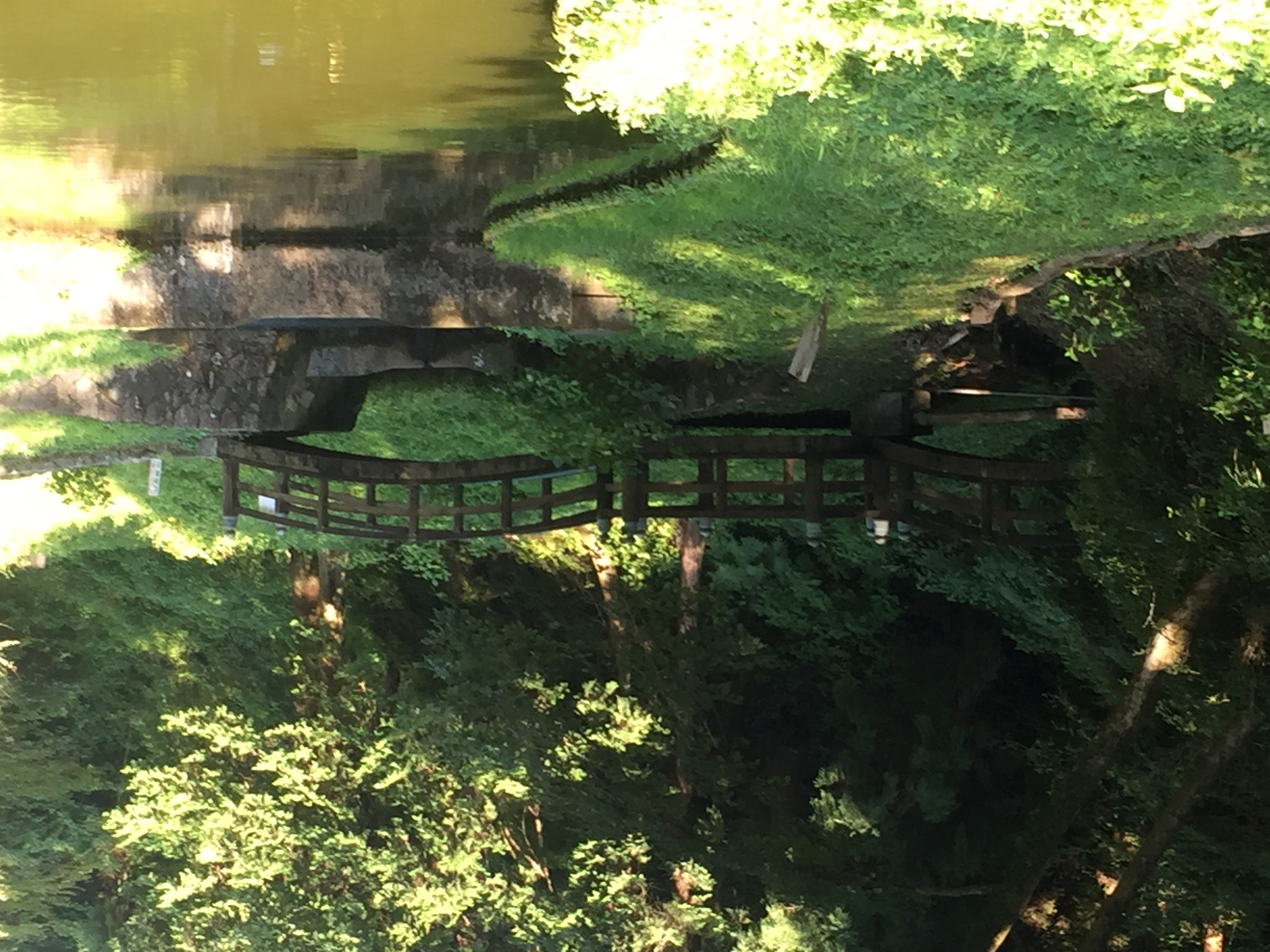






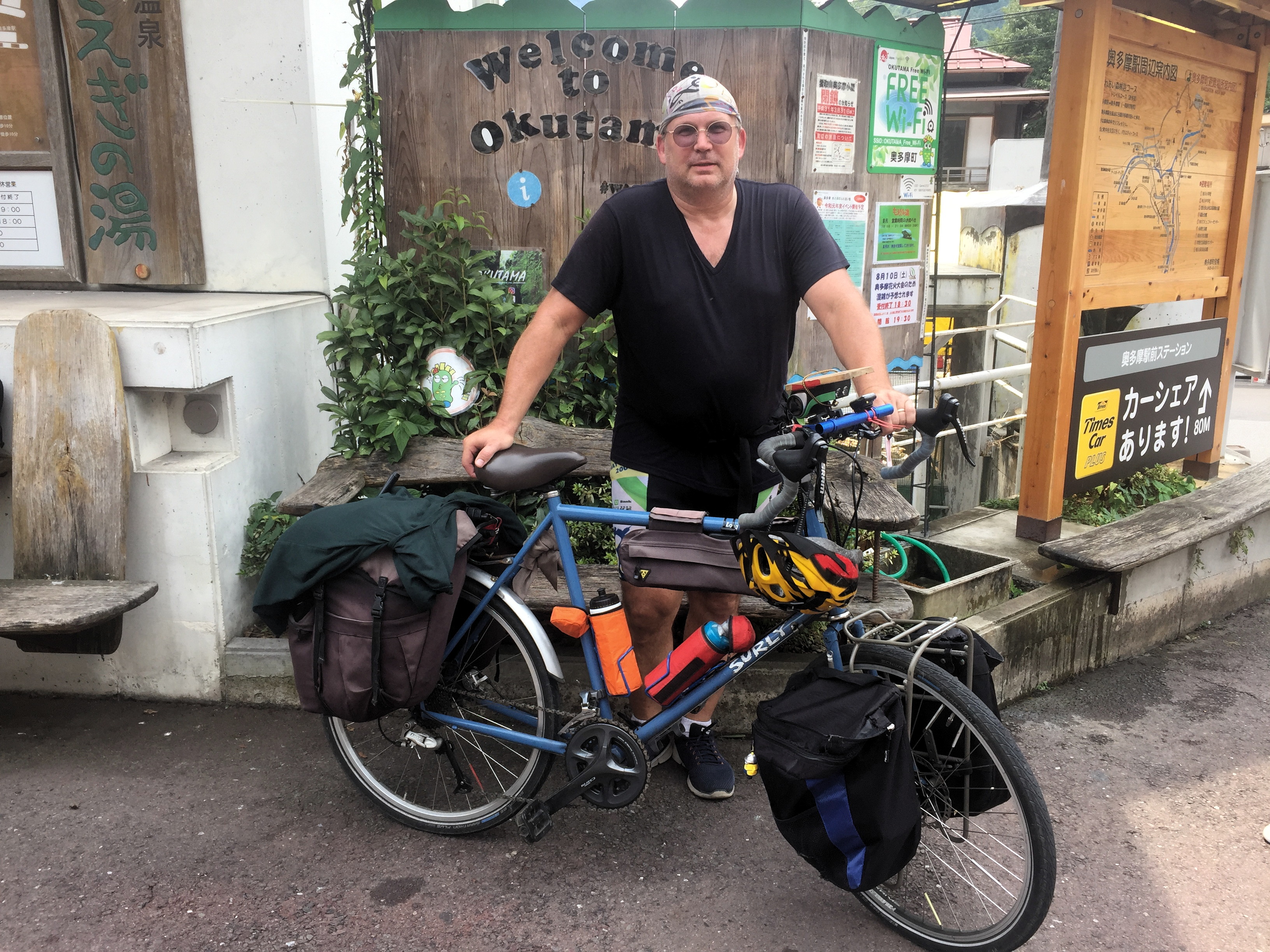
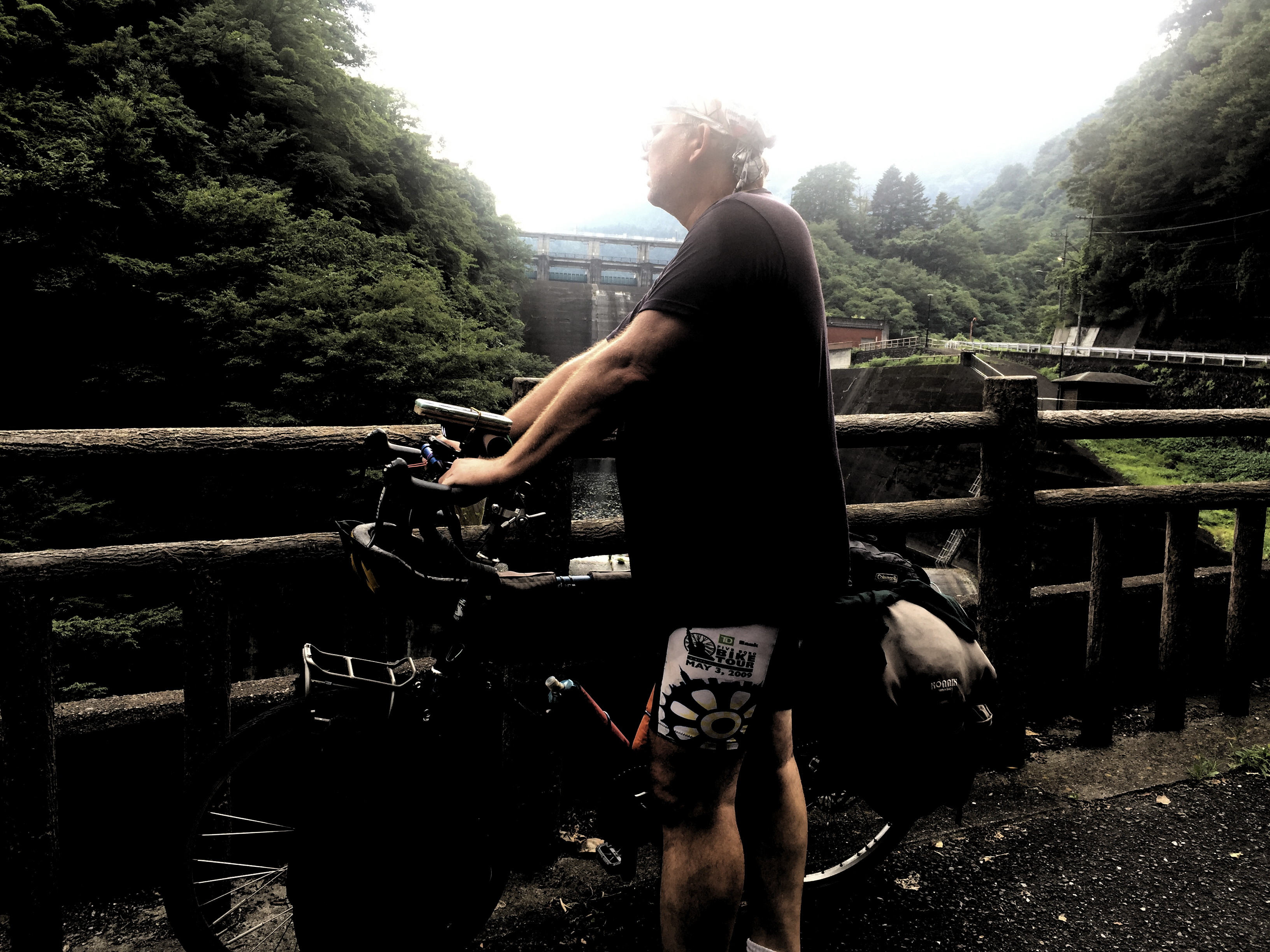
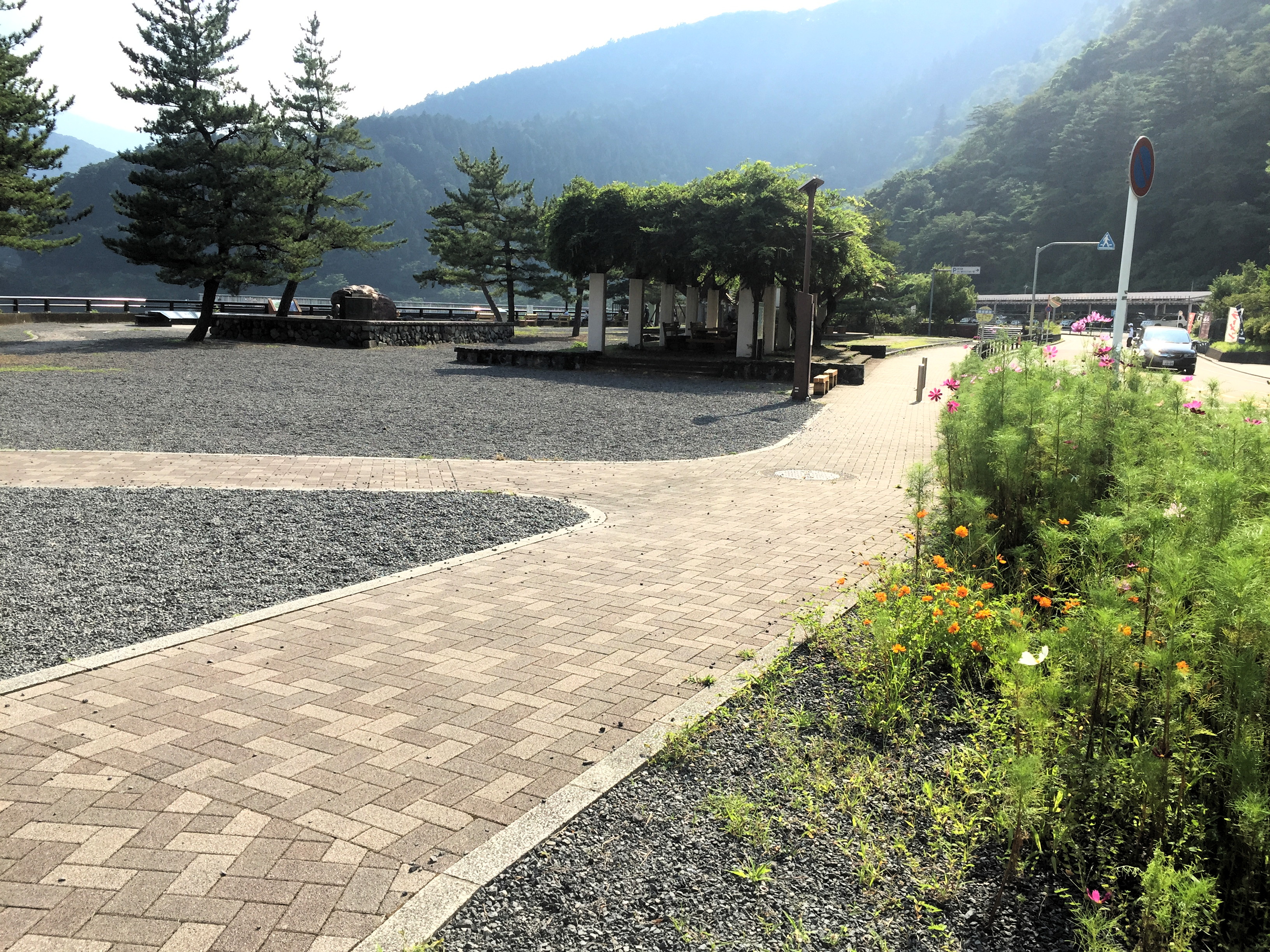
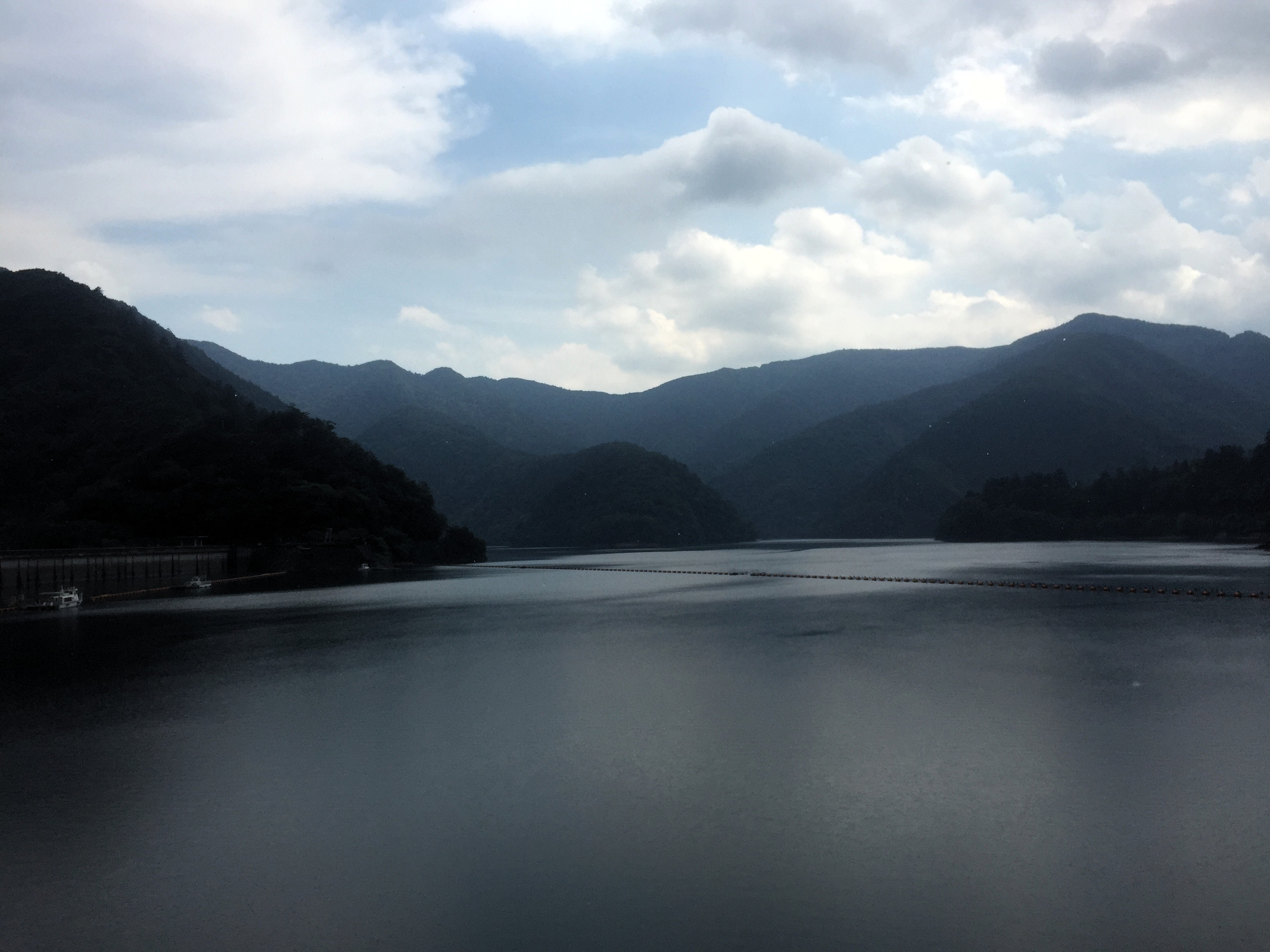


Video
[yotuwp type=”videos” id=”Z4xT73sXE-E” ]
Home | Photo Gallery | Podcasts | Videos
]]>2019/05/04 – 2019/05/05
Thanks to the abdication of the Heisei Emperor and the coronation of his son, the Reiwa Emperor we had a 10 day holiday in Japan. I should have planned a longer trip but we had out-of-town guests for the beginning part of the holiday and other events schedule through the middle of the holiday. On top of that, I wasn’t sure if I would get Mad Max, the Surly Blue Beast, back from Blue Lug Bicycle Shop where it was being overhauled and repaired in time for the holiday. As it turns out, I did get Max back the week before the holiday began. Anyway, by mid-week, watching YouTube videos of other peoples tours kindled in me a yearning to be on the road.
Day 1
After eating lunch, doing the dishes and taking a late shower, I began packing my gear. The weather forecast was for a storm from 3 pm to 6 pm. With a little luck I might make it the 8 km to the Tama River and get my camp set up before the rain began. I had no such luck. I don’t think I was even halfway before the rain started coming down. It was only about 3:30 and the sky got dark. I pulled into a convenience store to unpack my 100 yen poncho and turn on my lights. The chinsy poncho broke right away and was too small to cover my body thoroughly. It was too light and even though it was wet the wind caught it and blew it around. It was next to worthless.
I was only about 4 km or so from the river; a short ride in even poor conditions. I knew I could take refuge in the parking structure next to the river when I got there. It was raining pretty heavy but since I was already wet thanks to my worthless poncho I thought “how much worse can it get?” The answer came to me like the flash of lighting that lit up the sky and the crash of thunder that rumbled behind me; much worse. As I turned onto Koshu Kaido the wind whipped up and the rain came down even heavier making it very difficult to see. I got off the road and onto Shinden Ryokudo. Without cars it felt a bit safer but that was where the rain started to turn into a slushy kind of hale. I glad it wasn’t quite solid but it still stung a little when it hit me in the ear.
I wasn’t too worried about lightning because I was in the city where the tall buildings were a more likely target for Zeus’s wrath. But when I heard the thunder behind me it was still startling.
I finally made it to the parking structures but I found it offered scant protection from the rain because the ceiling of the structure was the metal plates and i-beams that made up the deck of the second story. There were so many gaps and the beams seemed to concentrate the water. Under the largest sections of the metal plates of the upper deck it was possible to get out of the rain somewhat but there was still water everywhere. I wasn’t alone under the car park. Many picnickers that didn’t read the sky well or didn’t have proper shelter were scrambling back to the parking garage and their cars with their soaked picnic gear and sodden children.
Despite the rain the atmosphere under the parking garage was festive and everyone seemed to be taking the rain in stride.
The rain let up sooner than I expected and I was making my soggy way over the levee and the bike trail to the picnic area on the banks of the river where I could set up my tent. When I got to the top of the levee I was surprised by several things. First, many picnickers were still in the picnic area and didn’t show any signs of leaving and, second, the river wasn’t in danger of flooding but there were so many puddles in flat area between the levee and the river. I headed upstream where there were more trees in the hope of finding fewer puddles. I eventually found a place that was slightly less soggy than the others.
By the time I finished setting up my camp the rain had completely stopped and the sky was starting to brighten. I changed into dry clothes and made dinner. I brought a choice of two rice dishes. Keema curry or dry curry. I went for the keema curry. I tried a new way of cooking rice. Instead of leaving the rice on the flame until all the water boils out I brought the water and rice to a boil for about a minute then put the lid on and turned off the heat. I let the rice sit for about 15 minutes. It turned out good. It was sticky and fluffy but didn’t stick to the pan. I probably could have steamed it a little longer but it wasn’t bad. I went for the keema curry this time.
Day 2
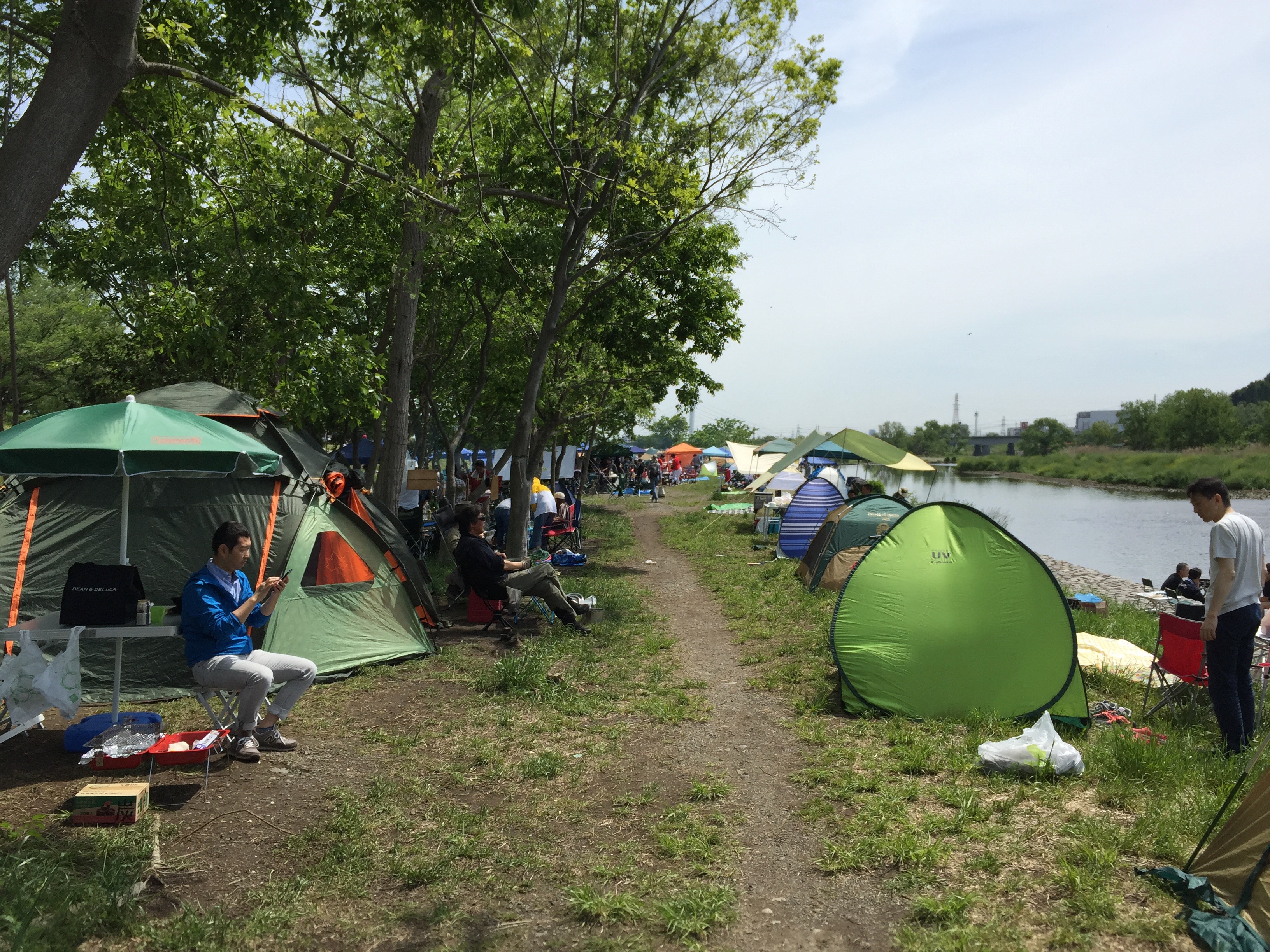
The day dawned clear and warm. I hung out at the park until about 9 am in the hope that my tent and my clothes from the day before would dry out. My shorts almost got dry, I didn’t need the shirt but the shoes were definitely still soggy. I decided there was no point in wearing dry socks with wet shoes so I put my still damp socks on from the day before and set off. By 9 the park was already beginning to fill up. I had to weave my way through the forest of tents. It gave me just a small inkling of what refugee tent cities might be like.
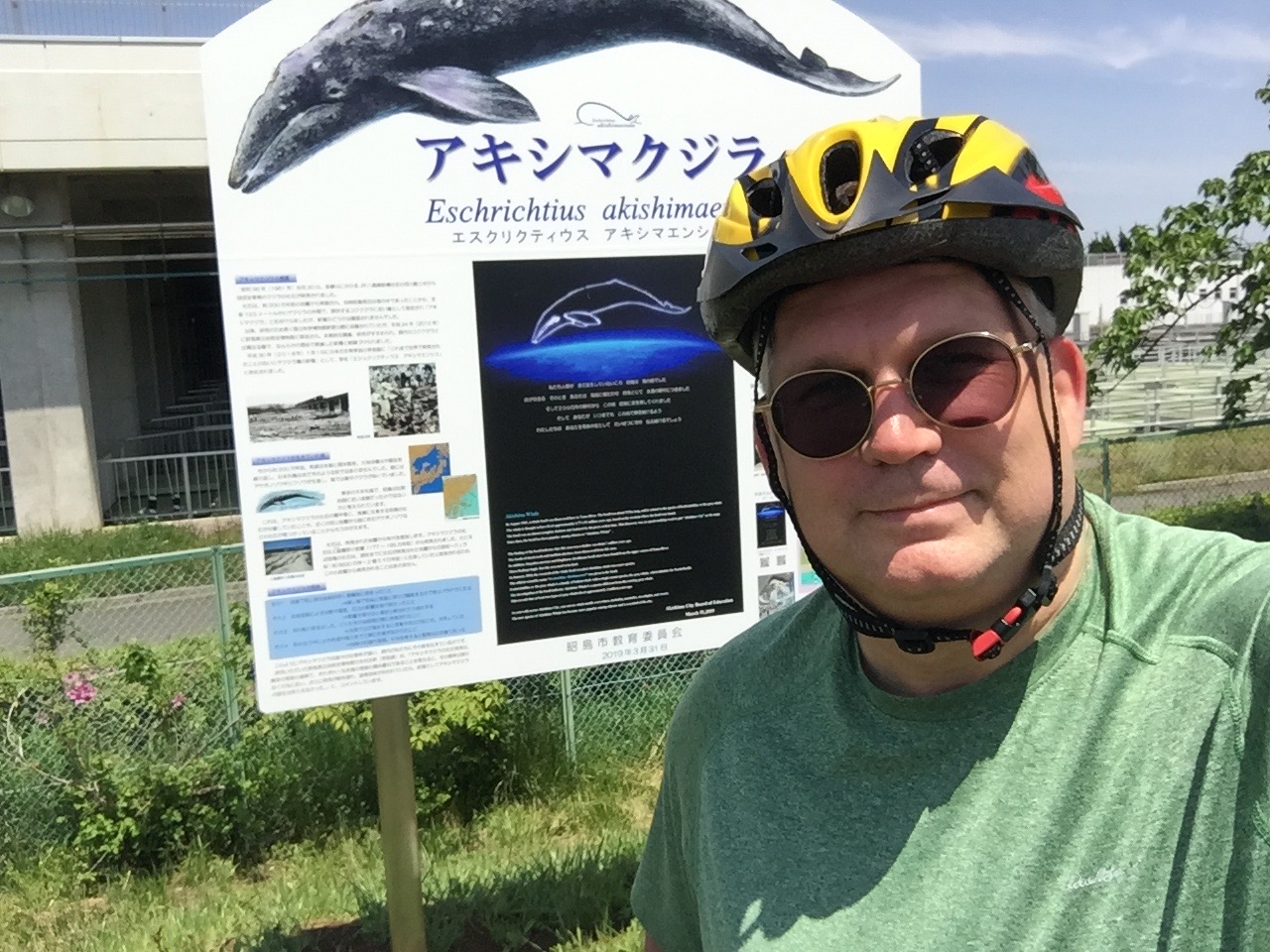
I headed west following the Tama River upstream. I took a brief break in Akishima at the site of the tragic Hachiko Line train wreck because I saw a sign with a big whale on it. The English text was brief but informative. I didn’t take the time to read the Japanese. The sign was just erected a month ago. It is located near Kujira Koen. Kujira means whale in Japanese and I always thought that was a funny name for a park that was no where near the ocean. Now I know why it is called Kujira Park. Because of the whale fossil found there!
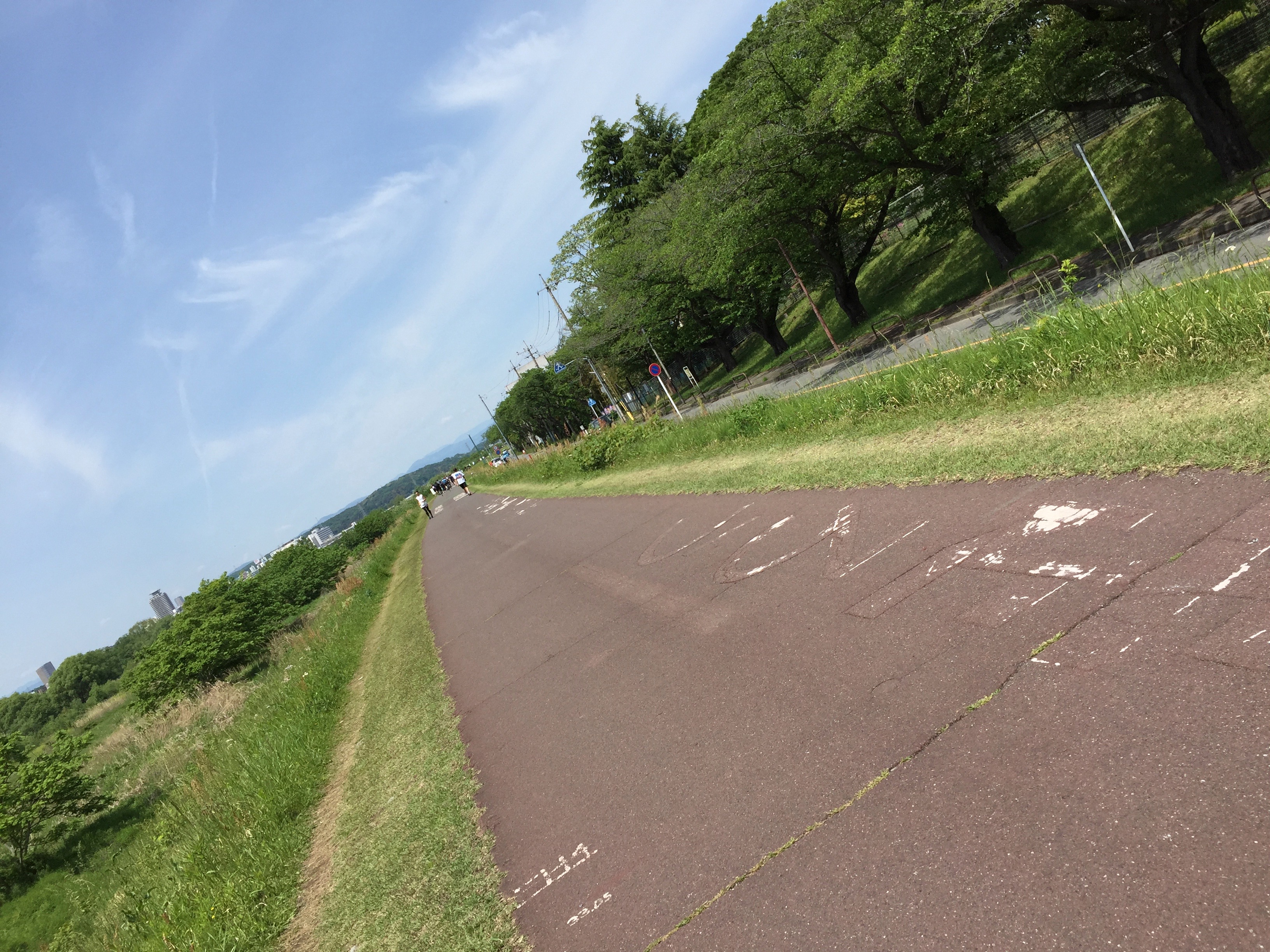
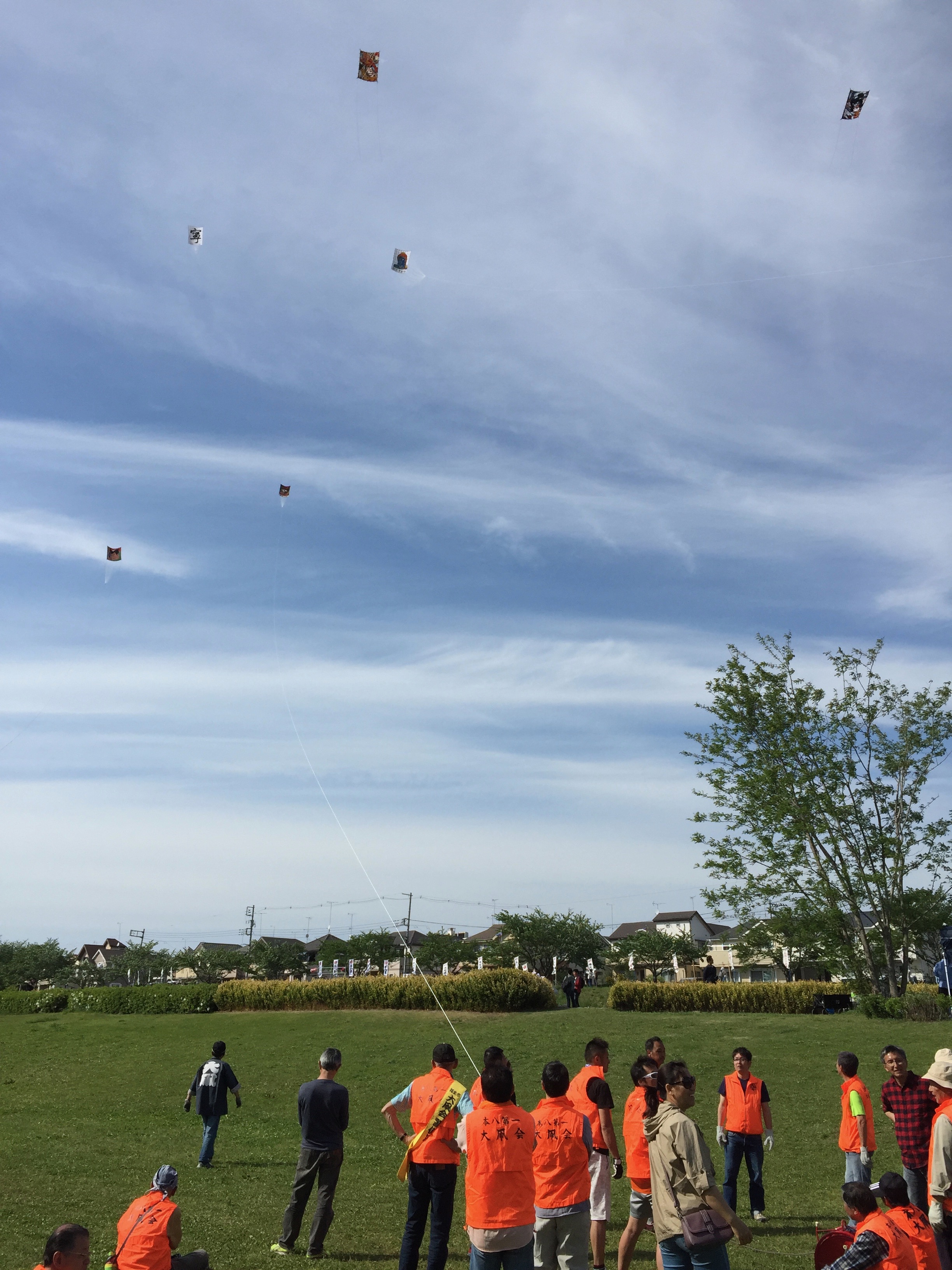
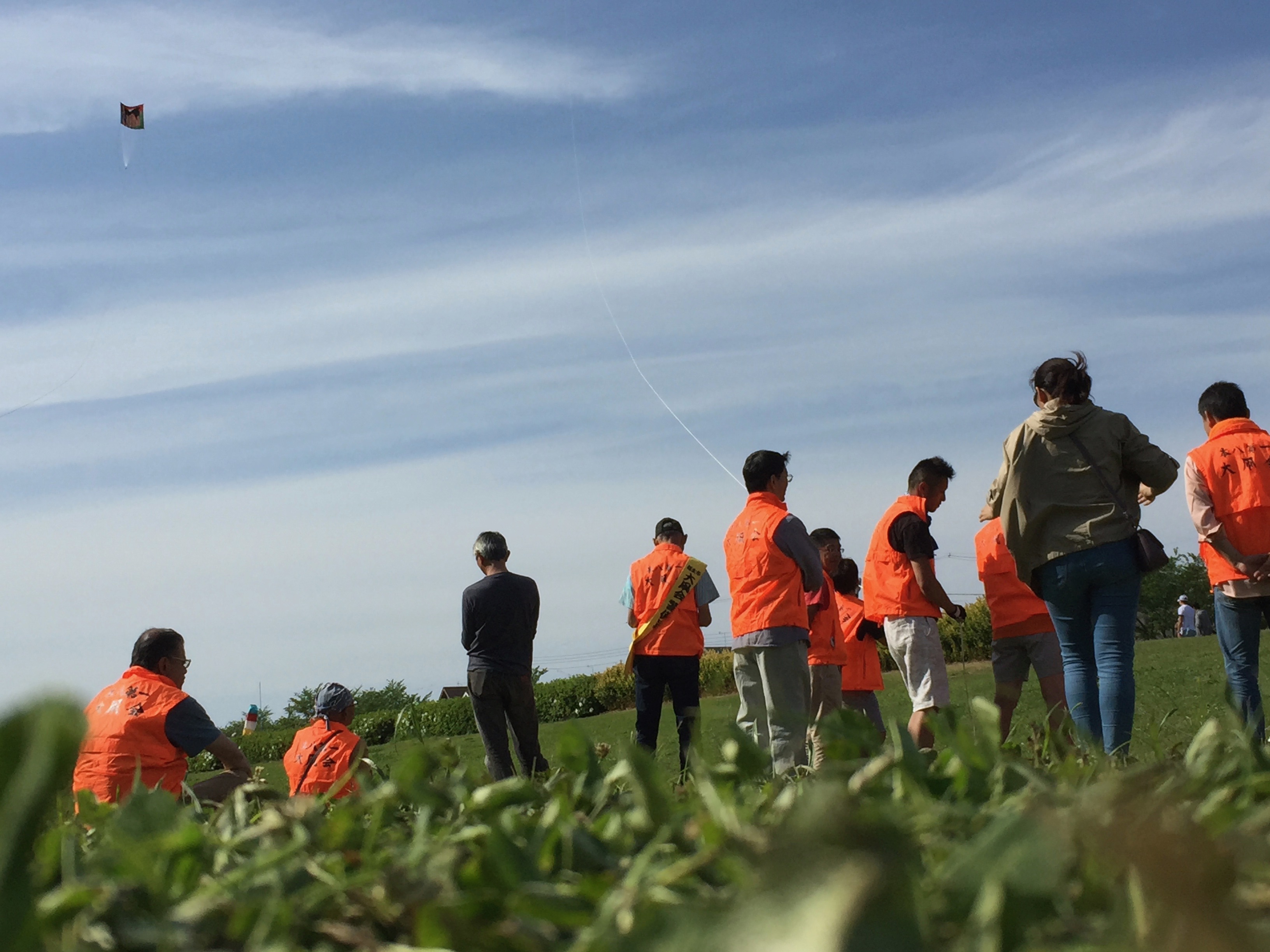
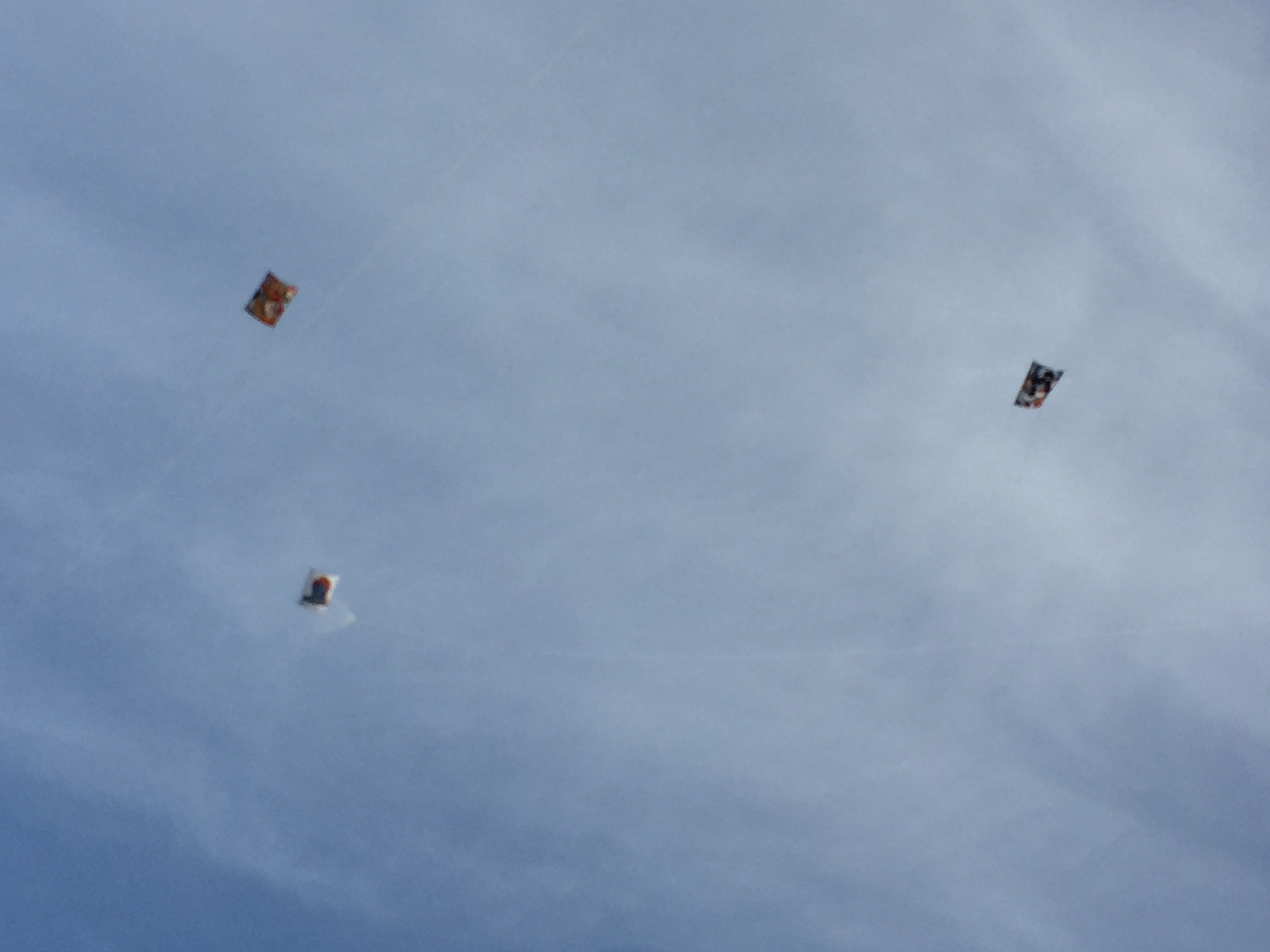
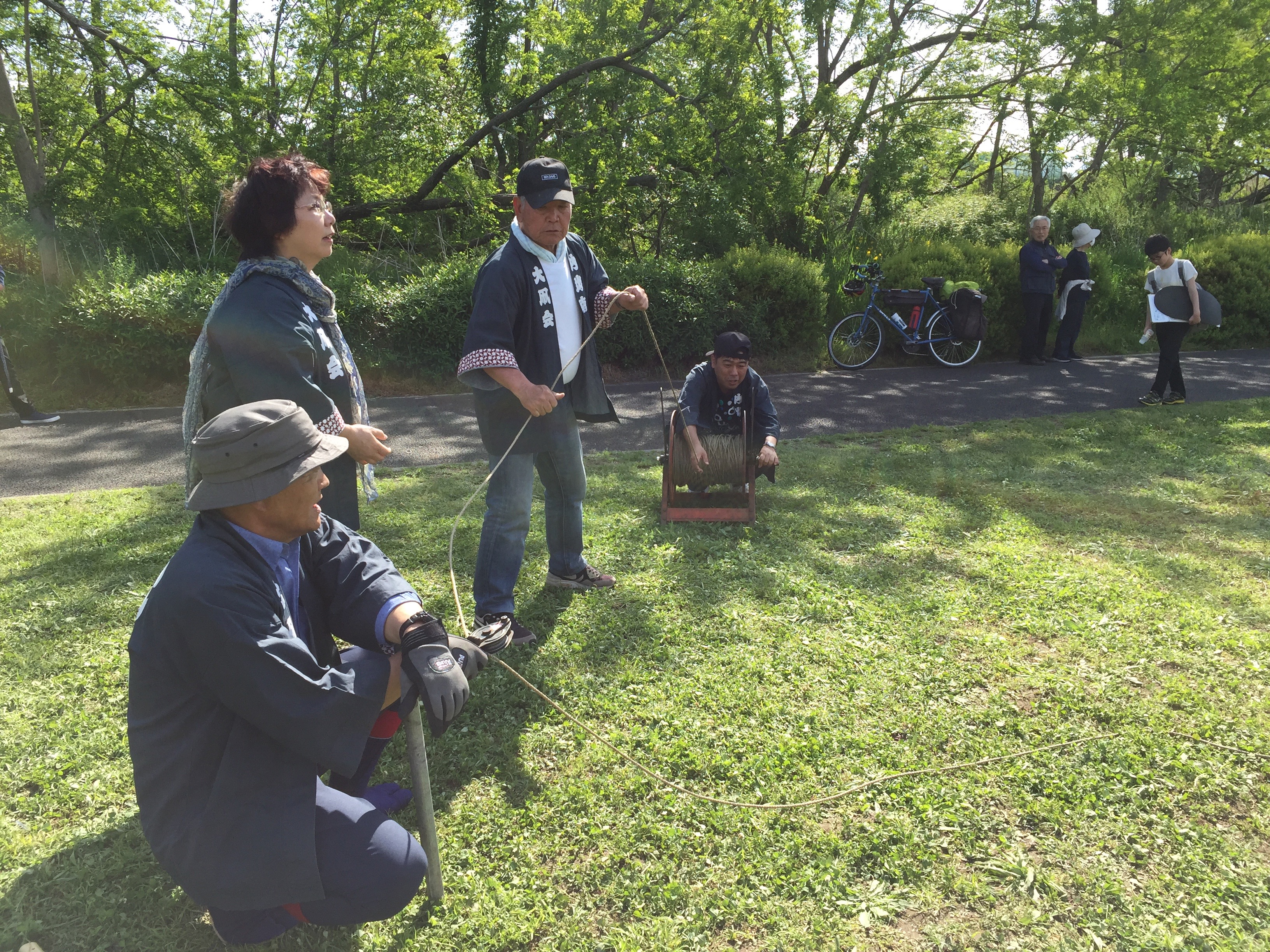
As I pedaled through Fussa Park I passed a kite flying event. There, groups of men were preparing very large kites. The kites were made of paper and sticks and had colorful pictures that looked like traditional ukiyoe pictures. I estimate that the kites were about three and a half meters tall.
I rolled onto Hamura where I had my lunch at the headwaters of Tamagawa Josui, the historical canal that has its source in the Tama River. My shoes were nearly dry by then so I changed into a fresh pair of socks.
I really had no specific destination in mind. After lunch I decided to cross the river on the footbridge and try to find my way downstream on the Kanagawa Prefecture side. That didn’t last long. There is no trail or cycling road on the Kanagawa side across from Hamura. I followed the river as close as possible on the streets but I soon found myself at Nagata Bridge and crossing back over to the Tokyo side of the river. From the bluff above the river on the Kanagawa side I caught a glimpse of four of the kites flying high above the Tama River valley.
By the time I got back to Fussa Park, there were seven huge kites aloft. I got there just in time to see them reel them back in. They are impressive and majestic creatures in the air but need about 6 people to carry them on land. It was a good day to fly a kite because the wind was very strong (and in my face on the way home). From Fussa Park I was riding straight into the teeth of the wind most of the time. It felt like there was a hand on the back of my bike pulling me back.
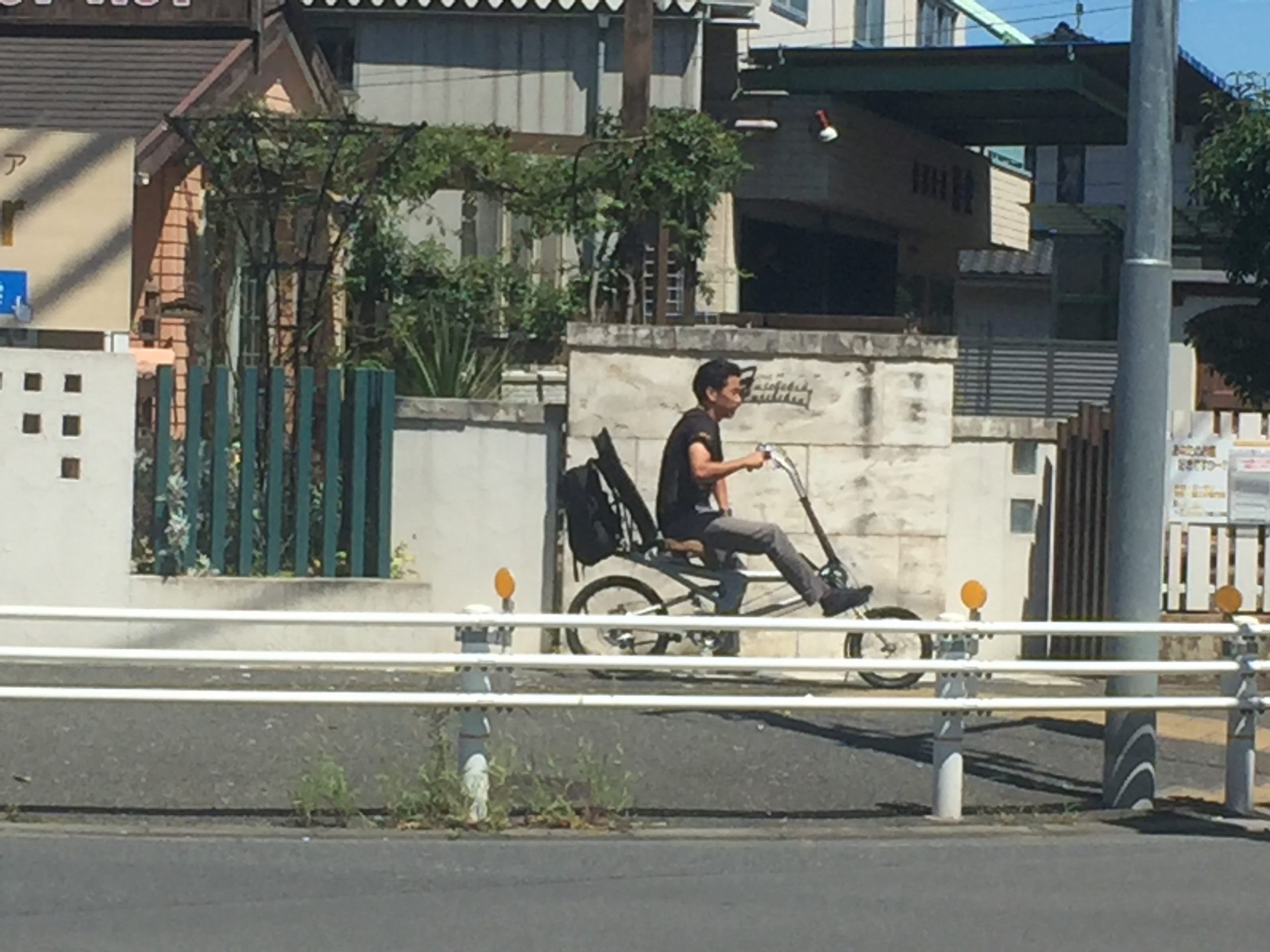
After the park, I caught up to a man riding a bicycle with a prosthetic leg. After my experience on Oshima with only one pedal I have a new appreciation for the difficulties of riding with a handicap. I wouldn’t be surprised if he was training for the Tokyo Special Olympics next summer as he was kitted out like a racer. The Tama Cycling Road is a popular place for road racing teams to train.
Lessons Learned:
I learned quite a few lessons on this short trip. The first being that the best way to stay dry while riding in the rain is to not ride in the rain. I know that sounds fairly obvious but if there is no pressing need to ride in the rain, don’t. The second lesson is that having good rain gear is important. For ongoing comfort it is important to try to keep your feet dry. Clothes will dry out fairly quickly once the sun comes out but shoes take time to dry.
As you can see from the video (if you have already watched it) that I brought the old orange tent. Now there was no reason I couldn’t have brought my usual green nylon tent but I made some alterations to the old orange, canvas tent and I wanted to try them out. I sewed in snaps along the bottom to help close the gap between the floor and walls. My theory is that will help keep rain from seeping in under the wall. I also put some velcro on the door and window to make them close better. All-in-all, it was an improvement but still not very good. Tent technology, if that is a thing, has come a long way since my castoff canvas tent was new. I really like having the extra space of a two-person tent. I have no excuse to buy a new tent, but maybe I will just window shop for a cheap one. One thing that became clear is that regardless of which tent I use I need a ground cloth to help keep the tent floor dry and clean.
The final thing I can think of is that I need to find the leak in my air mattress. When it is properly inflated it is comfortable enough to get a good night’s rest but when it’s not it is no better than sleeping on the hard ground. I think the leak must be around the valve or maybe the seams. I checked it once before but I couldn’t find it. I don’t think it leaks until I lay down on it.
Akishima Whale.
In August 1961, a whale fossil was discovered here in Tama River. The fossil was about 13.5 m long, (44′ 3″ for the metrically challenged. I’m looking at you, fellow Americans) and is related to the species of Eschrichtiidae or the gray whale. The whale is thought to have lived approximately 1.77-1.95 million years ago, based on the stratum where the fossil was found. The fossil was an almost complete skeleton and featured in the press at the time. The discovery was an epoch-making event that put “Akishima City” on the map. Since then, the fossil has been popular among citizens as the “Akishima Whale”.
The finding of the fossil indicates that this area was a shallow sea about 2 million years ago. The fossils of shark teeth and shellfish have also been discovered from this area. In addition, Stegadon Aurorae and Elaphurus Davidianus fossils have been found from the upper course of the Tama River.
In January 2018, the research of the whale fossil revealed that the Akishima Whale was a new species. The official scientific name “Eschrichtius Akishimaensis” was given to the fossil. Eschrichtiidae or the gray whale is in the family of baleen whales with a single extant species, the gray whale, which inhabits the North Pacific. Studies of the fossil indicates that the Akishima Whale is a different species from the existing gray whale.
Rail Disaster
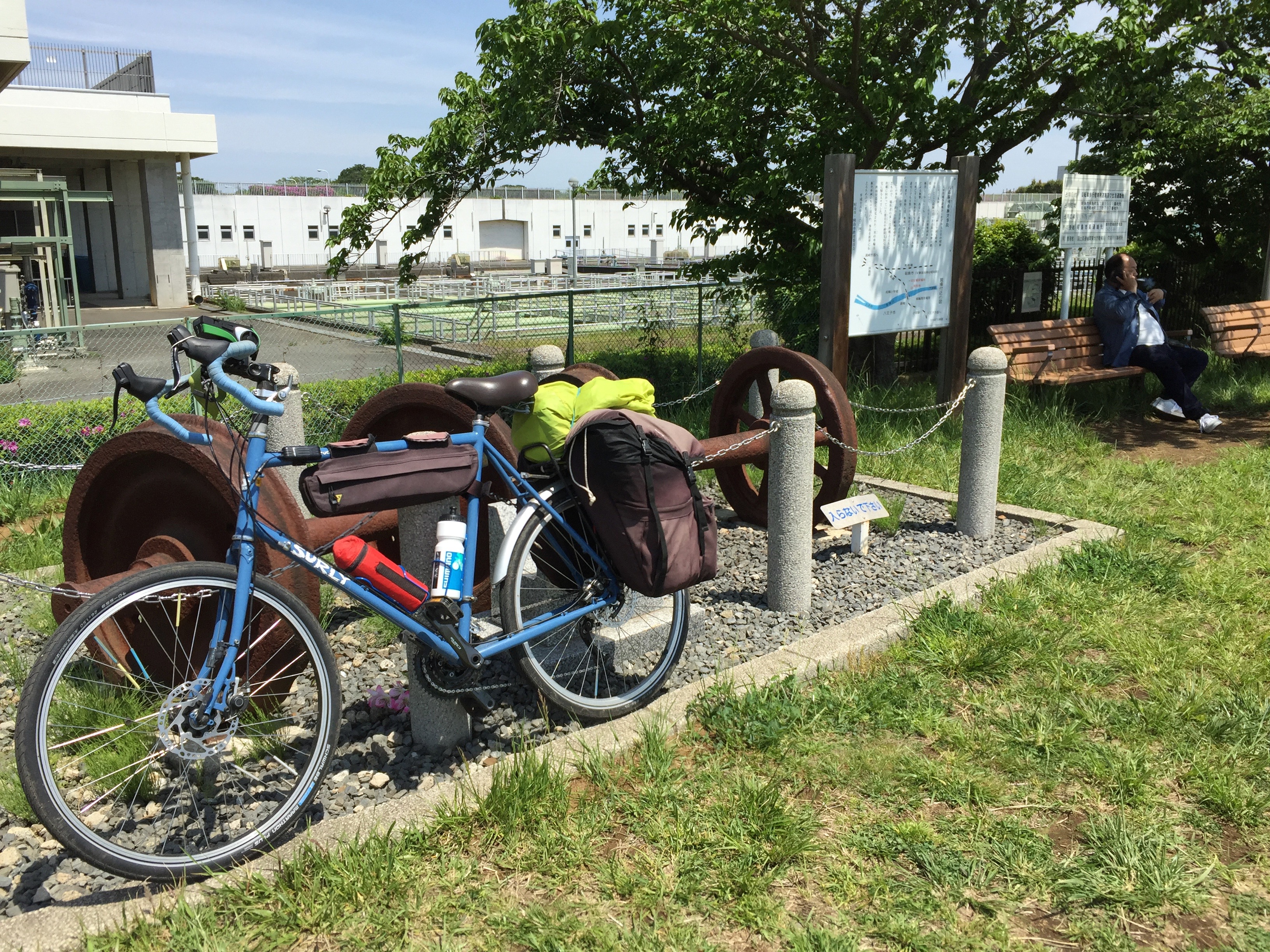
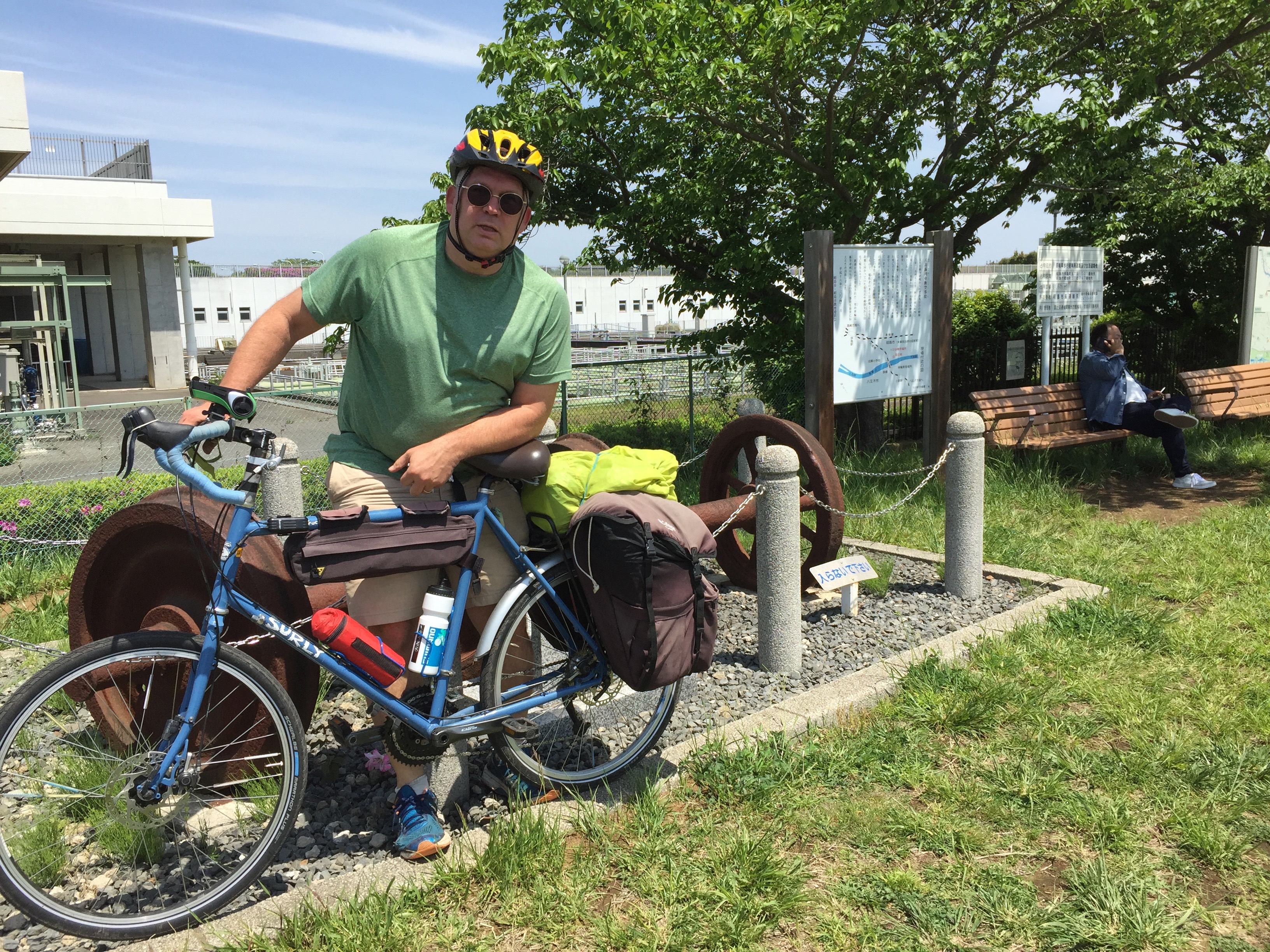
On August 24, 1945, just 9 days before the end of World War II, two passenger trains collided with each other on the bridge that crosses the Tama River. 105 people died from the collision or from falling into the river while another 67 were injured. It is still considered one of the worst rail disasters in Japan’s history. The official cause is heavy rain and flooding. There is a memorial along the bike path to commemorate the disaster. Two sets of steel train wheels are exhibited with a plaque (in Japanese) that tells of the accident.
Photo Gallery
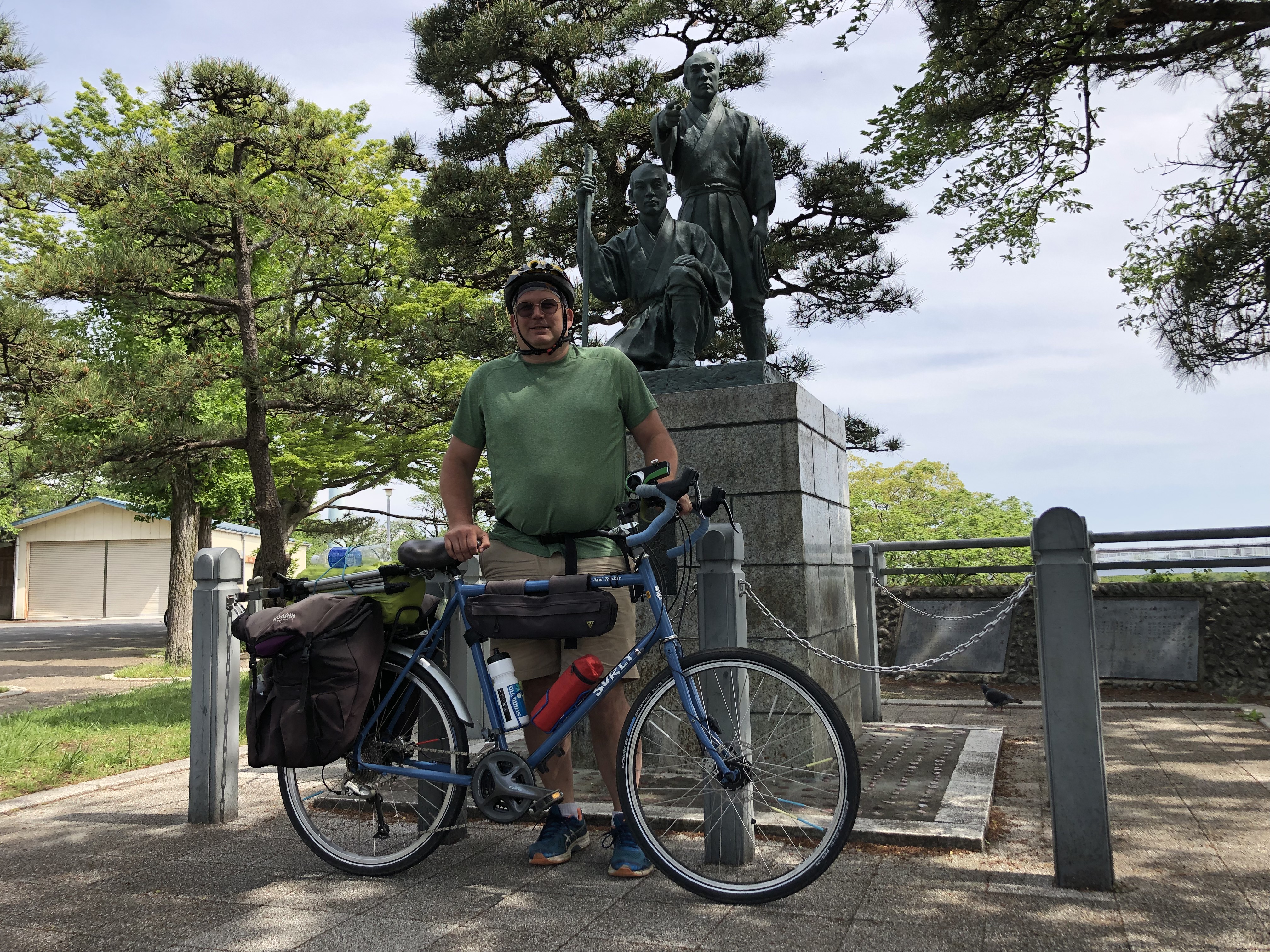
Video
[yotuwp type=”videos” id=”hGllcjPymZY” ]
Home | Photo Gallery | Podcasts | Videos
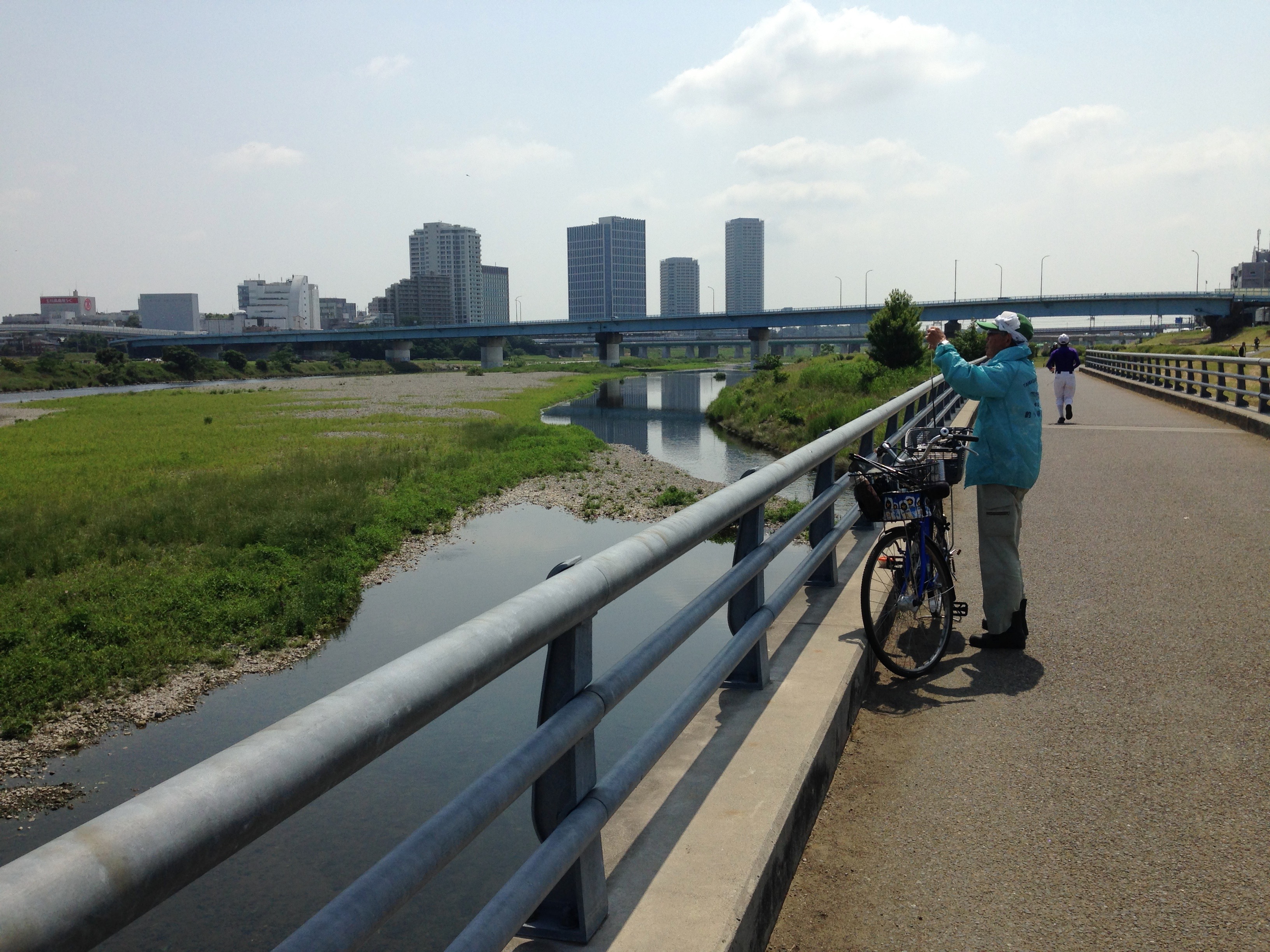
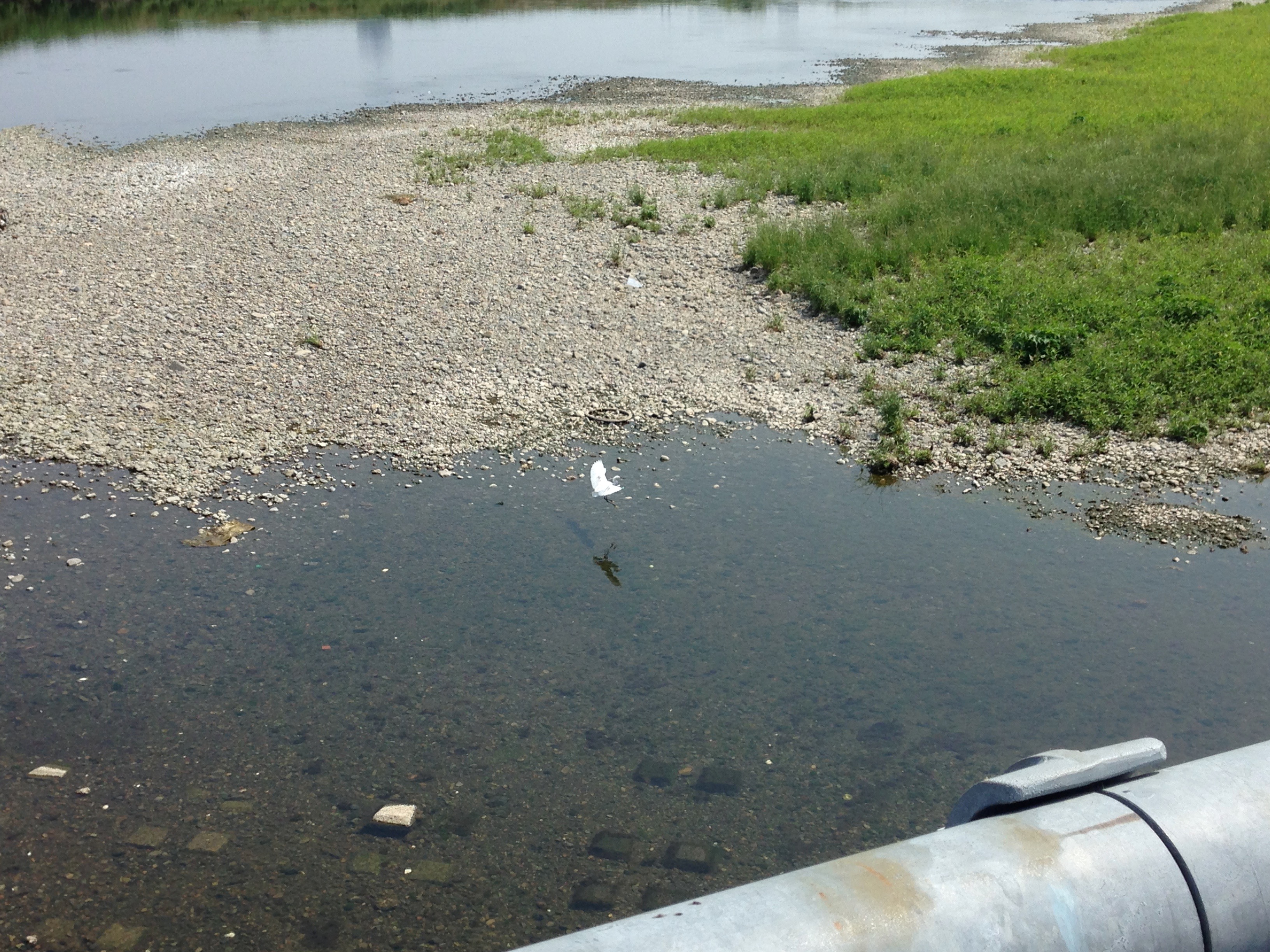
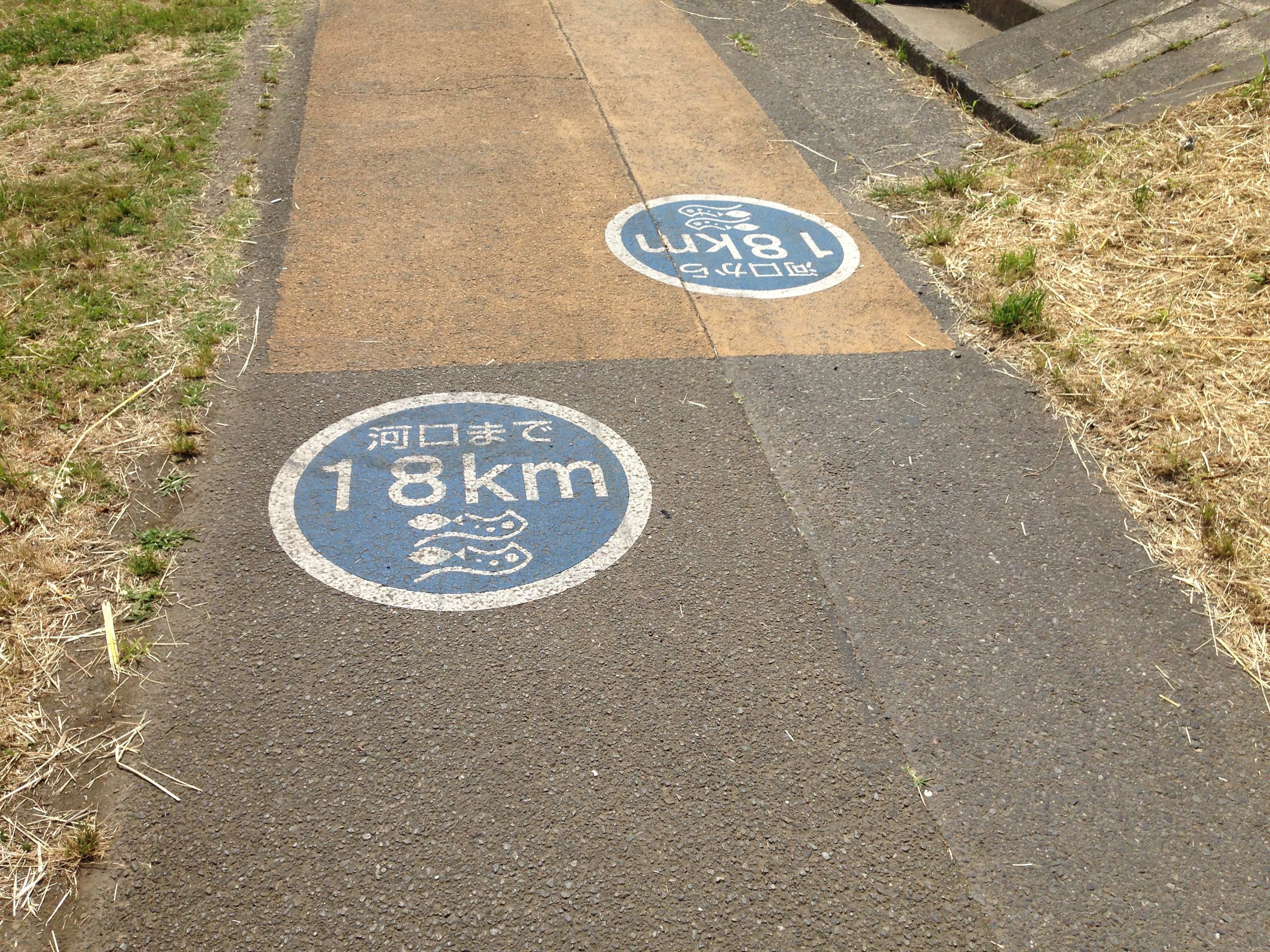
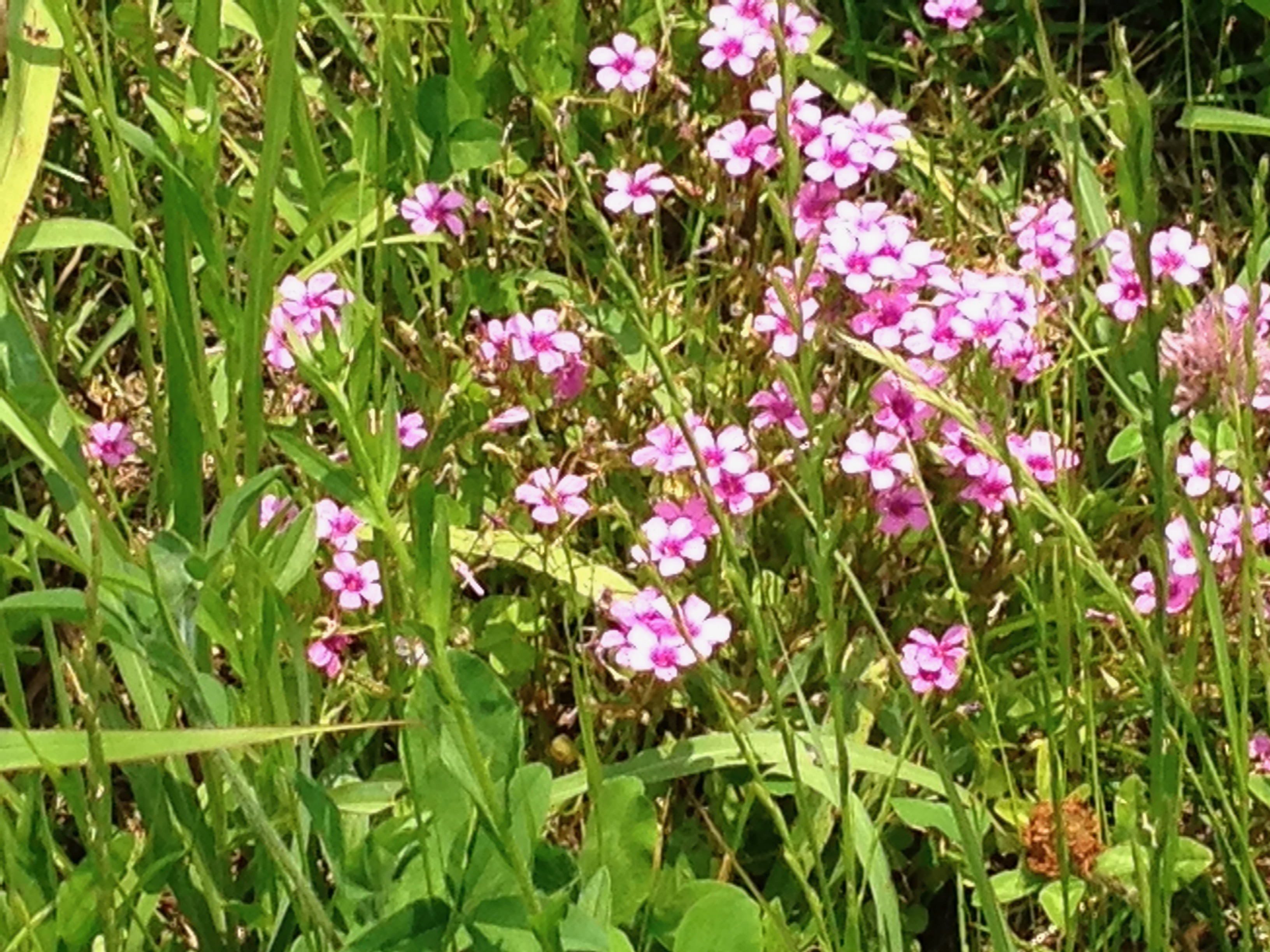
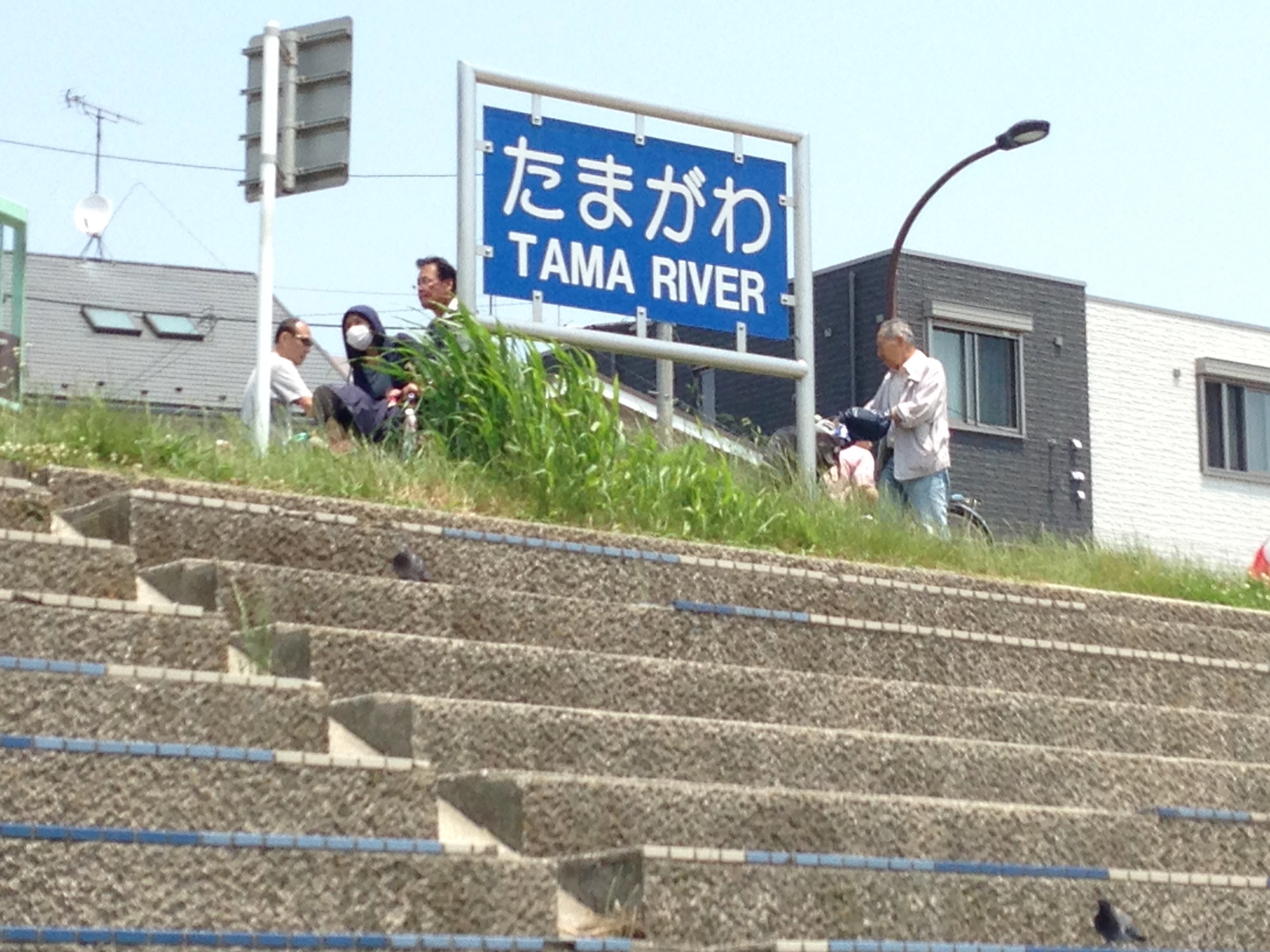
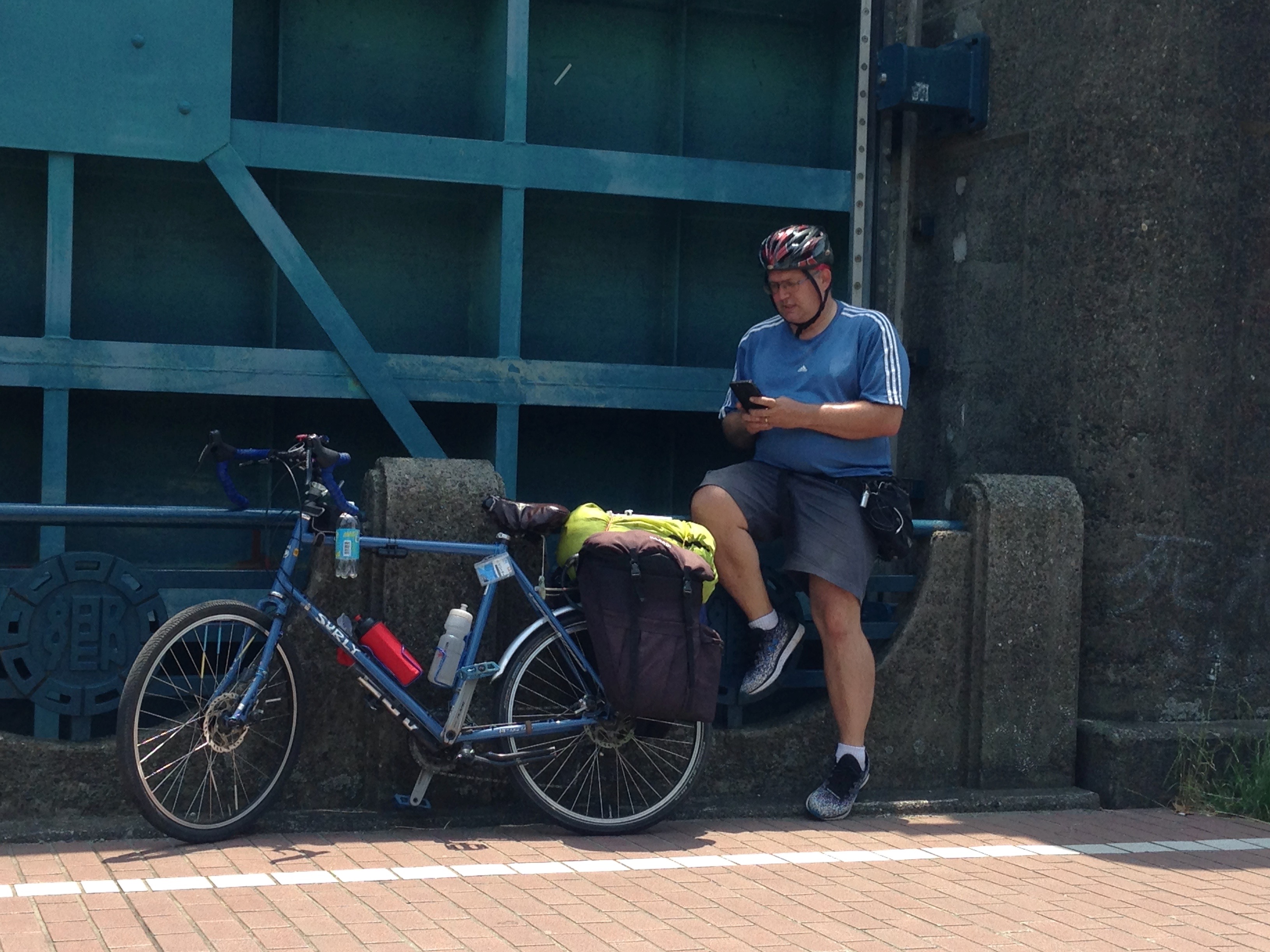
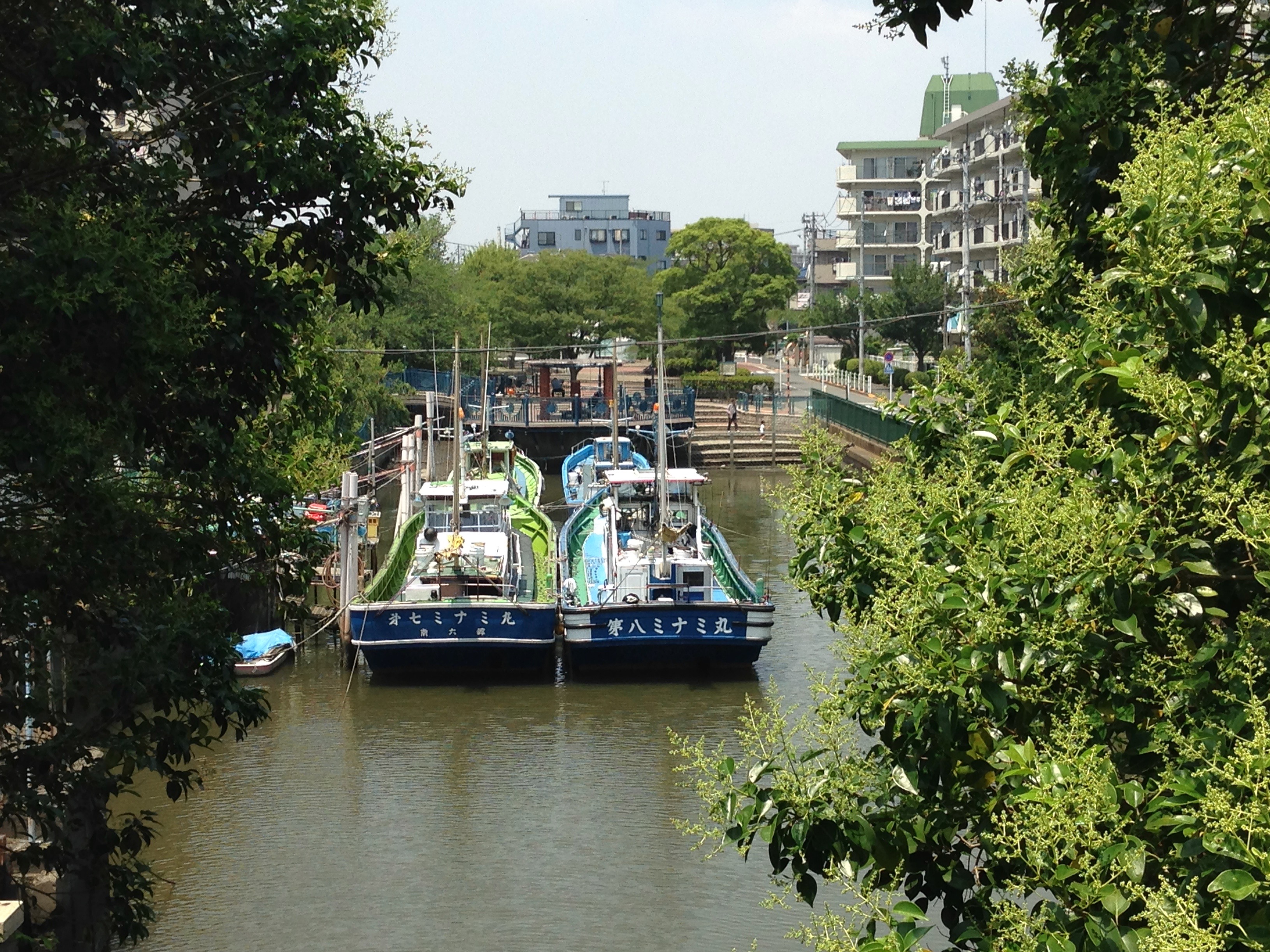
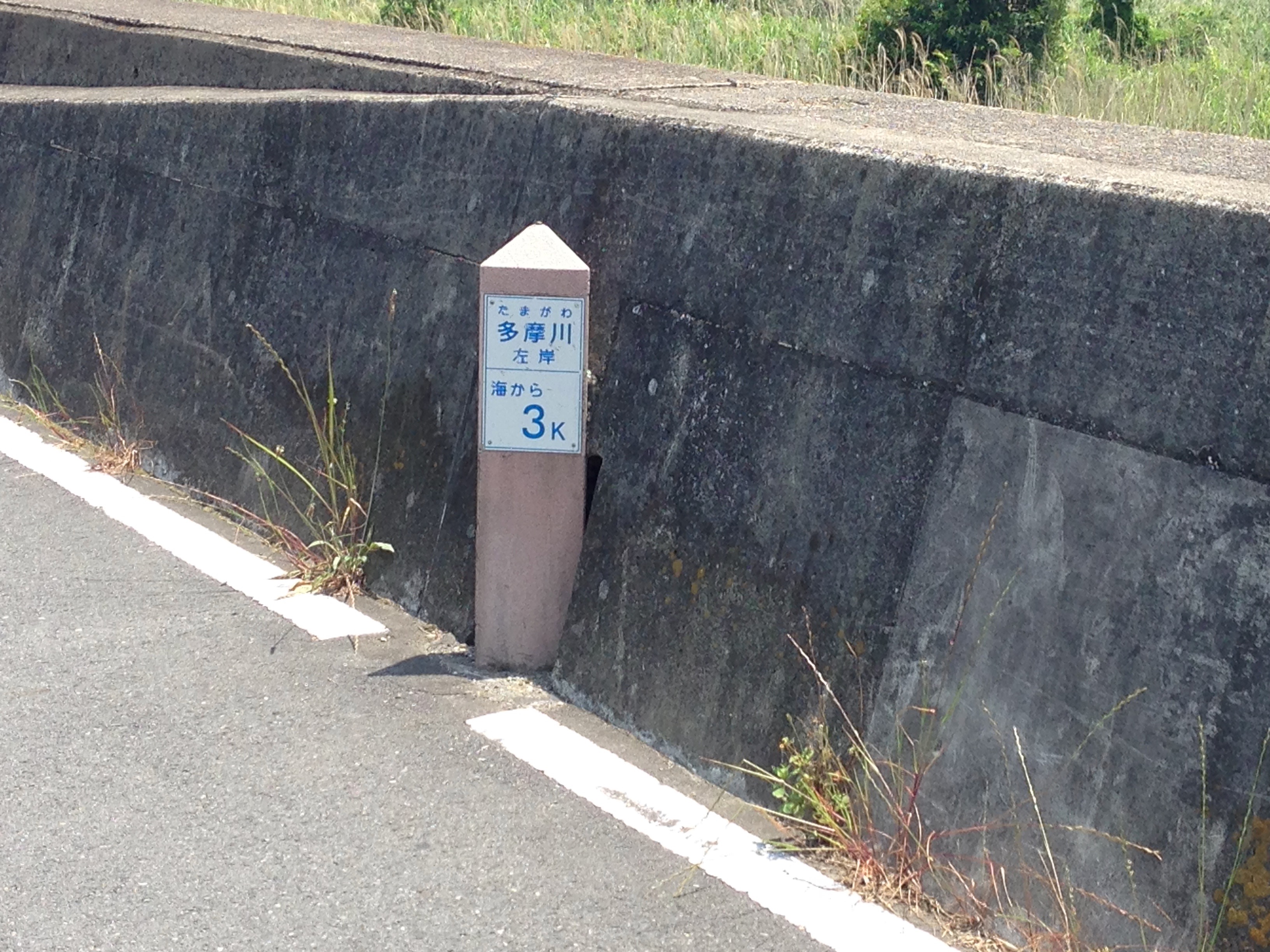
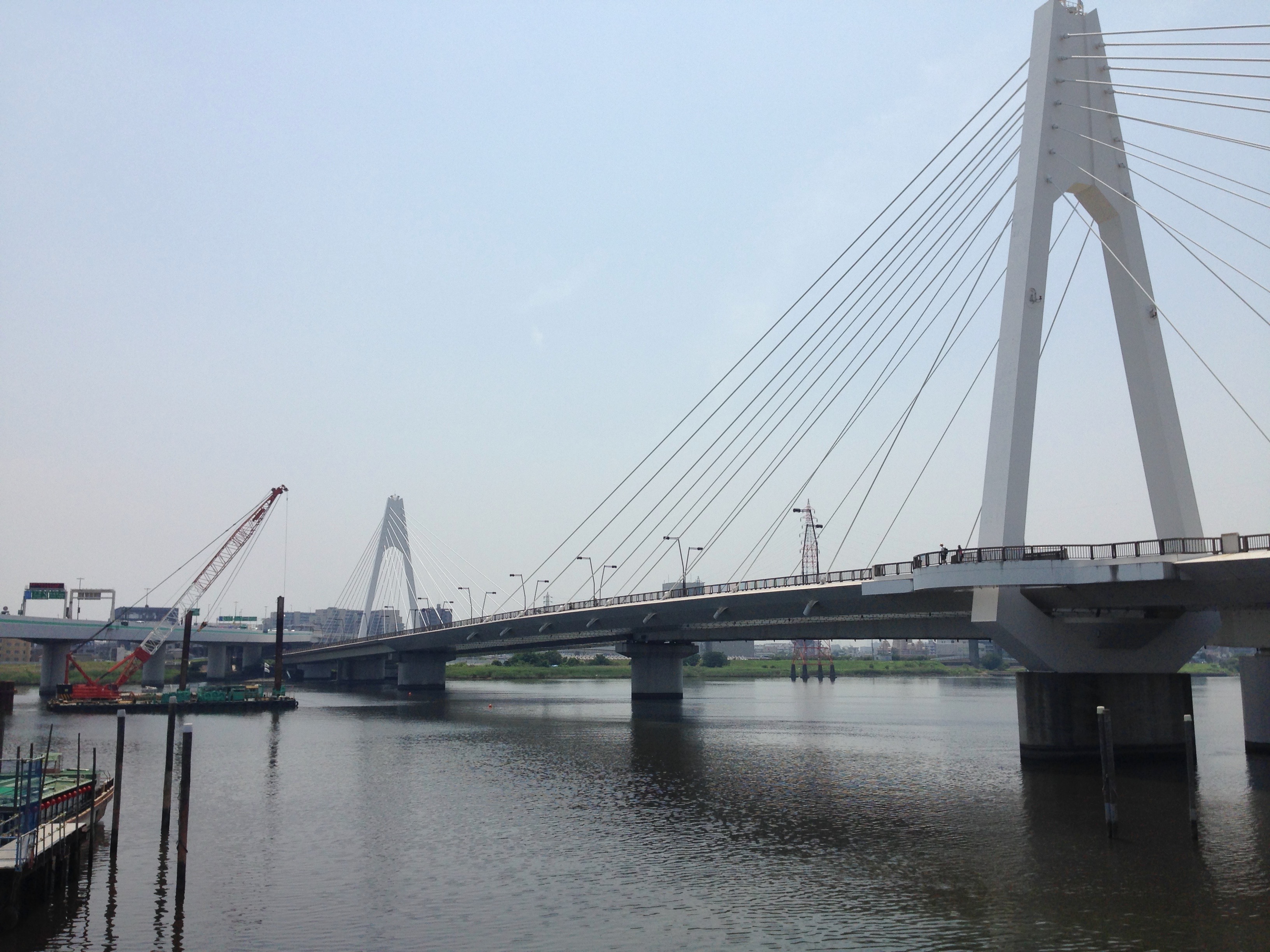
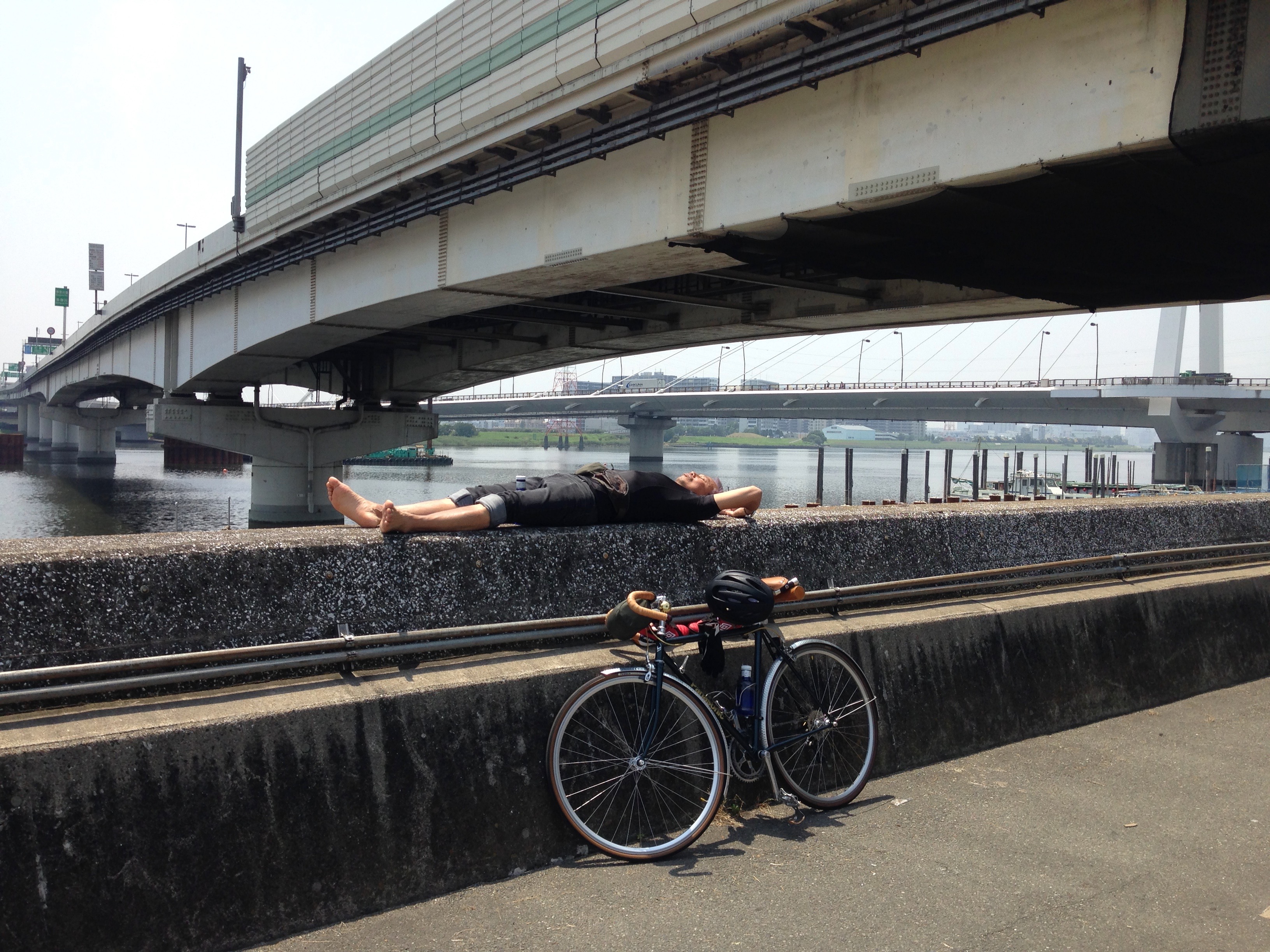
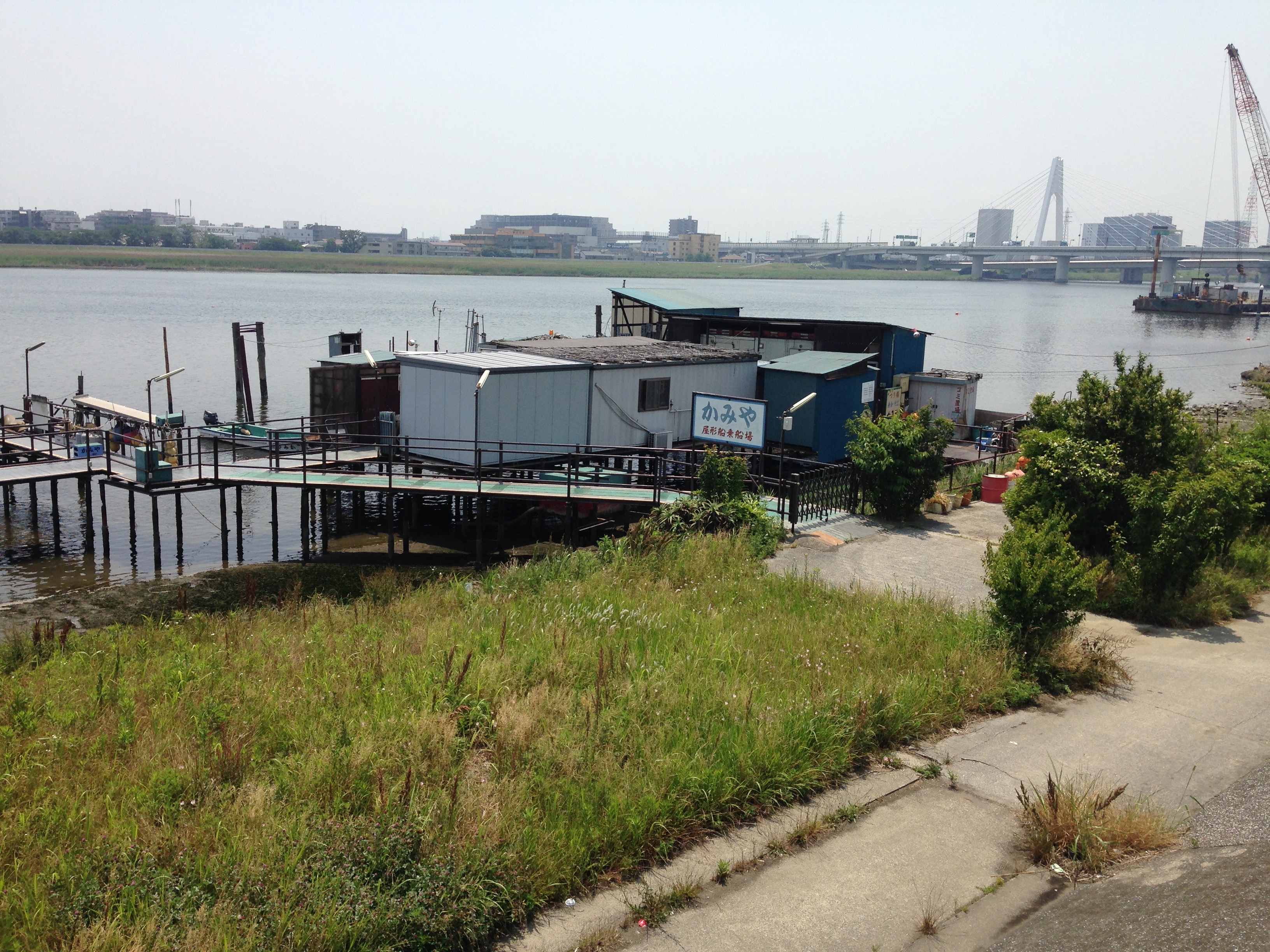
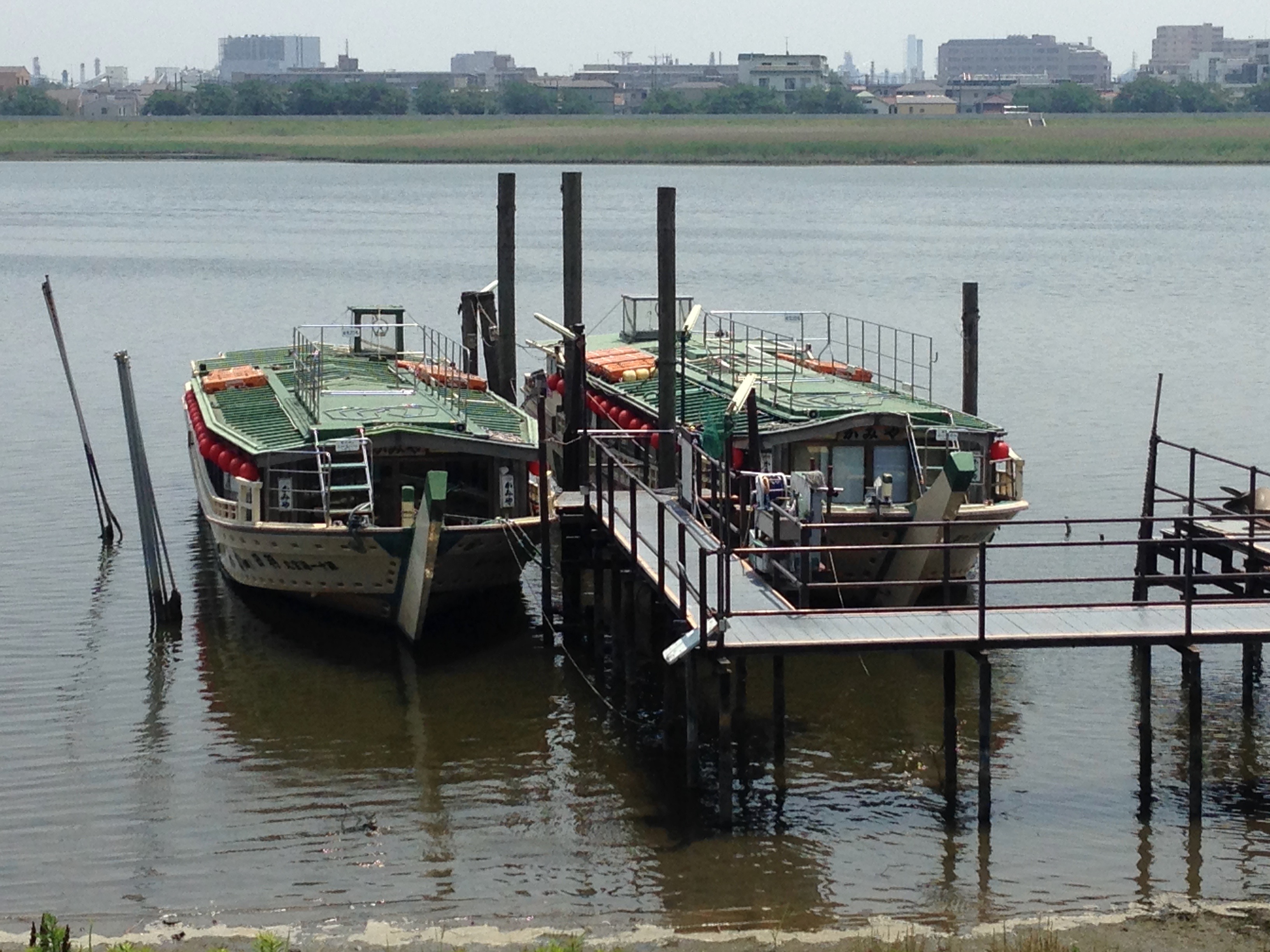
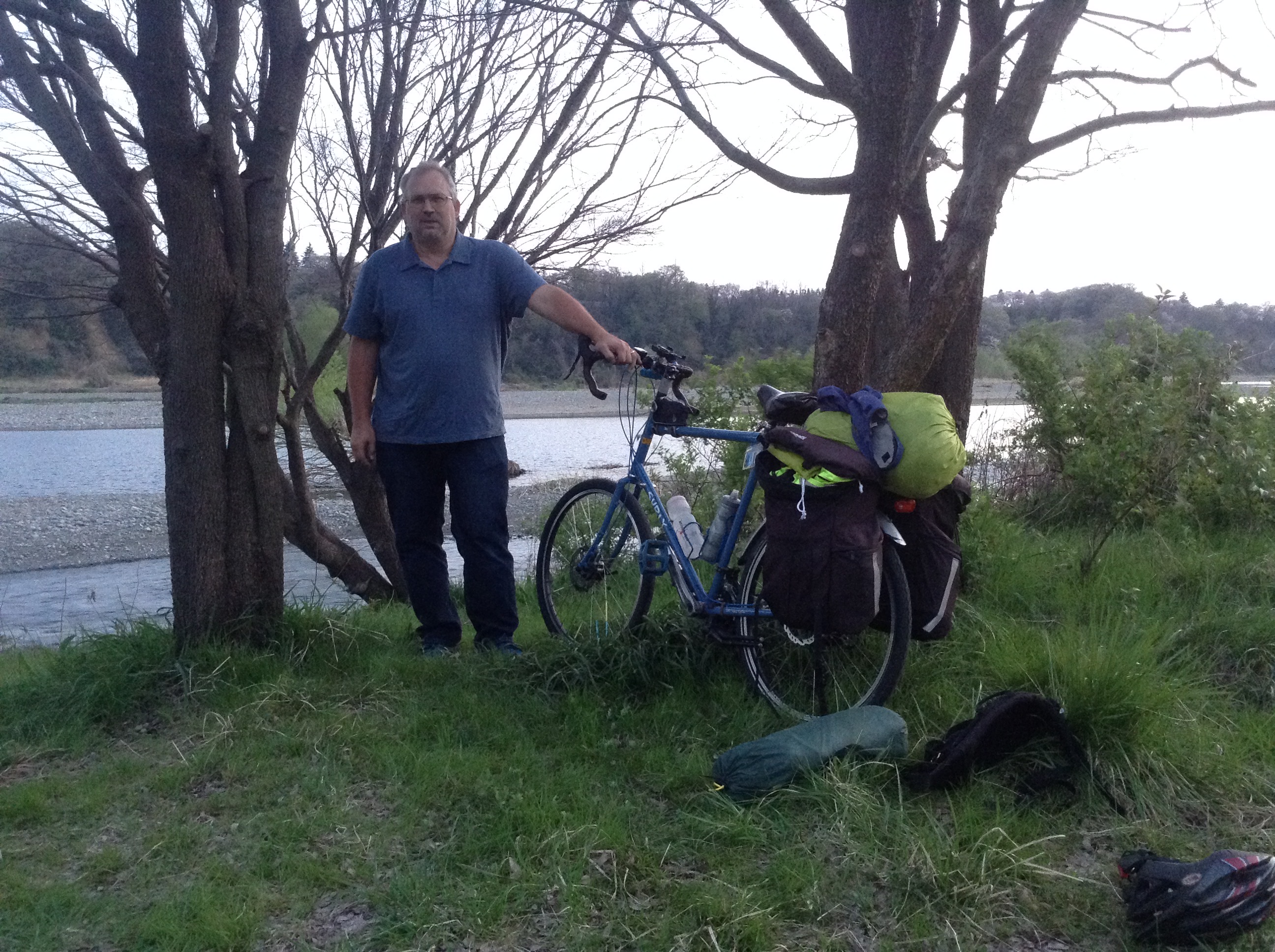
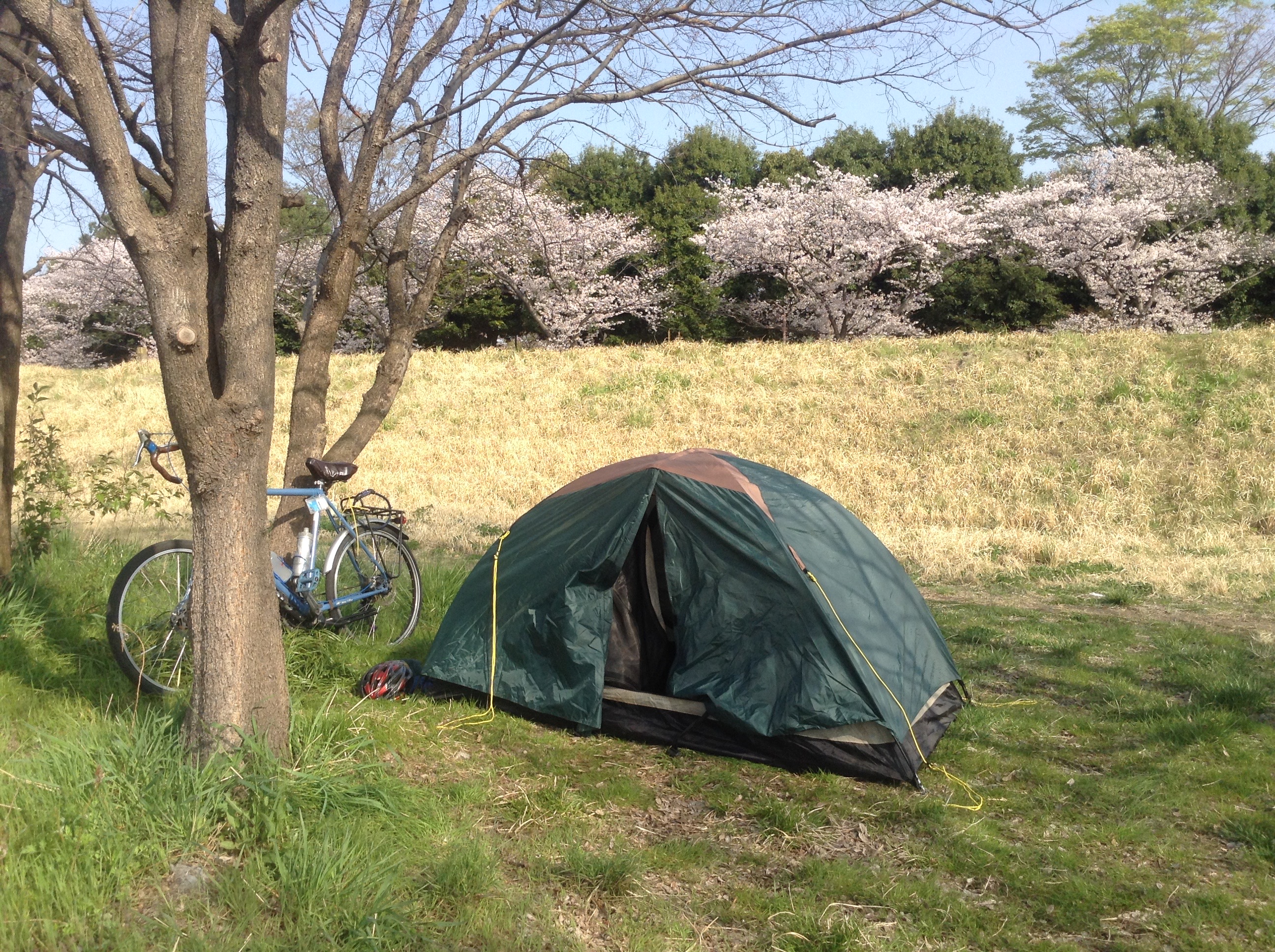
]]>This was a really good overnighter where I stealth camped along the Tama River.
Photo Gallery
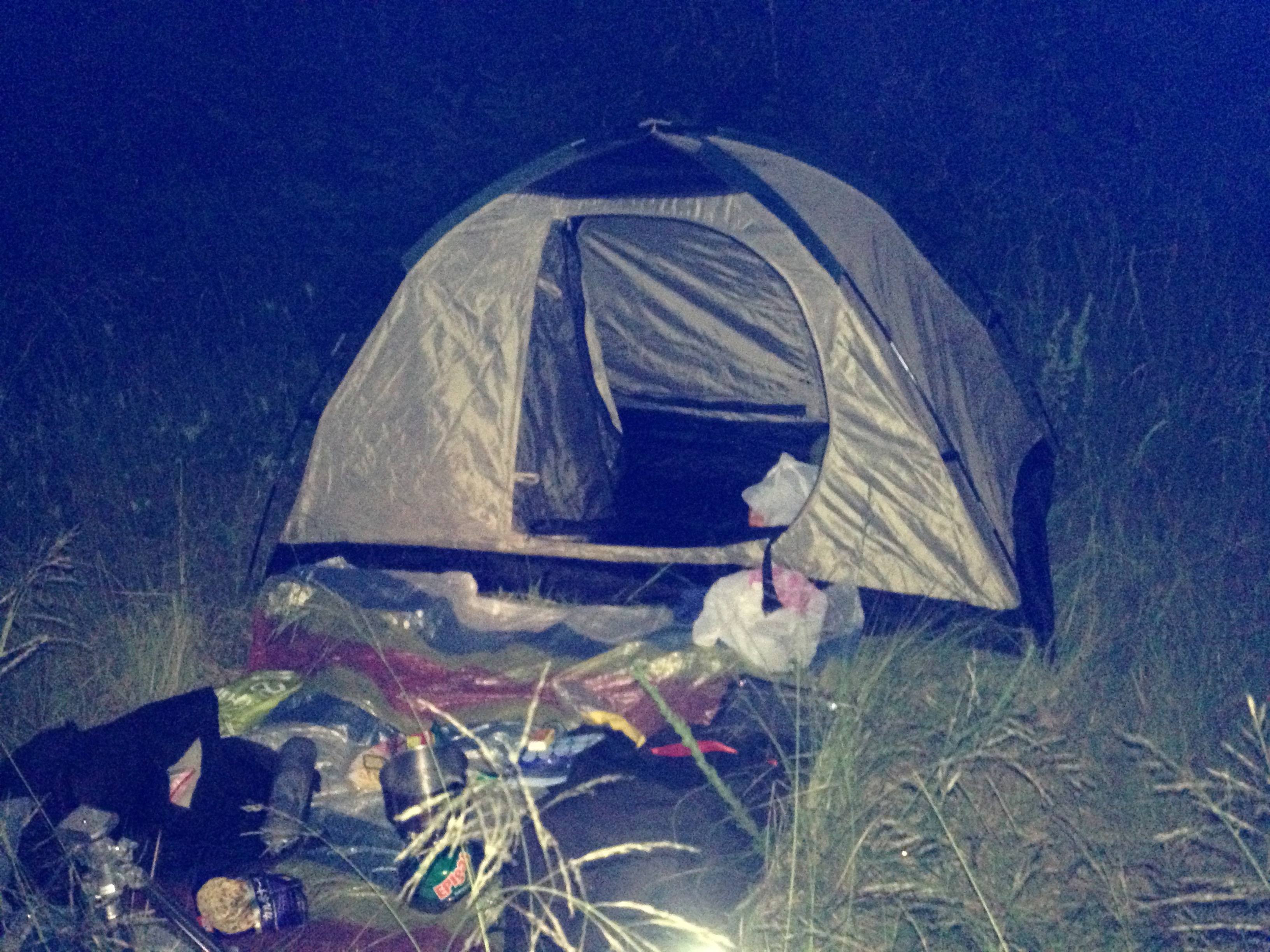
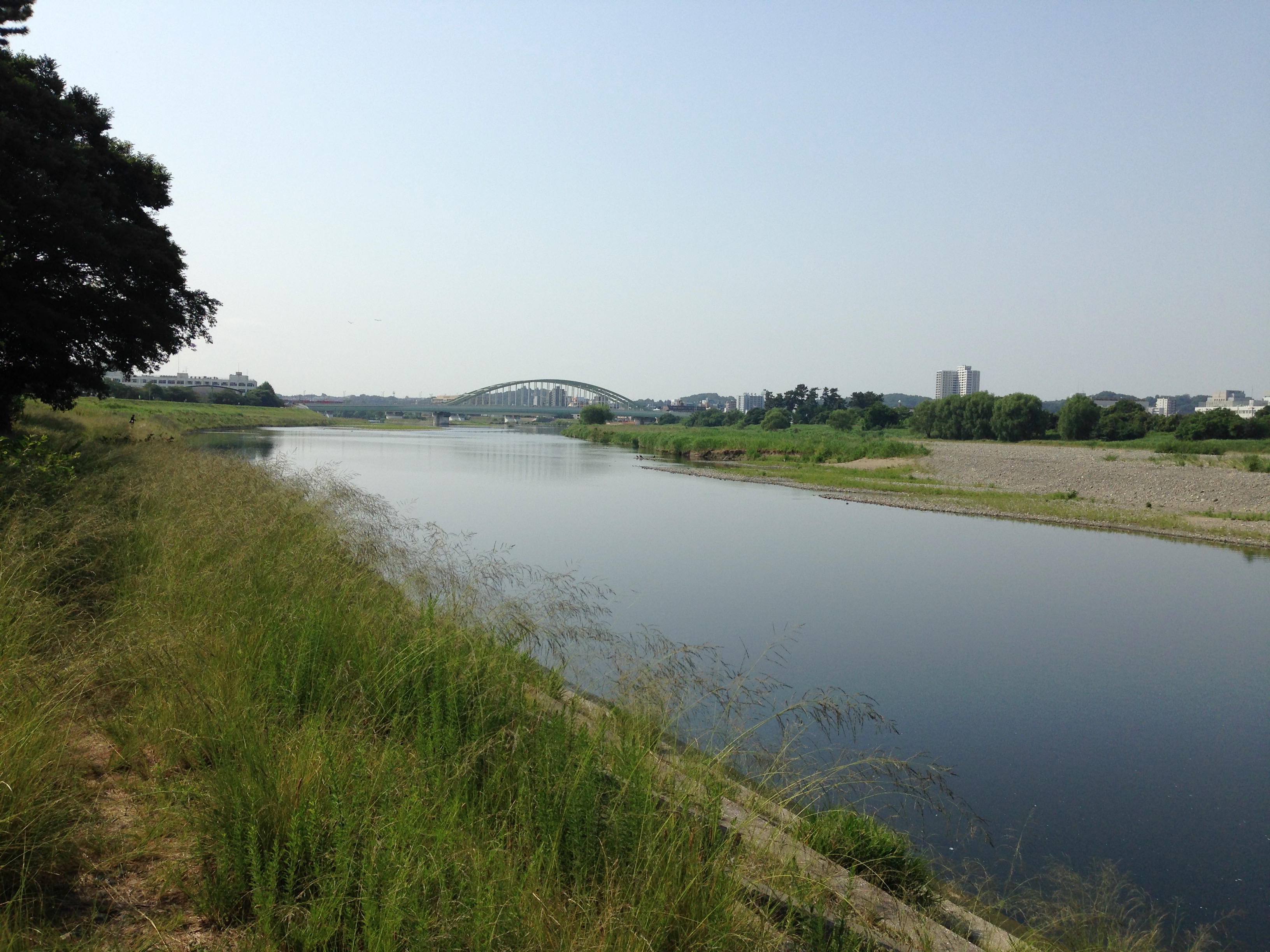
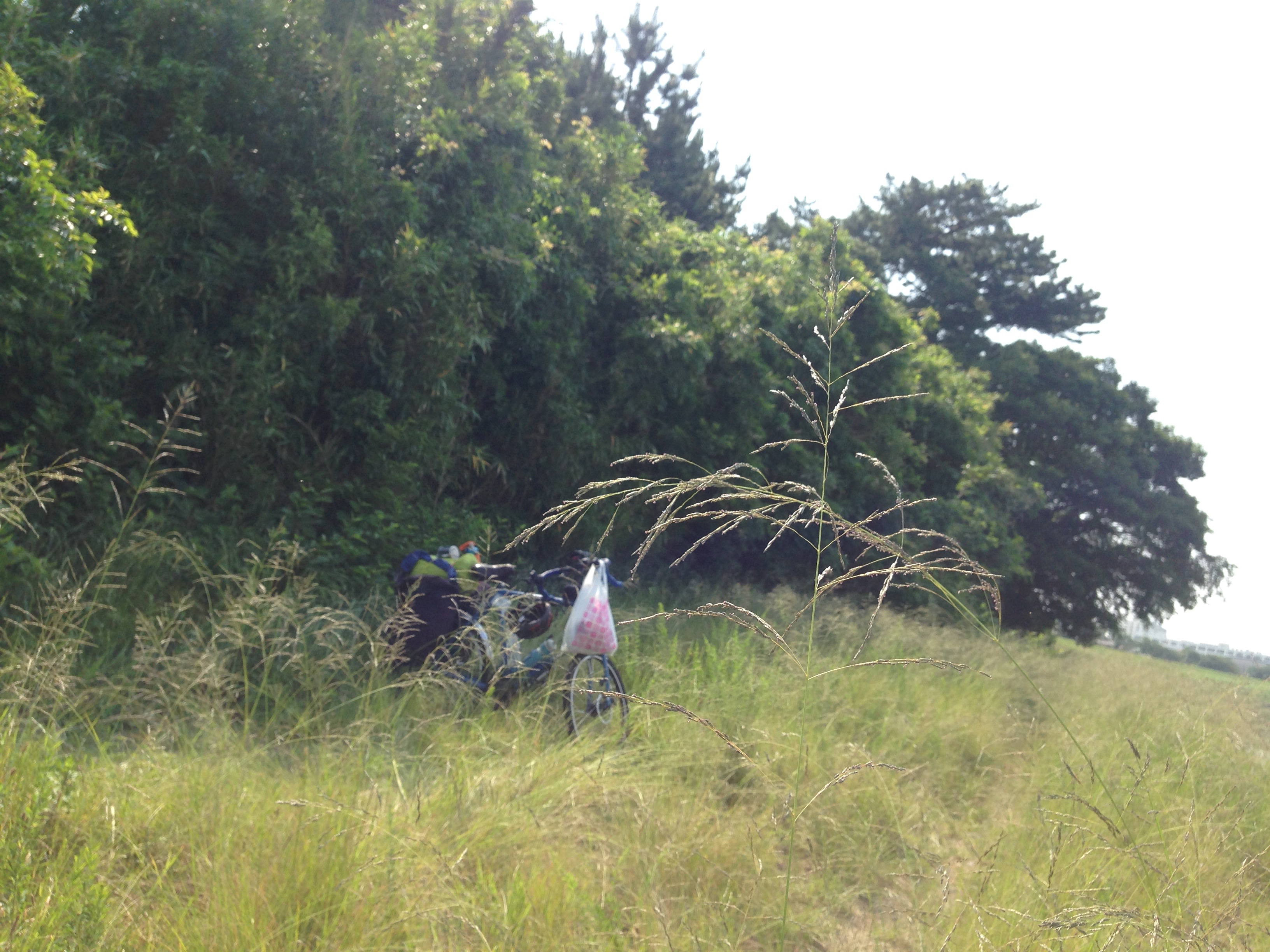
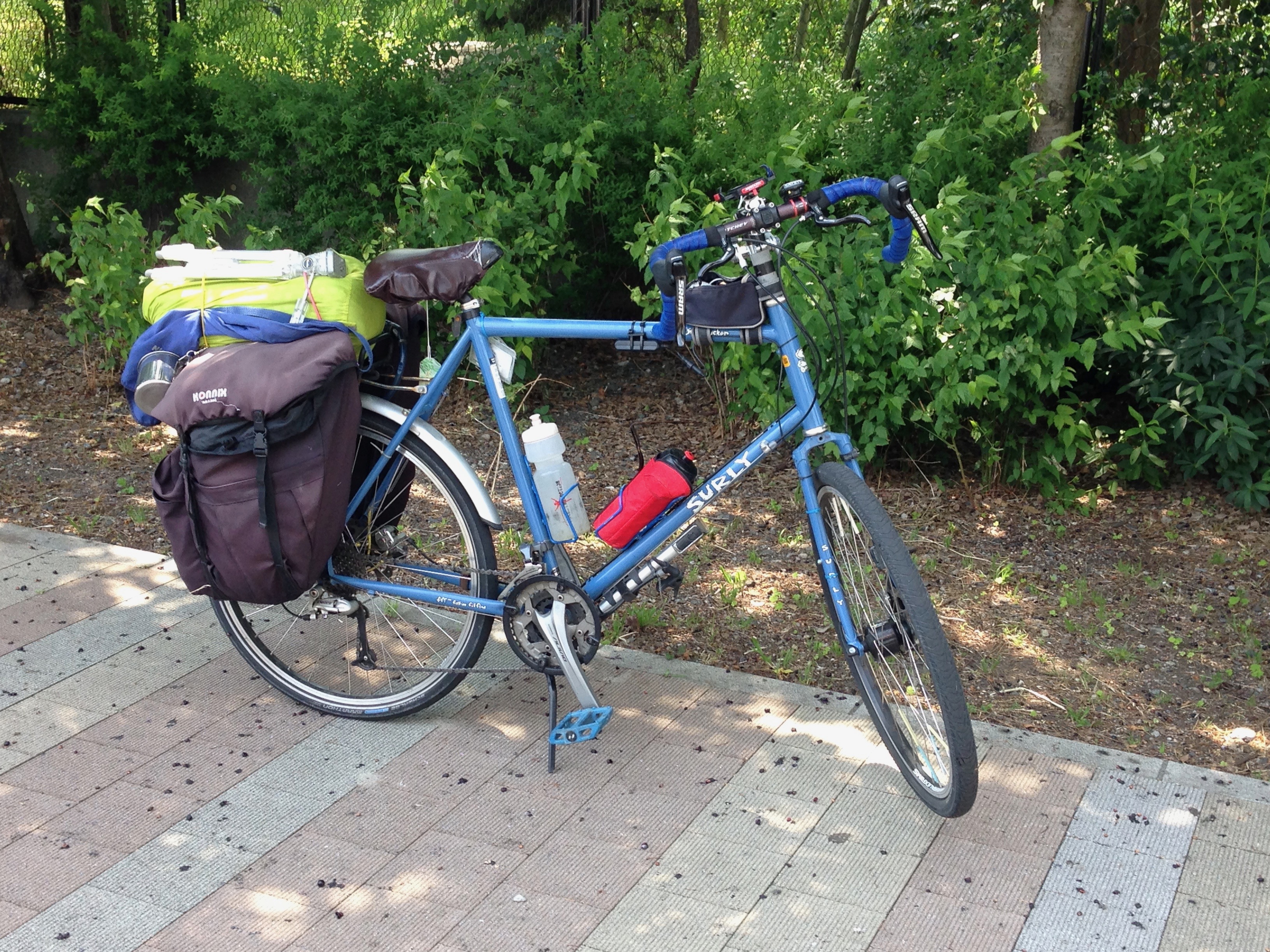
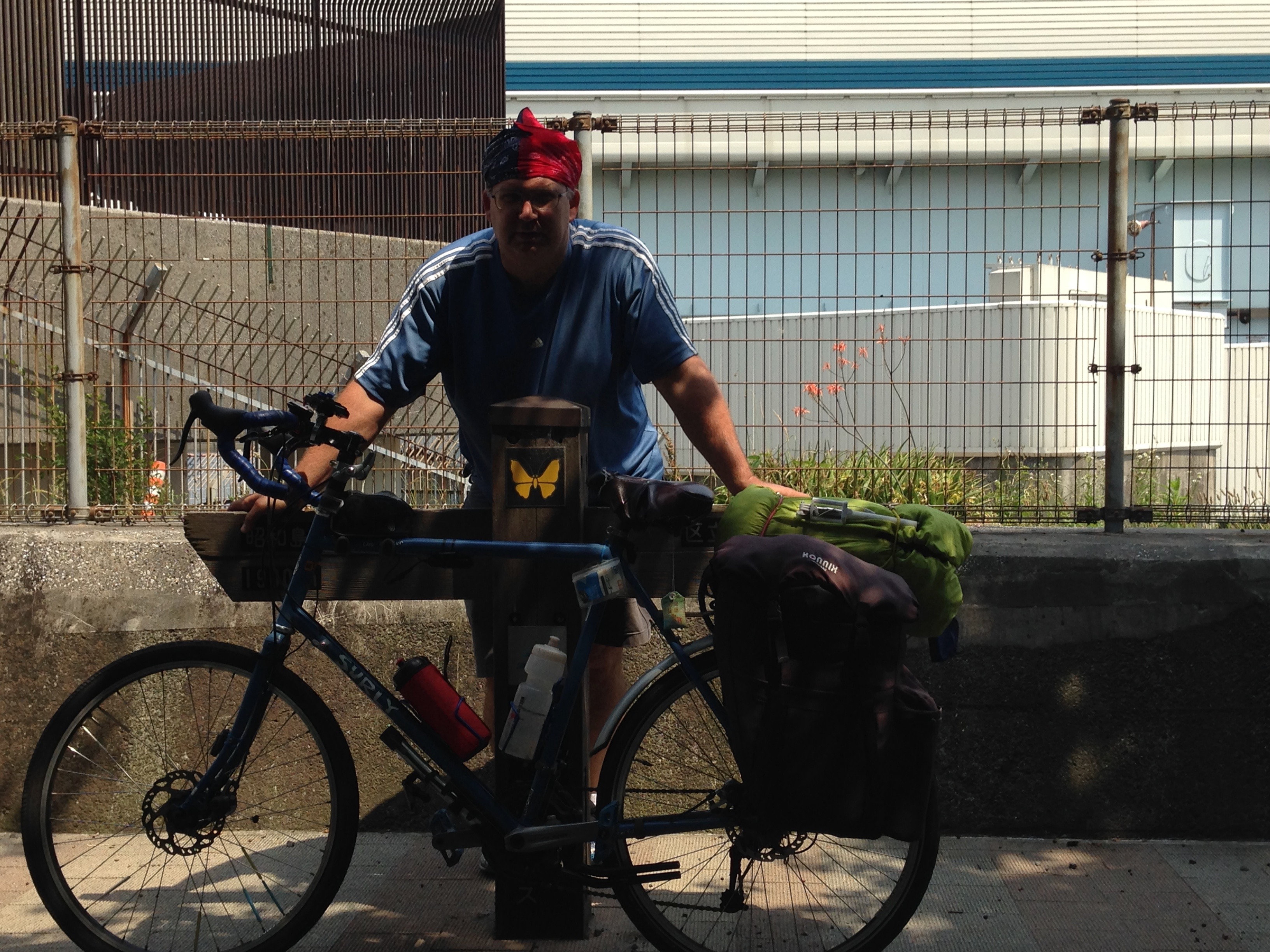
Video
[yotuwp type=”videos” id=”ArTi-S1jwFA” ]
Home | Photo Gallery | Podcasts | Videos
]]>The video for this tour has been on the Youtube channel for a long time but I thought it deserved a blog article as well. It was one of the first videos I made so the audio has too much echo in places and the video is a bit shaky so please be kind when you view it. I think my video skills have improved since then. I am writing this article a full 10 months after the fact. It was a wonderful trip and well worth looking back on.
Day 1
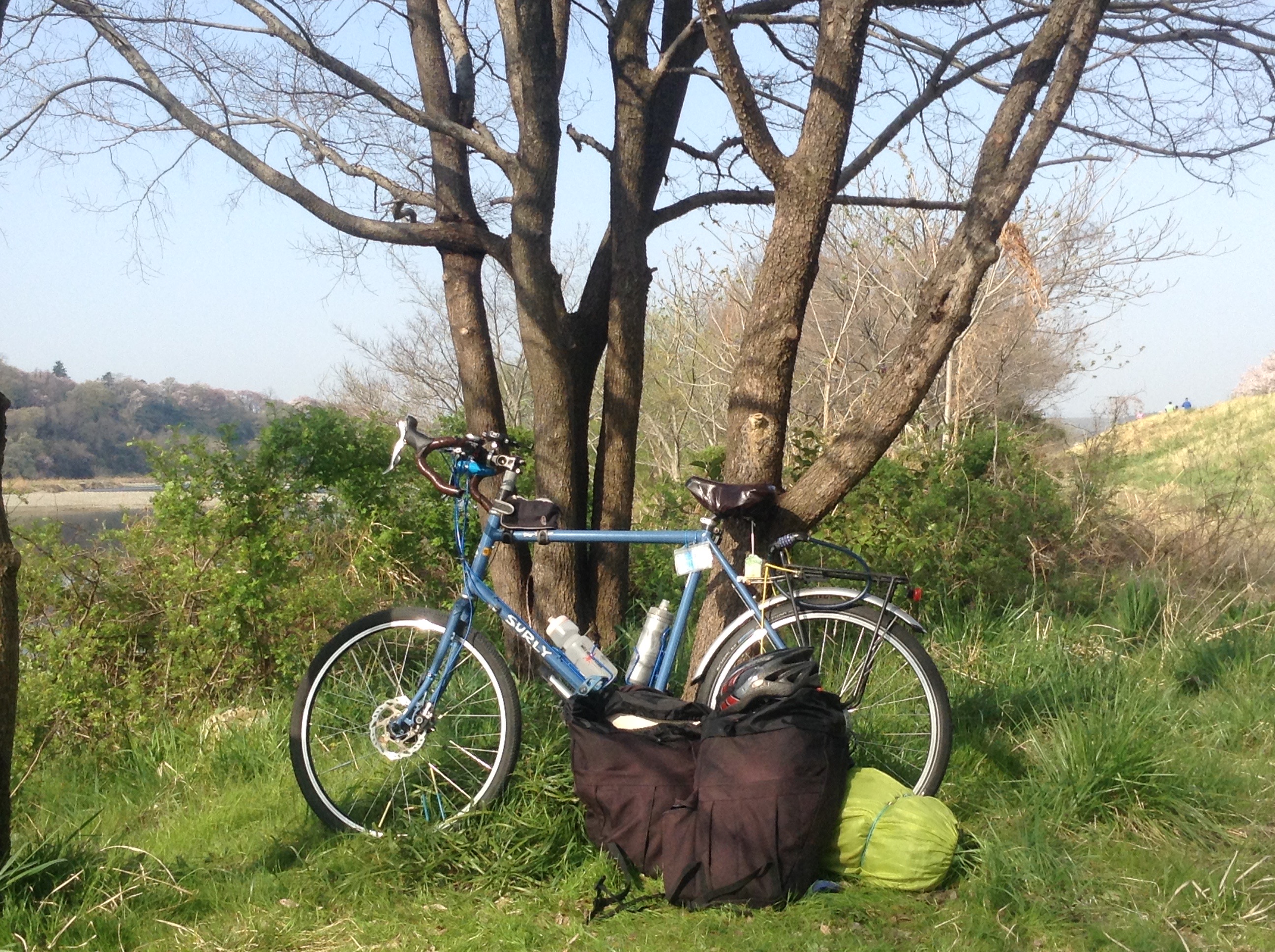
I left late in the day so the first day I had just enough time to get to the river, a mere 8 km away, and set up my camp before sunset. If I had just gone to the river and camped for the night then returned home it would still have been a good trip. This goes to show that you really don’t have to go far to go on a great bike trip. Maybe, technically, you can’t call an overnighter that is still in your neighborhood a bike “tour” but it can still be great.
Day 2
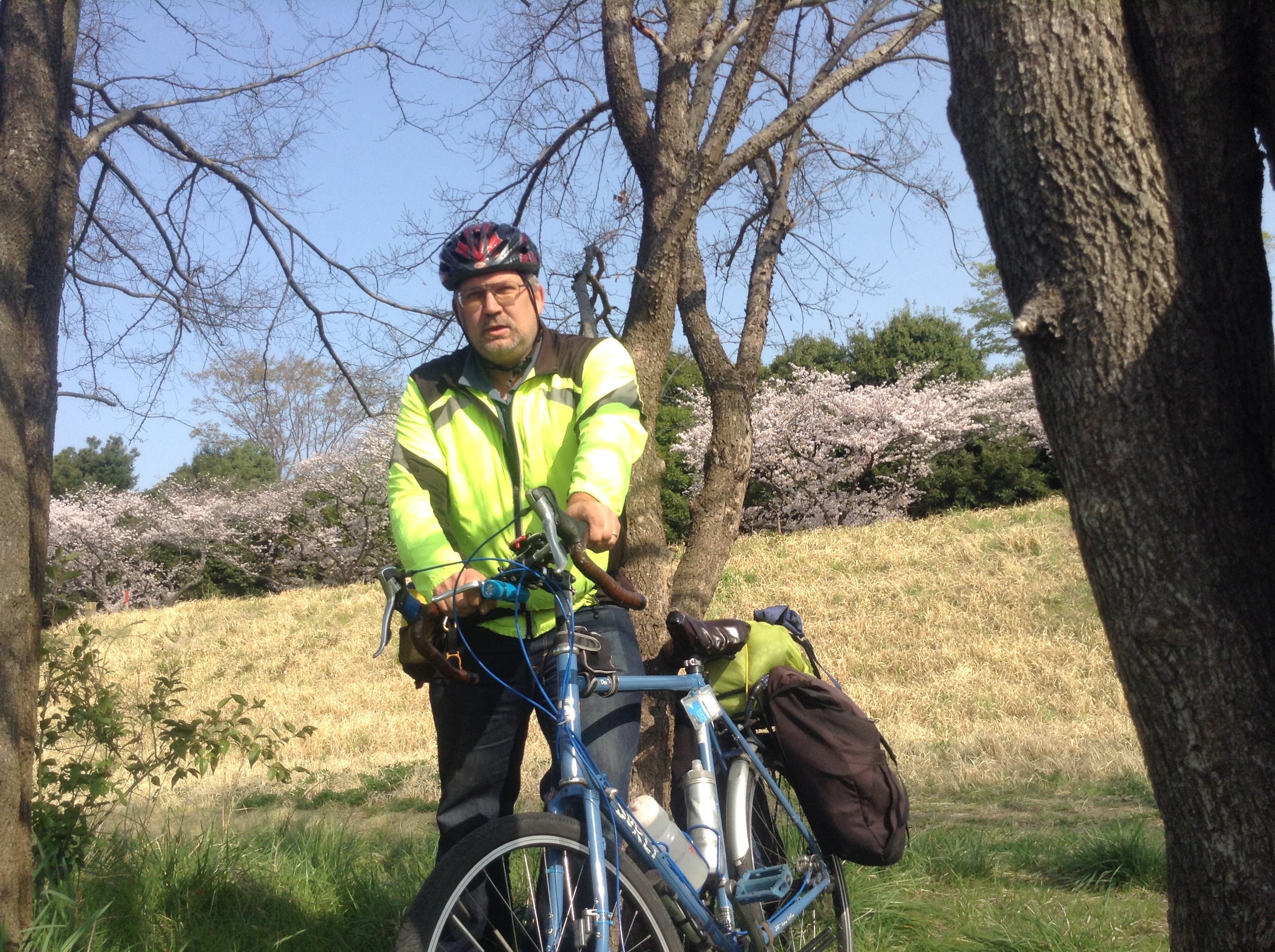
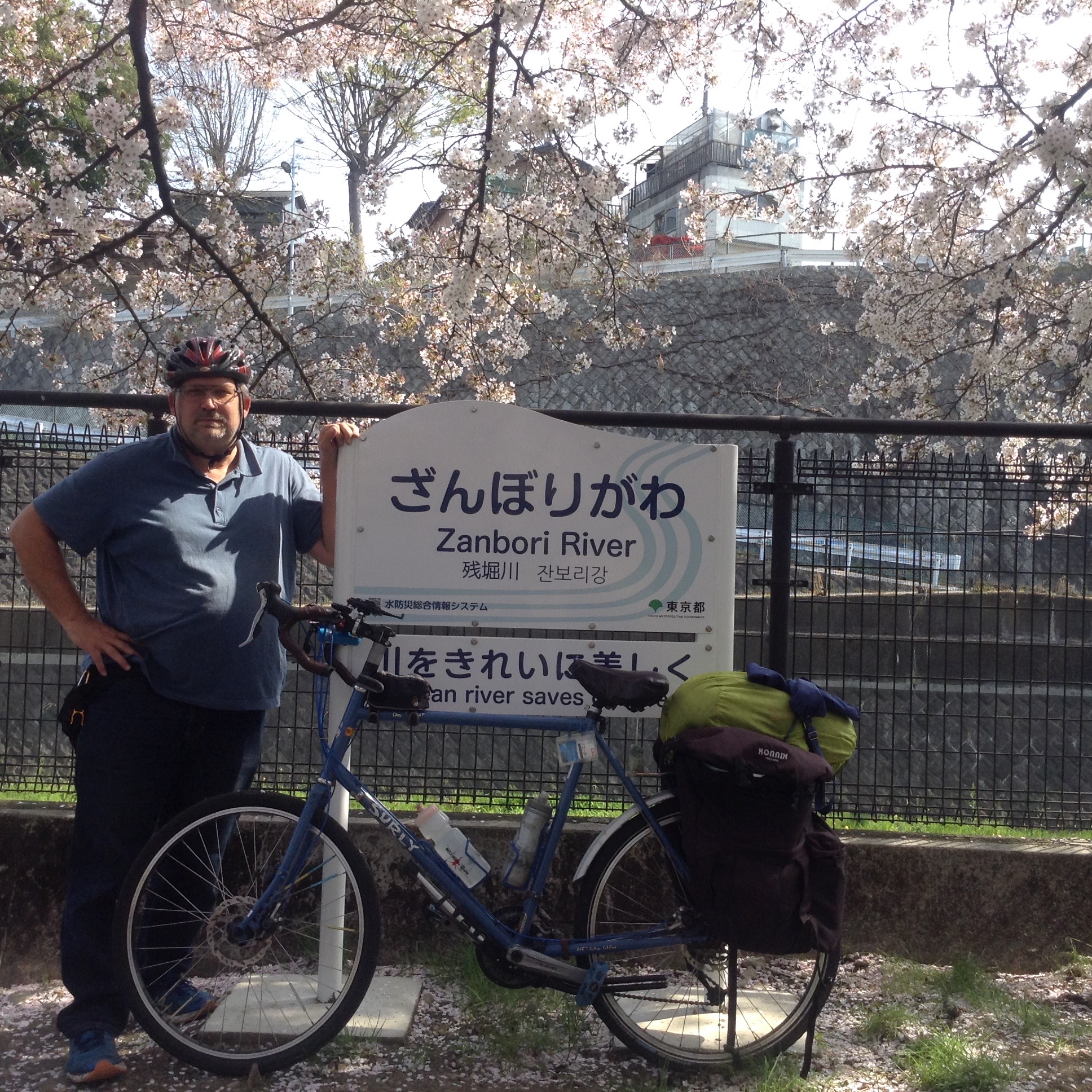
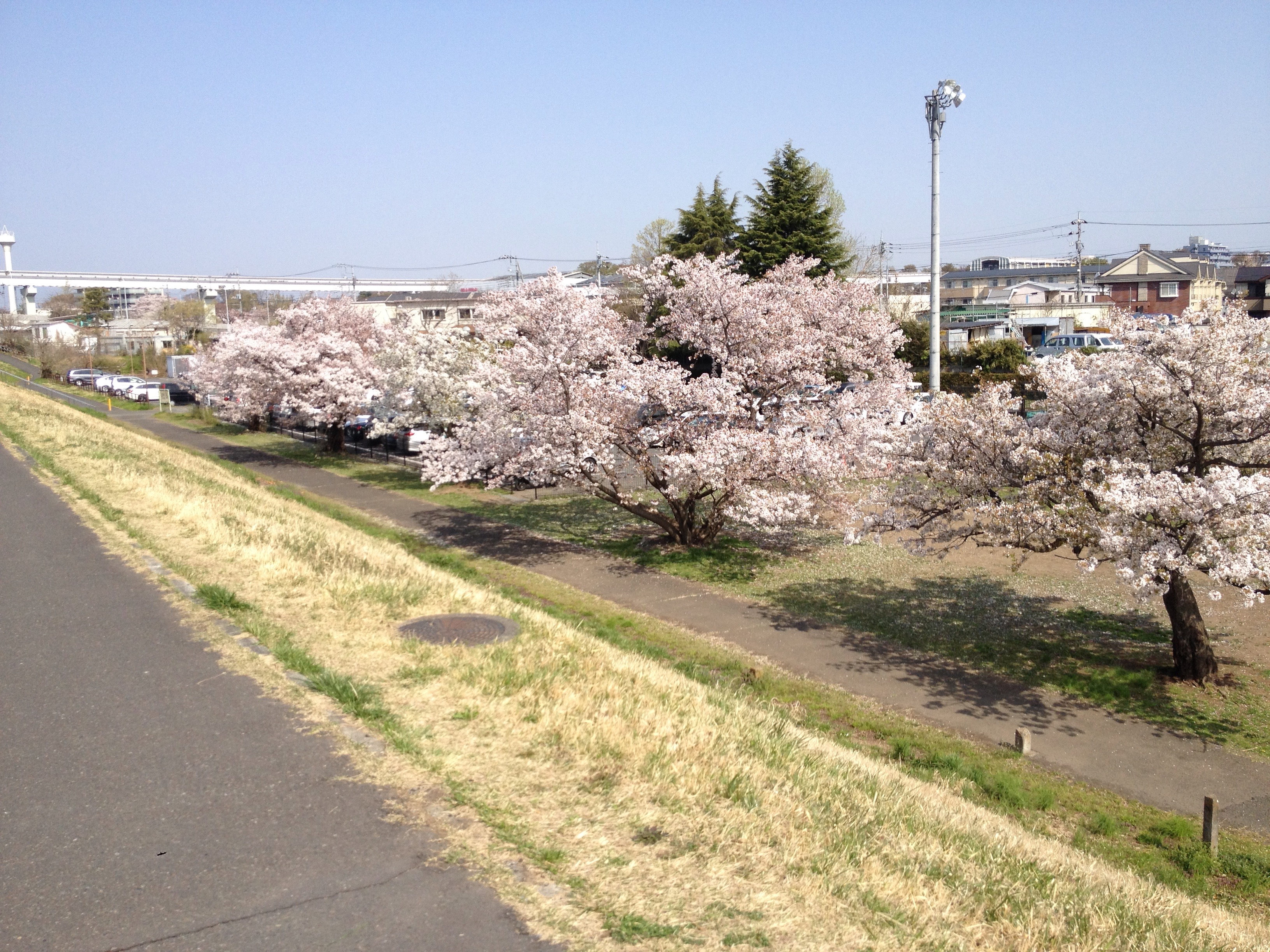
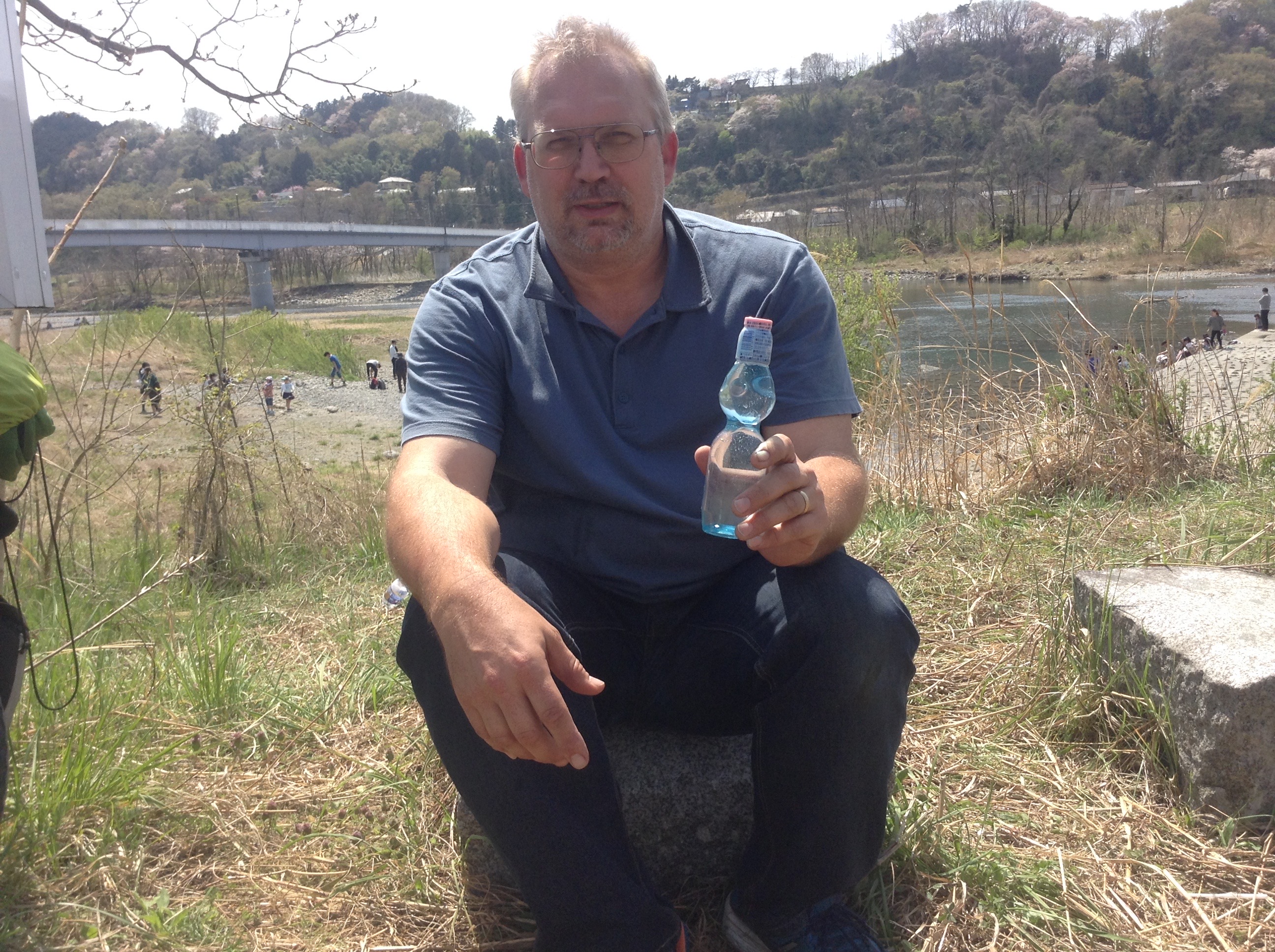
On the second day I pointed my front wheel upstream with the goal of reaching Hamura, a scant 20 km away. I was pleasantly surprised that the cherry blossoms were still in bloom. I was doubly surprised when I stumbled upon a spring cherry blossom festival. I dismounted and enjoyed some festival food and atmosphere beneath the cherry blossoms. Cherry blossom time is just around the corner. I hope I have time to do it again.

Hamura is special to me because it is the first “destination” I ever had on a bike ride in Japan. It is the source of the historic Tamagawa Josui Canal. The canal has its source in Hamura where it is diverted from the Tama River, flows very near my house and continues east where is currently peters out near Koshukaido. In ancient times, around 1635, it flowed all the way to Shinjuku where it provided water to the growing capitol city of Edo. Watering all of small villages along the way.
Lessons Learned
To quote Tim Mooney, “Ride your ride.” There are no rules for what is and what is not a bike tour. In my opinion, if you just go somewhere, stay overnight and come home you have successfully gone on a bike tour. It doesn’t made if you camp or stay in a hotel, cook your own food or buy a bento from the convenience store. Just get out there and ride.
Photo Gallery
Podcast
Video
[yotuwp type=”videos” id=”HVFZ04Q0CF4″ ]
Home | Photo Gallery | Podcasts | Videos
]]>